Should we trust what students tell us about Israel?
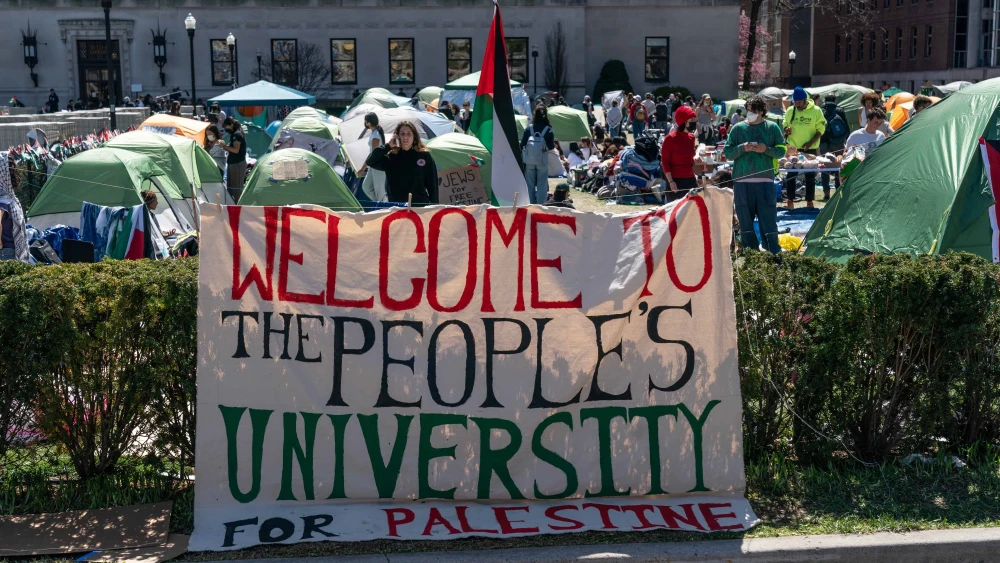

I’ve been working with public opinion data for more than 40 years and have found it enormously useful. But polls sometimes raise more questions than they answer. That is certainly true of the latest Brandeis study, American Undergraduates and the Israeli-Palestinian Conflict, which attracted considerable media attention for its finding that most undergraduates believe that Israel is committing genocide against the Palestinian people.
That headline is alarming. But what does it actually tell us?

Far less attention was paid to an important caveat offered by the authors themselves. They acknowledge that answers to questions about contentious political issues do not necessarily reflect “deep or considered views.” Respondents may rely instead on simple heuristics—which side seems to be the “bad guys?”—or partisan cues—what would someone on my political team say? This is especially true when people know or care little about an issue.
Consequently, the authors concede, students’ answers about Israel “may or may not reflect deeply considered views.”
Put more simply: Ask students a question, and they will give you an answer. That doesn’t mean they know much about the subject, have thought seriously about it or care enough about it to influence their behavior.
Both knowledge and intensity matter. Ignorance makes opinions more susceptible to misinformation and manipulation. Intensity determines whether those opinions translate into action. Historically, this helped explain the political influence of pro-Israel voters: They were more likely to consider Israel when deciding how to vote, while voters hostile to Israel often cared more about other issues.
That may be changing as more candidates make criticism of Israel and opposition to AIPAC prominent features of their campaigns. Even so, support for the Democratic Socialists of America and DSA-aligned candidates may still be driven primarily by domestic concerns rather than the Middle East.
Asked to rank five issues, “Israel/Palestine” came in last. Only 24% ranked it as their most important issue. Had students been offered 10 or 20 choices, it presumably would have fallen even further down the list.
As an aside, I had one immediate problem with the report, which vacillated between references to Israel/Palestine and the Israeli-Palestinian conflict. The former appears 70 times and reflects one of my peeves with academics who insist on referring to a place that ceased to exist after the establishment of the State of Israel in May 1948. The phrase incorrectly equates Israel with a non-existent state and unnecessarily introduces a political assumption into what purports to be an objective survey.
Which brings me back to what students comprehend about the Middle East and the situation. They were asked to assess their knowledge, rather than being tested. Only 43% felt knowledgeable, and 22% said they were not at all knowledgeable. I suspect an objective test of their knowledge would prove the figures were substantially lower.
For example, how many could locate Israel on a map? How many know who controlled the West Bank and Gaza before 1967? How many students chanting “From the river to the sea” can identify the river and the sea? Videos of protesters unable to answer elementary questions about the conflict are anecdotal, but they illustrate the problem: Conviction is not the same thing as knowledge.
Perceptions can become political realities
The broader trend identified by Brandeis is nevertheless real. Consistent with other surveys, younger Americans are more sympathetic toward the Palestinians and more critical of Israel. One Brandeis finding should set off alarm bells in Jerusalem: Only 15% of students viewed the Israeli government favorably, compared with 18% who viewed Hamas favorably.
As I’ve been arguing for months, Jerusalem, you’ve got a problem when Hamas is more popular than the Netanyahu government.
The ideological divide was equally predictable: Liberals were substantially more critical of Israel than conservatives.
But survey wording matters, particularly when respondents may know little about the subject. The finding that generated the headlines came from asking students whether they agreed or disagreed with the statement: “Israel is committing genocide against the Palestinian people.”
Students were not given a definition of genocide or asked to demonstrate their understanding of the term. Would the results have been the same if they had first been given the legal definition of genocide and then asked whether Israel’s conduct met that standard? We don’t know.
We also don’t know how students arrived at these opinions.
College students do not form their views in a vacuum. They spend years marinating in the toxic campus culture where Israel is frequently discussed through the lenses of colonialism, racism, apartheid and intersectionality. Too many faculty members engage in academic malpractice and use their classroom for indoctrination. On many campuses, opportunities to encounter a positive—or even neutral—presentation of Israel are limited.
The authors acknowledge that they cannot determine why students hold the views they do. They suggest a range of possible influences: events in the Middle East, social media, K-12 education, campus advocacy, political polarization and Israel’s perceived alignment with the Trump administration.
Social media may be even more consequential. For many young people, it’s their principal source of news, and their feeds can become ideological echo chambers filled with emotionally powerful images, slogans and misinformation. Yet the survey did not explore students’ social-media consumption.
On one hand, knowledge matters because one would expect student opinions to be informed. On the other hand, it makes little difference if their misinformation informs their behavior. So, we might lament that they don’t understand that Israel is not committing genocide, but that won’t stop them from having negative feelings about Israel, going out to protest or voting for a candidate who parrots that falsehood. Their opinions matter precisely because perceptions can become political realities.
The obvious answer is that students need better education.
Ideally, this would start before college. But collegians also need more exposure to the positive aspects of Israel on the quad and from their peers; at least more neutral positions in the classroom; and a significant increase in courses on Israel, ideally taught by quality scholars from a range of perspectives. Given the variety of influences noted above, however, better education can only make a dent in a problem that is affected by actions far beyond the campus.
The Brandeis survey tells us something important about what students say they believe. It tells us much less about what they know, why they believe it or how strongly they hold those views.
Unfortunately, what they believe may ultimately matter more than whether they understand why they believe it.



Get the latest updates in our WhatsApp group.







A recent Brandeis University study, "American Undergraduates and the Israeli-Palestinian Conflict," found that most undergraduates believe Israel is committing genocide against Palestinians. However, the author, citing over 40 years of public opinion data experience, cautions that these responses may not reflect "deep or considered views" due to limited knowledge or reliance on simple heuristics and partisan cues. The study itself noted that only 43% of students felt knowledgeable about the issue, with 22% admitting they were "not at all knowledgeable."
- The article highlights that students ranked "Israel/Palestine" last among five important issues, with only 24% considering it their most important concern.
- A concerning finding was that only 15% of students viewed the Israeli government favorably, compared to 18% who viewed Hamas favorably.
- The author questions the methodology, noting students were not provided a definition of genocide before being asked if Israel was committing it.
- The article suggests that campus culture, social media, and a lack of balanced education contribute to these perceptions, emphasizing that "conviction is not the same thing as knowledge."
© All rights to the original article belong to the source. Din Online shows a headline, an excerpt and a link only. The objectivity rating is computed automatically and is an estimate only.
Discussion
No comments yet — be the first to comment.