Smotrich placates coalition on Haredi draft, but pays a cost among settler base


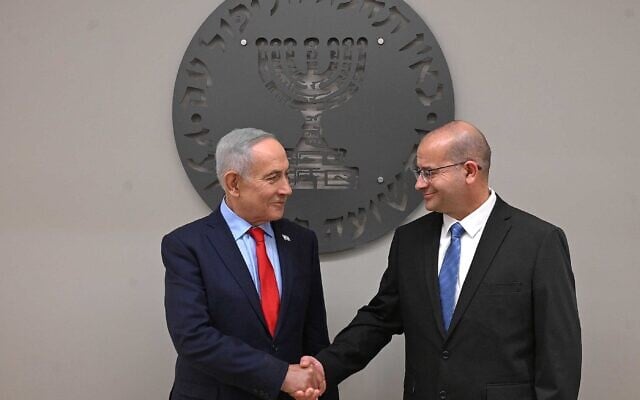
Far-right Finance Minister Bezalel Smotrich faces a fight for political survival in elections in October after angering his fellow West Bank settlers by voting not to punish ultra-Orthodox Jews who refuse to serve in the military.
The political travails of Smotrich are a sign of how tricky it will be for Prime Minister Benjamin Netanyahu to shepherd allies in his quarrelsome coalition through the October 27 election, Israel’s first since the start of the Gaza war.

A lifelong settler in the Israeli-controlled West Bank, Smotrich, 46, leads the Religious Zionism party, which opposes a Palestinian state and argues that Jews’ claim to land between the Jordan River and Mediterranean Sea arises from the Bible.
Several Western countries have banned him from entering over accusations he supports violence by settlers against Palestinians in the West Bank, a claim he and the government reject.
Though less overtly pugnacious than the other main far-right cabinet member, Public Security Minister Itamar Ben-Gvir, with whom he is often compared, Smotrich has used his time in office to ramp up settlement building. He defends the cause with a caustic turn of phrase and is still lionized by many in the movement.
“I think his achievements have been off the charts,” said Chaim Silberstein, a settler in Beit El, where Smotrich grew up and where new apartment blocks reflect the expansion he has championed.

But some one-time backers have been infuriated by his support last month for a law that would prevent the arrest of ultra-Orthodox Jews for avoiding the military draft.
“I don’t have a political home today,” said Sarel Halperin, 30, from the West Bank settlement of Alon Shvut, who voted for Religious Zionism in 2022. “If we keep doing this for years, we won’t have reservists, and we won’t have an army and we are not a country that can exist without an army.”
Religious Zionists such as Smotrich and his followers — colloquially known as “knitted kippahs” for the skullcaps worn by Orthodox Jewish men with modern dress — believe Judaism and nationalism go hand in hand. That causes political friction with some ultra-Orthodox communities in traditional dress, whose sons have typically eschewed military service for Torah study.
Parties representing both groups are part of Netanyahu’s coalition, which has struggled to avert a split over the issue since a Supreme Court ruling in 2024 that an exemption to the draft for religious study was unlawful.
The bill that passed in parliament last month would have prevented arrests of ultra-Orthodox Jews who avoid the draft, but has also been blocked by the Supreme Court.
Smotrich says the ultra-Orthodox should be obliged to serve, but that arresting them would create division. He defended the position at a settler event last month, where attendees heckled him while shouting out numbers of dead soldiers.

“Arrests don’t bring ultra-Orthodox to the army…they just make Jews fight one another in the streets,” he responded. “We must enlist the ultra-Orthodox but it must be with a process and consensus.”
Gayil Talshir, a political science lecturer at the Hebrew University of Jerusalem, said Smotrich’s position represents a calculated decision to avoid a firm stance against the exemption that would have forced him to quit the coalition.
Remaining in government allowed him to advance his goals and push settlement expansion. But it has come at a cost in support from some who consider the issue fundamental.
Smotrich “no longer represents the values of Religious Zionism” and has “sold this country to the ultra-Orthodox,” said Shvut Raanan, a 33-year-old lawyer who grew up in the West Bank and has campaigned to end the exemption from military service.
Her husband has served hundreds of days in the reserves since the October 7, 2023, Hamas-led attacks on Israel that sparked the Gaza war, and she said many households are crumbling under such strain.
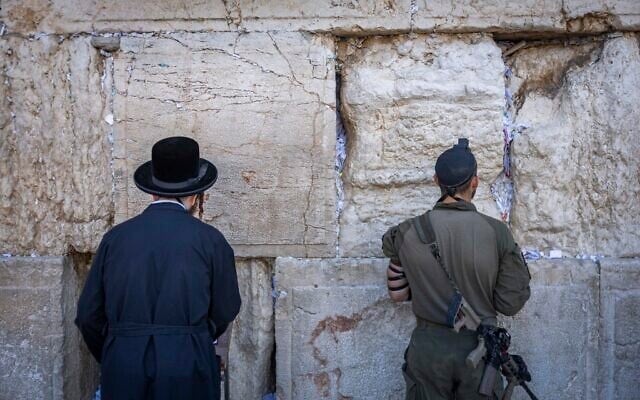
The issue has not been as big a problem for Ben-Gvir, the other main far-right settler cabinet member, whose voters are less motivated over the exemption, said Talshir.
Smotrich’s party now holds seven seats in the 120-seat parliament, after running in 2022 on a combined list with Ben-Gvir’s party that jointly won 14.
Opinion polls indicate Religious Zionism could struggle to breach the minimum 3.5% of the vote needed to win any seats in October.
Still, with every seat likely to count in forming the next government, Talshir said she expected Netanyahu would try to arrange another party merger on the far-right for Smotrich, to ensure his ally makes it through.

As a multimedia journalist, my job is to take the quality, fact-based journalism produced by The Times of Israel newsroom and make it accessible across every platform — from Instagram posts to podcasts to short-form videos.
This is how many, especially young people, consume news these days. But misinformation is rampant on social media. Our team at ToI produces accurate, responsible short-form reporting on Israel and the Jewish world.
If you believe in the importance of factual social media journalism, please consider joining our reader support group, The Times of Israel Community. Your financial support is essential to sustain responsible multimedia reporting.
— Gabriella Jacobs, multimedia journalist

We’re really pleased that you’ve read X Times of Israel articles in the past month.
That’s why we started the Times of Israel – to provide discerning readers like you with must-read coverage of Israel and the Jewish world.
So now we have a request. Unlike other news outlets, we haven’t put up a paywall. But as the journalism we do is costly, we invite readers for whom The Times of Israel has become important to help support our work by joining The Times of Israel Community.
For as little as $6 a month you can help support our quality journalism while enjoying The Times of Israel AD-FREE, as well as accessing exclusive content available only to Times of Israel Community members.
Thank you, David Horovitz, Founding Editor of The Times of Israel






Far-right Finance Minister Bezalel Smotrich faces political challenges ahead of Israel's October elections, particularly from his settler base, due to his vote against punishing ultra-Orthodox Jews who avoid military service. This decision, aimed at placating coalition allies, has angered some former supporters who view military service as fundamental. Smotrich, leader of the Religious Zionism party, defended his stance by stating, "Arrests don’t bring ultra-Orthodox to the army…they just make Jews fight one another in the streets." While some settlers, like Chaim Silberstein, praise his achievements in settlement expansion, others, such as Sarel Halperin, feel politically homeless, arguing that such policies undermine the army. Political analysts suggest Smotrich's move was a calculated effort to remain in the coalition and advance his settlement agenda, despite the cost to his support among some religious Zionists who believe he "no longer represents the values of Religious Zionism."
© All rights to the original article belong to the source. Din Online shows a headline, an excerpt and a link only. The objectivity rating is computed automatically and is an estimate only.
Discussion
No comments yet — be the first to comment.