Some young US Jews pulling back from Jewish life due to Israel discourse — study
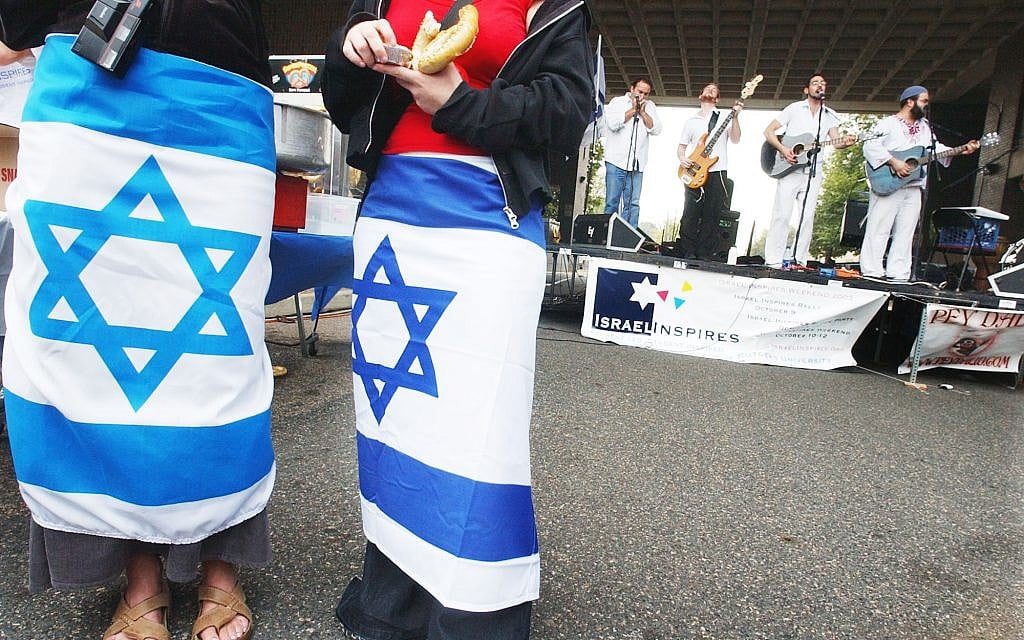

JTA — Nearly four in 10 Jewish young adults say events affecting American Jews in recent years have led them to pull back from Jewish spaces or become more selective about where they participate, with disagreements over how Israel and the Palestinians are discussed as a leading reason, according to a new survey.
The survey, which was conducted by Sense Worldwide and commissioned by the Jim Joseph Foundation, found that 39% of respondents have engaged less, engaged more selectively or disengaged entirely from Jewish spaces due to “events affecting Jewish people in the last few years.”

Among those nearly 40% of respondents, 42% of them said that it was because their “views don’t align with how Israel/Palestine is discussed, and I don’t feel there’s room for nuance,” and 40% said they engaged less because they did not want to “experience biased, one-sided messaging.” Forty-eight percent said it was because “conversations often feel hostile, toxic, or unproductive.”
And among all respondents, when asked what would make Jewish experiences more appealing to them, 30% said that they would be attracted to experiences that were more cultural and less religious, and 26% said “spaces where non-Zionist and anti-Zionist views can be expressed without being labelled antisemitic.”
At the same time, the study found that young Jews have hardly abandoned Jewish life. Three-quarters of Jewish young adults in the United States say they regularly do something Jewish, though most are finding their connections outside of synagogues and traditional Jewish institutions, according to the study.
A small group of participants, 4%, also offered an explanation of the lasting impact that Jewish experiences had had on them. The study found that the clearest negative theme among those respondents was disillusionment around Israel and Zionism and the way it was presented in Jewish education or community spaces.
“A negative legacy I have been reflecting on is what I now understand to be a biased education/perspective on Israel,” one respondent wrote.
The study surveyed 2,071 Jewish adults aged 22 to 40 from December 2025 through April 2026. Respondents were sampled from panels created by NORC and GenLabs, and the margin of error was +/- 3.4%.
The survey found that 75% of Jewish young adults say they regularly do something Jewish in their lives, with 45% saying their only form of participation was informally, often at home with family or friends.
Just 30% said they regularly participate formally in Jewish life, including through institutions or organizations.
That divide was also reflected in where respondents said they most often feel a sense of Jewish connection. Fifty-five percent cited family and 44% cited Jewish friends, compared with 19% who cited Jewish community organizations or groups.
Sixteen percent said they found connection through social or political causes connected to Jewish identity, and 13% said they felt most connected through experiences related to Israel.
“The research gives us a much fuller and accurate understanding of where, how, and why Jewish young adults seek out and experience Jewish life,” said Stacie Cherner, the director of research and learning at the Jim Joseph Foundation, in a statement. “Now, importantly, we can begin to translate these insights to action.”
The Jim Joseph Foundation, which commissioned the survey, is a funder of 70 Faces Media, JTA’s parent company.
Another study of Jewish engagement across generations by the Jewish Federations of North America in March found that 40% of Jewish American adults describe themselves as engaged with their local Jewish community, while 60% were unengaged.
When asked how often they take part in “anything that feels Jewish,” 20% of respondents said very often or often, while 24% said sometimes, 33% said rarely and 22% said never, the new survey found. Those without earlier Jewish experiences were much less likely to participate at all.
Among those who rarely or never participate in Jewish life, 52% said it was because they “don’t feel a strong connection to Jewish life,” while 38% said it “feels too religious” and 36% said it “doesn’t feel relevant to my life right now,” the survey found.
Among the 11% who have engaged more with Jewish spaces in recent years, the most common reason was wanting to feel a stronger sense of solidarity with the Jewish community, cited by 71%.
And of that 11%, 61% said they wanted to “be around people who understand what I’m feeling,” and 54% said Jewish spaces felt safer or more supportive than other spaces. Eight percent said they sought spaces where non-Zionist and anti-Zionist views can be expressed without being labelled antisemitic.

As a multimedia journalist, my job is to take the quality, fact-based journalism produced by The Times of Israel newsroom and make it accessible across every platform — from Instagram posts to podcasts to short-form videos.
This is how many, especially young people, consume news these days. But misinformation is rampant on social media. Our team at ToI produces accurate, responsible short-form reporting on Israel and the Jewish world.
If you believe in the importance of factual social media journalism, please consider joining our reader support group, The Times of Israel Community. Your financial support is essential to sustain responsible multimedia reporting.
— Gabriella Jacobs, multimedia journalist

We’re really pleased that you’ve read X Times of Israel articles in the past month.
That’s why we started the Times of Israel – to provide discerning readers like you with must-read coverage of Israel and the Jewish world.
So now we have a request. Unlike other news outlets, we haven’t put up a paywall. But as the journalism we do is costly, we invite readers for whom The Times of Israel has become important to help support our work by joining The Times of Israel Community.
For as little as $6 a month you can help support our quality journalism while enjoying The Times of Israel AD-FREE, as well as accessing exclusive content available only to Times of Israel Community members.
Thank you, David Horovitz, Founding Editor of The Times of Israel









A new survey, commissioned by the Jim Joseph Foundation and conducted by Sense Worldwide, indicates that nearly 40% of Jewish young adults (ages 22-40) in the US have reduced or become more selective in their participation in Jewish spaces. A primary reason cited by 42% of this group is that their "views don’t align with how Israel/Palestine is discussed, and I don’t feel there’s room for nuance." Many also reported that "conversations often feel hostile, toxic, or unproductive." While 75% of young Jews regularly engage in Jewish life, most do so informally, with only 30% regularly participating in formal Jewish institutions. The study, which surveyed 2,071 individuals from December 2025 to April 2026, also found that 26% would be attracted to spaces where "non-Zionist and anti-Zionist views can be expressed without being labelled antisemitic."
© All rights to the original article belong to the source. Din Online shows a headline, an excerpt and a link only. The objectivity rating is computed automatically and is an estimate only.
Discussion
No comments yet — be the first to comment.