Something moved beneath Schumer’s feet
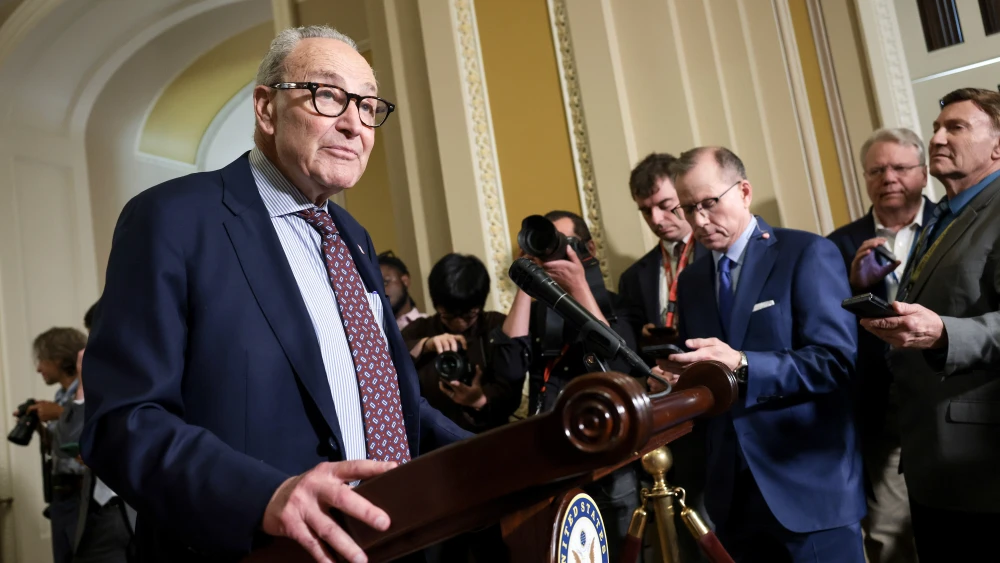
“Schumer,” he would tell Jewish audiences, came from shomer, or “guardian.” And as the highest-ranking Jewish elected official in American history, he embraced the description Shomer Yisrael, a guardian of Israel and the Jewish people.
It was more than a clever play on words. It became part of Schumer’s political identity.

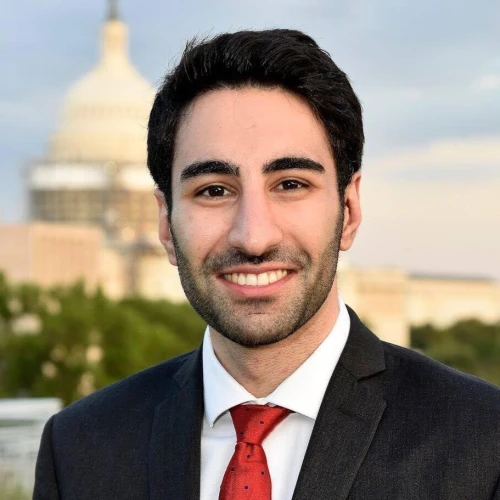
Which is why his decision to embrace Dr. Abdul El-Sayed, the Democratic nominee for the U.S. Senate from Michigan, deserves more than the usual partisan shouting. JNS editor-in-chief Jonathan Tobin recently excoriated Schumer for the endorsement, arguing that when American Jews needed courage, their supposed custodian chose politics instead. There is plenty in that indictment with which to agree. But I wonder whether Schumer’s decision says something even more disturbing.
Perhaps Schumer hasn’t changed nearly as much as the party around him has.
He didn’t want El-Sayed to win the Michigan primary. He backed Rep. Haley Stevens, a mainstream pro-Israel Democrat. El-Sayed nevertheless defeated her in an extraordinarily close race. Michigan is now essential to Democratic hopes of regaining control of the Senate. Within hours, Schumer and other party leaders announced that Democrats would unite behind El-Sayed.
Asked about the political contortions involved, Schumer supplied perhaps the most revealing sentence of the episode: “The issue isn’t me. It’s about winning.”
There is a sympathetic case for him.
Schumer is the Senate Democratic leader. His job is to elect Democratic senators. Michigan could determine control of the chamber. Party leaders routinely support nominees they opposed in primaries. Refusing to support El-Sayed could help elect a Republican and doom Democratic hopes of regaining the Senate.
But Shomer Yisrael was supposed to mean something beyond politics.
The concern about El-Sayed is not that he is Muslim. Nor should support for Palestinian rights or criticism of an Israeli government be confused with antisemitism. Israel is a democracy, and Jews themselves argue vigorously about its government and policies.
El-Sayed’s record goes considerably further. He has called for ending U.S. military aid to Israel, used the language of apartheid and genocide against the Jewish state, and questioned the motives of Democrats who support Israel.
The question, therefore, is not whether Schumer suddenly agrees with Abdul El-Sayed. I doubt he does.
The question is what it means that he no longer believes that disagreements over matters this fundamental are sufficient reason to withhold his political support.
And that is where New York Jews should pay particular attention.
We have already watched Mayor Zohran Mamdani demonstrate that aggressive anti-Zionism is no longer necessarily an impediment to political success in New York City. Rep. Alexandria Ocasio-Cortez (D-N.Y.) and others on the party’s progressive flank have shown that positions once regarded as far outside the Democratic mainstream can now command substantial constituencies.
Something is moving beneath Schumer’s feet. Something is moving beneath American Jewry’s feet as well.
For decades, American Jews could largely assume that support for Israel’s existence as a Jewish state was safely inside the bipartisan consensus. Republicans and Democrats could quarrel about settlements, peace negotiations, military tactics and Israeli prime ministers while agreeing on that foundation. But that consensus is cracking.
Jewish Democrats also need to ask an uncomfortable question: Did they help create the conditions that made this possible?
For too long, much of the organized Jewish community treated Democratic support for Israel as a permanent fixture, rather than a political position that required constant explanation, cultivation and defense. Jewish donors supported candidates for a hundred reasons and often assumed that Israel would take care of itself.
Jewish organizations emphasized access to Democratic leaders while sometimes hesitating to confront ideological trends within the party for fear of appearing partisan. And many Jewish voters continued to regard pro-Israel sentiment as an almost hereditary characteristic of mainstream Democratic politics. It wasn’t.
Nothing in politics is hereditary.
Meanwhile, Israel’s opponents were organizing, recruiting candidates, contesting primaries and teaching a generation of activists to view Zionism not as the national liberation movement of the Jewish people but as something morally suspect.
They did the work. We often assumed that we had already won the argument.
Schumer’s predicament is one consequence. And it demonstrates why relying upon individual political “guardians” was always dangerous.
No senator can be Shomer Yisrael for us. No political party can be entrusted permanently with that role. Political coalitions change. Generations change. Incentives change. Yesterday’s red line becomes today’s uncomfortable disagreement and tomorrow’s party platform.
I do not take pleasure in saying this about Schumer. Indeed, that is precisely the point. There would be something easier about concluding that he had simply lost his moral compass. We could condemn him and move on.
I suspect the truth is harder.
Schumer may know exactly where his compass points. He may simply have discovered that following it now carries a political price he is unwilling—or, as Democratic leader, believes himself unable—to pay.
A shomer, however, is not needed when guarding the gate is easy. He is needed when leaving his post would be easier.
And if even he now finds that post impossible to hold, American Jews should spend less time asking what happened to Chuck Schumer and much more time asking what happened to the political landscape around us—and what we intend to do about it.



Get the latest updates in our WhatsApp group.




Senator Chuck Schumer, who once embraced the title "Shomer Yisrael" (guardian of Israel), has endorsed Dr. Abdul El-Sayed, the Democratic nominee for the U.S. Senate from Michigan, despite El-Sayed's record of calling for an end to U.S. military aid to Israel and using "the language of apartheid and genocide against the Jewish state." Schumer had initially backed a different candidate, but after El-Sayed won the primary, Schumer and other party leaders united behind him, with Schumer stating, "The issue isn’t me. It’s about winning." This decision highlights a shifting political landscape where aggressive anti-Zionism is becoming less of an impediment to political success within the Democratic Party. The article suggests that American Jews can no longer assume bipartisan consensus on support for Israel and must actively cultivate and defend this position, rather than relying on individual "guardians" like Schumer.
© All rights to the original article belong to the source. Din Online shows a headline, an excerpt and a link only. The objectivity rating is computed automatically and is an estimate only.
Discussion
No comments yet — be the first to comment.