Special Report: UN data counts Palestinian terror as ‘settler violence’
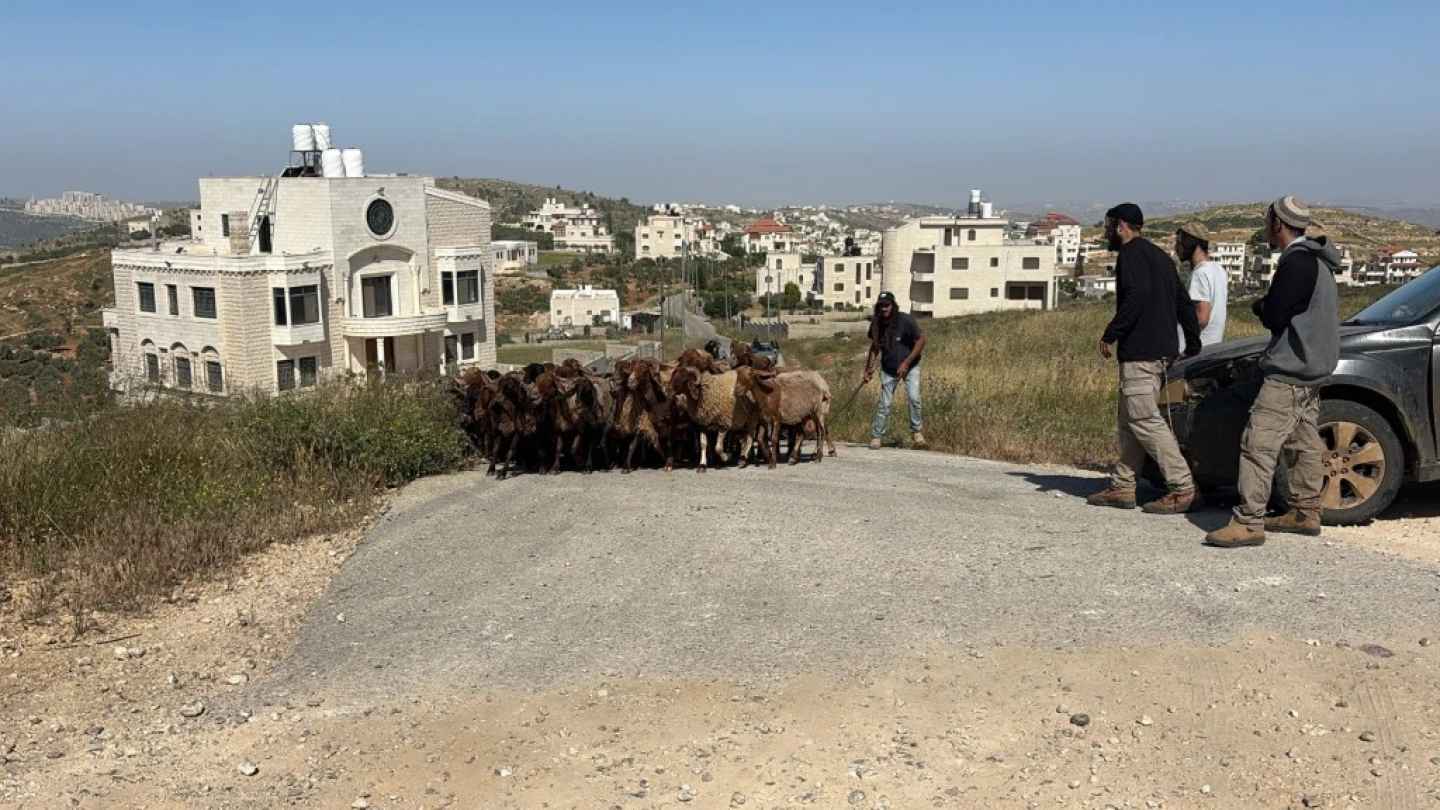
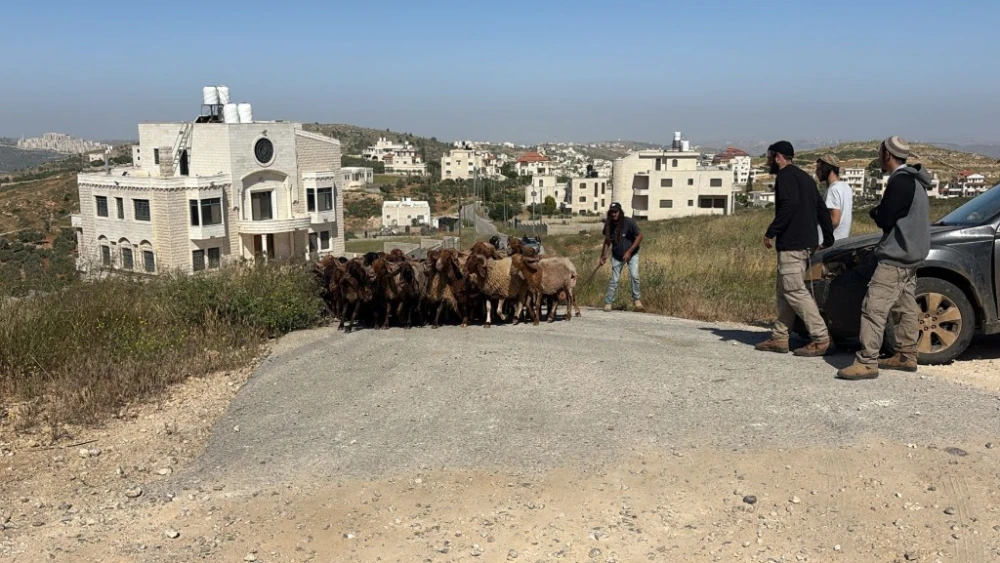
On the night of Jan. 27, 2026, violence broke out in the herding hills of Masafer Yatta—that much everyone agrees on. What happened next depends on who’s telling it: A U.N. dashboard logged it as a 100-strong “settler” rampage; Israeli military communications describe a Palestinian attack on a shepherd that preceded it. The gap between those two accounts is at the center of a dispute over how the international community measures “settler violence” in Judea and Samaria.
According to the United Nations Office for the Coordination of Humanitarian Affairs (OCHA), around 100 Israeli “settlers” raided four Palestinian communities, attacked residents with knife-tipped sticks, stole roughly 300 sheep, burned three tons of firewood, vandalized homes and vehicles and injured six Palestinians.

According to military messages, radio communications and field material reviewed by The Press Service of Israel (TPS-IL), the incident began when Palestinians from Halawa, one of the communities in Masafer Yatta, attacked a Jewish shepherd with rocks, injured him and stole his flock. Israeli forces later searched the area and recovered the animals, according to a TPS-IL review of military communications.
Over several months, TPS-IL reviewed incidents listed by OCHA in its humanitarian reporting on Judea and Samaria between January and May 2026, comparing the U.N. agency’s descriptions with Israeli military accounts, public statements, local documentation, media reports, and interviews with Israeli researchers and activists.
TPS-IL did not attempt to independently verify every incident in OCHA’s database. Rather, it examined cases where available Israeli security accounts, public documentation, or other records raised questions about classification and whether competing accounts were reflected in international reporting.
Israeli officials, police records, military sources and critics of OCHA acknowledge that Jewish Israelis have committed violence against Palestinians and that criminal acts should be prosecuted. The narrower question is methodological: How does OCHA classify “settler-related violence,” how are incidents verified, and how are disputed cases used in international discussions about sanctions, diplomacy and policy?
TPS-IL sent OCHA detailed questions and examples from its review two weeks before publication. OCHA did not respond.
TPS-IL also contacted the European Union and three far-left nongovernmental organizations frequently cited in discussions of Israeli-Palestinian violence: B’Tselem, the Palestinian Center for Human Rights and Breaking the Silence. The NGOs did not respond, and an E.U. spokesperson replied with a terse email.
OCHA’s Settler-Related Violence Dashboard is among the most widely cited international sources tracking violence involving Israelis and Palestinians in Judea and Samaria, with figures referenced in U.N. reporting, government discussions and media coverage.
The database uses a broader definition than the phrase “settler violence” may suggest. OCHA defines settler-related violence as incidents involving violence, intimidation or property damage carried out by “settlers,” or against “settlers,” as well as incidents involving other Israeli civilians in Judea and Samaria. A “settler” attacking a Palestinian, a Palestinian attacking a “settler,” or an incident involving Israeli civilians where responsibility has not been conclusively established may all appear within the same broader category.
OCHA has stated that it does not always independently confirm every detail before publication. In some cases, involvement by “settlers” may be based on available information about circumstances rather than a police finding, court determination or identification of a specific individual. This methodology makes the figures difficult to interpret.
Col. (res.) Gabi Siboni, a senior research fellow at the Jerusalem Institute for Strategy and Security, has studied OCHA’s figures and says that the classification system creates an inaccurate picture.
“‘Settler violence’ is practically the name of a campaign that’s been conducted for a few decades,” Siboni told TPS-IL. “It’s a political campaign to smear and to conduct activity against the Israeli presence in Judea and Samaria.”
In April, Siboni co-authored a paper with Brig. Gen. (res.) Erez Winner comparing OCHA’s reported incident totals with Israeli police enforcement data. OCHA reported roughly 1,800 settler-related violence incidents in 2025, while Israeli police investigated 967 cases. Sixty-one resulted in indictments.
Siboni said the comparison raised questions about how the two systems define and count incidents. “You see the ratio. The campaign is promoting the wrong figures,” he said.
“When they put regular criminal events into the basket of settler violence, you can understand they want to increase the numbers as much as they can,” Siboni added. “These events are used to push the European Union, to push administrations, to put sanctions against what is called settler violence.”
Meir Deutsch, director general of the Regavim Movement, is another Israeli critic of OCHA’s methodology. Regavim monitors construction in Judea and Samaria that is unauthorized under Israeli law. Regavim and Deutsch were among several organizations and individuals sanctioned by the European Union in May.
Deutsch told TPS-IL that Regavim reviewed an OCHA dataset containing thousands of reported incidents.
“We approached a professor of criminology, and he was able to get it from the United Nations. We got the whole Excel, 8,200 cases, and we started going through them one by one,” said Deutsch.
According to Deutsch, Regavim’s review found that some incidents appeared, based on OCHA’s own descriptions, to have been initiated by Palestinians, or to have involved circumstances that did not match the common understanding of settler attacks. “We are not saying there are no settlers who are violent,” said Deutsch. “There are settlers that use violence and they should be put in jail. But we have to look at the numbers.”
The European Union sanctioned both Regavim and Deutsch, along with other Israeli entities and individuals accused of “extremist settler activity,” in May. In its announcement, the European Union said Regavim “lobbied for the demolition of an EU-funded Palestinian primary school at the Jabbet al Dhib village, near Bethlehem.” However, the school — located in Area C, where Israel has administrative and security jurisdiction — was demolished in 2023 by court order.
“The court agreed with us, and that’s one of the reasons the European Union sanctioned Regavim,” Deutsch told TPS-IL. “Which means the European Union is now threatening the judges of Israel. Because next time we go to court, the judges are going to think, last time they sanctioned the side that won. Maybe next time they sanction the judge. That’s not just a threat to democracy. It’s a threat to the judicial system itself.”
A separate report on settler violence published in June by the Jerusalem-based Kohelet Policy Forum found that “Between 98-99% of incidents presented on OCHA-oPT’s database refer to confrontations with Israeli security forces, not settlers.”
Questioning OCHA’s methodology, Kohelet wrote, “Entirely non-violent conduct, including non-criminal conduct, is counted as settler violence. OCHA-oPT records over 8,000 incidents between January 2016 and April 2023. Among these incidents are alleged cases of Israelis ‘trespassing,’ with no casualties or property damage. Out of 1,704 incidents recorded in East Jerusalem, 1,361 involve Jews visiting the Temple Mount, Judaism’s holiest site, which Palestinians believe they should not be allowed to access. A total of 1,613 incidents in Judea and Samaria involve Israelis hiking or touring land Palestinians claim Jews should be forbidden from.”
In addition to Masafer Yatta, TPS-IL reviewed other incidents in which OCHA’s descriptions differed from Israeli military, police, or security accounts. The cases below illustrate the broader dispute over verification, classification and competing narratives.
Near Beit Imrin, March 21: OCHA recorded the death of 18-year-old Israeli Yehuda Sherman as a collision involving a Palestinian vehicle and the all-terrain vehicle he was riding. Another Israeli and a Palestinian were injured. A later statement from the Israel Security Agency (Shin Bet) said the Palestinian driver admitted during questioning that he had intentionally chased the vehicle and accelerated into it, making it a terrorist attack rather than a traffic accident, by that account.
Qalandiya Refugee Camp, May 11: OCHA reported that Israeli forces shot and killed a Palestinian man, held his body, confiscated his car and fired live ammunition and tear gas, injuring three people. It also reported that Israeli forces entered a training center in the refugee camp, photographing and measuring the structure. However, the Israeli Border Police said soldiers saw the man exit a vehicle and fire at them with an M-16 rifle equipped with a telescopic sight; security forces returned fire, killing him.
Sinjil, Jiljiliya and Abwein, May 13: OCHA reported that Israeli forces and settlers shot and killed 16-year-old Youssef Kaabneh and injured 10 others in villages near Ramallah, saying settlers entered the communities and took livestock while Israeli forces used live ammunition, rubber bullets and tear gas after residents tried to retrieve the animals.
However, Israeli video documentation reviewed by TPS-IL described a different sequence: Palestinians had stolen sheep from an unauthorized Israeli outpost, taking them to Jiljiliya. A clash broke out as the Israelis searched for their sheep. A Palestinian teen was killed and an Israel Defense Forces source told TPS-IL the teen was shot when soldiers were stoned.
OCHA has faced repeated questions over the reliability of its figures. In May 2024, the agency quietly halved its reported death toll for Palestinian women and children in Gaza without explanation, while a July 2024 study found U.N. famine warnings relied on unverified OCHA data that omitted Israeli aid figures. Separately, TPS-IL revealed that OCHA had been republishing Hamas propaganda through reports produced by Euro-Med Human Rights Monitor, whose current and former directors have been identified as Hamas operatives.
TPS-IL asked OCHA how it verifies incidents before including them in its dashboard and humanitarian reporting; whether it separates confirmed settler attacks from incidents involving conflicting accounts; whether cases initiated by Palestinians are included in the settler-related violence database; and whether entries are revised when later security findings contradict initial reports. OCHA did not respond.
An E.U. spokesperson referred TPS-IL to a May 28 statement from the European Council announcing sanctions against Israeli individuals and entities.
“The EU sanctions are discussed and adopted by 27 Member States in unanimity,” the spokesperson said in an email. “The sanctions discussions are confidential and fully in the hands of the member states.” The response did not address whether OCHA data, non-governmental organization reporting, or other field documentation contributed to the sanctions process.
TPS-IL also asked B’Tselem, the Palestinian Center for Human Rights and Breaking the Silence how they verify field reports, whether they provide material used in OCHA reporting, and how they handle incidents involving conflicting Israeli and Palestinian accounts. All three declined to comment.
Palestinian officials and human rights organizations point to OCHA figures to claim settler violence is on the rise. But the U.N. agency’s critics say the methodology makes the nature and scale of “settler violence” difficult to accurately assess.
Said Siboni, “If they [OCHA] want to dispute the credibility of the figures, they should confront them with figures of their own. I don’t think they’d be able to.”



Get the latest updates in our WhatsApp group.
Test yourself on one question pulled from JNS reporting. New puzzles daily.






A JNS special report, citing a TPS-IL review, alleges that the UN Office for the Coordination of Humanitarian Affairs (OCHA) misclassifies Palestinian terror attacks as "settler violence" in Judea and Samaria. The report highlights discrepancies between OCHA's data and Israeli military accounts, particularly in incidents like a January 2026 event in Masafer Yatta, which OCHA described as a settler rampage but Israeli communications indicated began with a Palestinian attack. OCHA's broad definition of "settler-related violence" includes incidents by or against settlers, and those involving other Israeli civilians, making figures difficult to interpret. Critics like Col. (res.) Gabi Siboni and Meir Deutsch argue that OCHA's methodology inflates numbers and serves a political campaign against Israel. Deutsch noted that Regavim's review of 8,200 OCHA cases found many initiated by Palestinians or not matching typical settler attacks. The Kohelet Policy Forum also reported that "Between 98-99% of incidents presented on OCHA-oPT’s database refer to confrontations with Israeli security forces, not settlers."
© All rights to the original article belong to the source. Din Online shows a headline, an excerpt and a link only. The objectivity rating is computed automatically and is an estimate only.
Discussion
No comments yet — be the first to comment.