Tehran prepares to turn Hormuz into an instrument of regional pressure
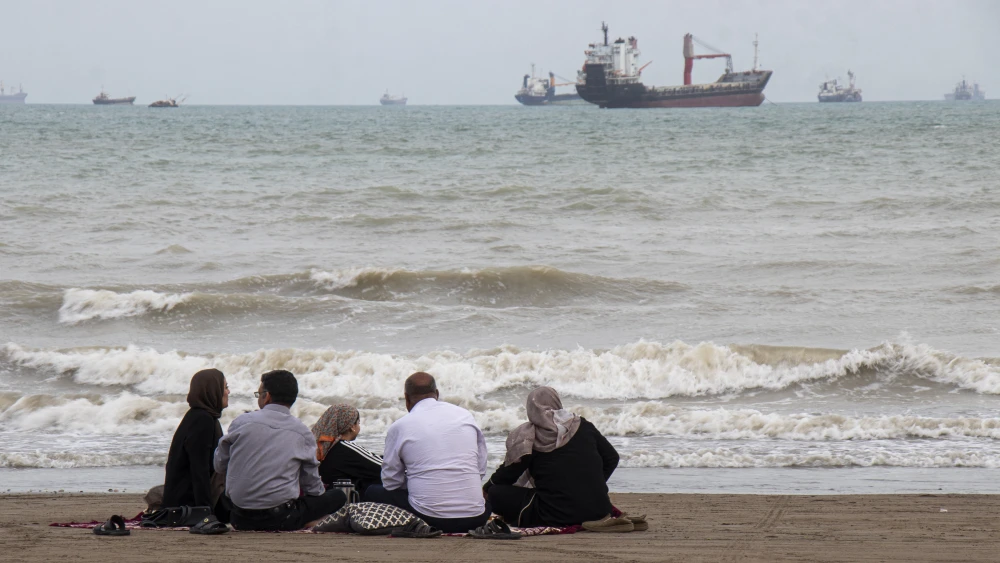
The central question in Iran is no longer simply whether the Strait of Hormuz will reopen, but who will determine which vessels are allowed to pass through it and under what conditions.
The government is continuing negotiations with Oman over navigation arrangements and is discussing a return to the understandings contained in the Islamabad Memorandum. At the same time, lawmakers are seeking to enshrine in law Iran’s ability to distinguish between vessels it considers acceptable and those it deems hostile.

The Islamabad Memorandum is the framework of understandings signed in June between Iran and the United States through Pakistani mediation. Among other provisions, it stipulated that Iran would reopen the Strait of Hormuz and that the U.S. would lift its naval blockade of Iran. The agreement also addressed the cessation of hostilities and the opening of broader negotiations on sanctions and Iran’s nuclear program.
The signing, however, did not resolve disputes over the routes vessels would use, responsibility for their security, mine clearance, the collection of transit fees, or the respective authorities of Iran and Oman. The talks with Oman are intended to translate the general commitment to reopen the strait into practical navigation rules.
Ali Reza Salimi, a member of the Iranian Majlis Presidium, outlined a bill under consideration by the National Security Committee. The proposal seeks to prohibit the passage of Israeli vessels and ships linked to countries that Iran defines as hostile or that impose sanctions. It could also apply to vessels carrying certain military cargoes and to ships belonging to countries that, in Tehran’s view, have failed to pay their share of compensation for war damage. The imposition of transit fees, coordinated with the armed forces, is also under consideration.
The proposed legislation links four issues: the confrontation with Israel, Western sanctions, demands for compensation for war damage, and control of maritime passage. If adopted, Hormuz would not return to its previous status as an international shipping route open to all vessels on equal terms. Instead, it would become a selective passageway that Iran seeks to regulate.
Pezeshkian seeks greater freedom to negotiate
Iranian President Masoud Pezeshkian presented the Islamabad Memorandum as a process that had already begun moving into implementation. According to him, the process included an easing of the naval blockade, sanctions relief related to oil and petrochemicals, and talks on releasing funds and financing the reconstruction of war damage.
Pezeshkian also said that the decision to go to war does not fall within the government’s authority, even though the government is required to manage its economic consequences. The distinction does not amount to a complete disavowal of the system, but it creates a political record of how responsibility is divided. The security establishment and the Supreme National Security Council determine military policy, while the civilian government is left to contend with shortages, inflation and damage to infrastructure.
Alongside the talks, the moderate camp has intensified its criticism of opponents of negotiations. Hossein Nouraninejad, deputy secretary-general of the Union of Islamic Iran People Party, argued that deepening internal divisions encourages U.S. President Donald Trump and that opponents of negotiations should take the national interest into account.
Both camps therefore invoke the same concept, national security, to justify opposing policies. Moderates argue that an agreement is necessary to prevent another war. Hardliners contend that only continued control of the strait can deter the U.S. and Israel.
Lower inflation is not reflected in the cost of food
The most prominent economic figure published in Iran appears, at first glance, to indicate a slight decline in inflation. According to data from the Statistical Center of Iran, year-by-year inflation fell by seven-tenths of a percentage point. This does not mean that prices fell. It means that the annual pace of price increases slowed slightly, while prices continued to rise from an already extremely high base.
The situation in the food basket is considerably worse. Inflation in food and beverages reached 128.1%. Oils rose by 261.5%, dairy products and eggs by 147.1%, meat by 145.2%, and bread and cereals by 116.7%.
The gap between the overall index and food prices hits workers and poor households particularly hard. The lower a household’s income, the larger the share devoted to food, electricity and housing. A slight decline in the headline inflation rate therefore does little to change the perception that wages are falling ever further behind the cost of living.
Pezeshkian acknowledged that the state of prices and the exchange rate was unacceptable.
Restoring internet access tests the government’s authority
The government announced that Pezeshkian had ordered international internet access to be restored to the situation that existed before December 2025. The decision does not prove that all restrictions have been lifted, that connection speeds have returned to previous levels, or that access to all platforms is unrestricted. In Iran, there is a persistent gap between announcements of eased restrictions and their implementation by telecommunications providers and security agencies.
The Shargh newspaper published accounts by social affairs and economic reporters describing their experiences during the war. The journalists reported ringing in their ears after explosions, nightmares, medication use, stress caused by internet shutdowns, and fear of writing because of frequently shifting red lines.
These are personal accounts and cannot be used to assess the prevalence of such experiences across the population. They do, however, reveal the psychological toll on those required to communicate the crisis to the public while experiencing it themselves.
The accounts also connect internet shutdowns with state control over information. For journalists, restricting the network is not merely a technical inconvenience. It reduces their ability to verify information, communicate with sources, and report damage in real time.
Another regional development attracting attention in the Iranian press is the “Mecca Alliance,” a mutual defense agreement signed by Saudi Arabia, Turkey and Pakistan. The agreement stipulates that an attack on any one of the three countries will be considered an attack on all of them and establishes mechanisms for intelligence sharing, security coordination and consultations among political and military officials.
Turkey’s foreign minister stressed that the alliance is not directed against Iran or any particular country. Shargh, however, presented differing interpretations. Some commentators viewed it as a U.S.-backed attempt to curb Iranian influence. Others described it as an effort by regional states to protect themselves from both Iran and Israel’s growing power.
From the Iranian perspective, the very creation of a new security framework is a troubling development. It combines Saudi Arabia’s economic power, Turkey’s military and technological capabilities, and Pakistan’s strategic capabilities. Pakistan is the only Muslim-majority state with nuclear weapons.
If regional states do not believe that the truce in Hormuz is stable, they are likely to seek alternative security arrangements and trade routes. The more Iran uses the strait to exact a price for sanctions, relations with Israel, or war damage, the greater the incentive it gives its neighbors to reduce their dependence on it.
The nuclear file recedes from the headlines
The nuclear issue was almost entirely absent from the leading Iranian publications. No new document was published concerning enrichment levels, uranium stockpiles, the condition of nuclear facilities, or the return of inspectors from the International Atomic Energy Agency.
The issue’s absence does not indicate that it has been resolved. Tehran appears, at this stage, to prefer consolidating the terms of the maritime arrangement before moving to the next phase of negotiations.
Such a separation suits Iran because it allows Tehran to seek sanctions relief and the reopening of commercial routes without immediately committing to nuclear concessions. From the U.S. perspective, however, a maritime arrangement that does not lead to progress on the nuclear issue could give Tehran economic benefits without sufficient strategic concessions in return.
Aug. 9 marks the point at which the debate over Hormuz is shifting from general declarations to a struggle over the rules governing passage. The government wants to present Oman and the Islamabad Memorandum as a path out of escalation. Conservatives want to ensure that reopening the strait does not restore its previous status as a shipping route open to all.
Pezeshkian is trying to expand his authority in negotiations, internet policy and the management of an economy defined by shortages. On each front, however, he depends on institutions that are not solely subordinate to the government—the security establishment in Hormuz, the mechanisms controlling internet filtering, and the institutions that determine how electricity, foreign currency and credit are allocated.
The economy is narrowing his window of opportunity. Slight declines in headline inflation and the dollar exchange rate do not offset food inflation of 128.1%. Electricity imports may temporarily protect petrochemical exports, but they do not resolve the nationwide shortage.
Three tests will determine whether the truce develops into a stable arrangement: the publication of an agreed document with Oman, a sustained increase in the number of insured vessels passing through Hormuz, and consistency between Iranian legislation and Tehran’s commitments.
Originally published by the Jerusalem Center for Security and Foreign Affairs.


Get the latest updates in our WhatsApp group.







Iran is attempting to transform the Strait of Hormuz into a tool for political leverage, seeking to control which vessels can pass and under what conditions. Lawmakers are considering a bill to prohibit Israeli ships and those from “hostile” or sanctioning nations, as well as imposing transit fees. This initiative links the confrontation with Israel, Western sanctions, and demands for war reparations to maritime passage control.
- The Islamabad Memorandum, signed between Iran and the U.S. via Pakistani mediation, aimed to reopen the strait and lift the U.S. naval blockade, but disputes remain over navigation rules, security, and fees.
- Current daily traffic through the strait is less than one-tenth of pre-war levels, with only 33 vessels passing in the first four days after recent easing of restrictions, compared to approximately 140 daily before the conflict.
- President Masoud Pezeshkian views the Islamabad Memorandum as an ongoing process, including easing the naval blockade and sanctions, while differentiating the government's role in managing economic consequences from the security establishment's military policy.
- The “Mecca Alliance,” a new mutual defense agreement between Saudi Arabia, Turkey, and Pakistan, is viewed by some Iranian commentators as an effort to curb Iranian influence or protect against regional powers, raising concerns in Tehran.
© All rights to the original article belong to the source. Din Online shows a headline, an excerpt and a link only. The objectivity rating is computed automatically and is an estimate only.
Discussion
No comments yet — be the first to comment.