The illusion of peace cannot erase the reality of war

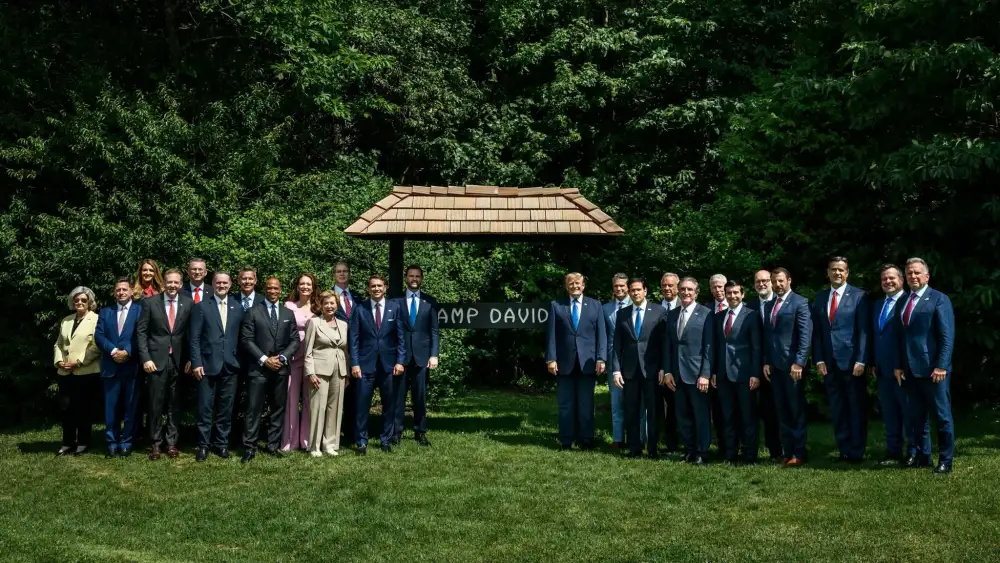

The latest developments in the Middle East, which have left commentators around the world puzzling over every statement and counter-statement, have had far greater philosophical significance than factual substance.
U.S. President Donald Trump declared that the United States was prepared to launch a decisive strike against Iran, placing Israel on maximum alert—from the Air Force to the Shin Bet and civilians ready to head for bomb shelters. Hours later, he announced what he described as a “framework for peace” concerning both the Strait of Hormuz and Iran’s nuclear program.
Iran immediately dismissed the announcement. State media, including IRNA and Fars, portrayed the United States as confused and defeated.
But appearances can be deceptive.
Trump, together with Israel, remains prepared to strike when the strategic moment arrives. Iran has been severely weakened, yet it cannot simply abandon the agenda of the Islamic Revolutionary Guard Corps, which continues to dominate what remains of the regime—even if Iran’s Foreign Minister Abbas Araghchi would prefer a different course.
Nothing that has happened rescues Iran, humiliates Trump or forces Israel to retreat. At most, Trump has paused a longer conflict—perhaps for reasons that also involve Saudi Crown Prince Mohammed bin Salman—but the confrontation itself has not ended.
American aircraft continue arriving in Israel. The Strait of Hormuz remains a potential flashpoint. Additional attacks on Gulf states cannot be ruled out. The timeline may shift, perhaps even until after the U.S. midterm elections, but the strategic contest continues.
The same applies to the recurring discussion of a breakthrough with Hamas.
Despite repeated announcements and optimistic speculation, nothing fundamental has changed. Israel’s security line inside Gaza remains firmly in place. The Israel Defense Forces continue searching for Hamas infrastructure, weapons caches and terrorist operatives. Meanwhile, no credible Palestinian “technocratic” government has emerged, because no Palestinian leadership has publicly and unequivocally broken with Hamas.
Residents of the Gaza border communities understand this reality. Many openly acknowledge that if Hamas were allowed to remain a military force, the kibbutzim that have only recently begun to recover would empty once again.
The debate, however, is clouded by something deeper than military analysis.
Israel gave the world the term conceptzia—the dangerous strategic mindset that convinces decision-makers to believe what they wish were true rather than what reality demonstrates. Even when peace is plainly out of reach, there remains a temptation to repeat the language of peace, present it as political theater and persuade ourselves that military victory is impossible and negotiations are the only alternative.
Yet history sometimes offers a different conclusion.
With regimes such as the Islamic Republic of Iran, and organizations such as Hamas, the path is already defined. They are not partners waiting to be discovered through diplomacy. Their ideological foundations make genuine coexistence impossible unless those foundations themselves are dismantled.
Our assumptions, shaped by decades of diplomacy and international norms, move to a different rhythm from the civilizational conflict now confronting the Middle East.
It is difficult to believe that Trump does not understand this reality or that Israel has somehow lowered its guard. Bomb shelters remain open. Military preparations continue. Public diplomacy may fluctuate, but strategic planning has not.
If there is ultimately to be a lasting solution, it will require more than declarations or temporary understandings. It will require neutralizing the revolutionary ideology of the Islamic Revolutionary Guard Corps, which continues to exercise decisive control over what remains of the Iranian regime.

Get the latest updates in our WhatsApp group.
Test yourself on one question pulled from JNS reporting. New puzzles daily.




Recent diplomatic efforts have not altered the strategic realities facing Iran or Hamas, despite U.S. President Donald Trump's declaration of a "framework for peace" after threatening a decisive strike against Iran. Iran immediately dismissed Trump's announcement, but the article suggests that both Trump and Israel remain prepared to act strategically. Iran is weakened, yet the Islamic Revolutionary Guard Corps' agenda persists. Similarly, no fundamental change has occurred with Hamas; Israel's security line in Gaza remains, and the IDF continues its operations. The article argues against the "conceptzia"—a dangerous strategic mindset that prioritizes desired outcomes over reality—and concludes that genuine coexistence with such regimes and organizations is impossible without dismantling their ideological foundations. Military preparations continue in Israel, indicating that strategic planning has not wavered despite public diplomacy.
© All rights to the original article belong to the source. Din Online shows a headline, an excerpt and a link only. The objectivity rating is computed automatically and is an estimate only.
Discussion
No comments yet — be the first to comment.