The Saudi tail and the American dog
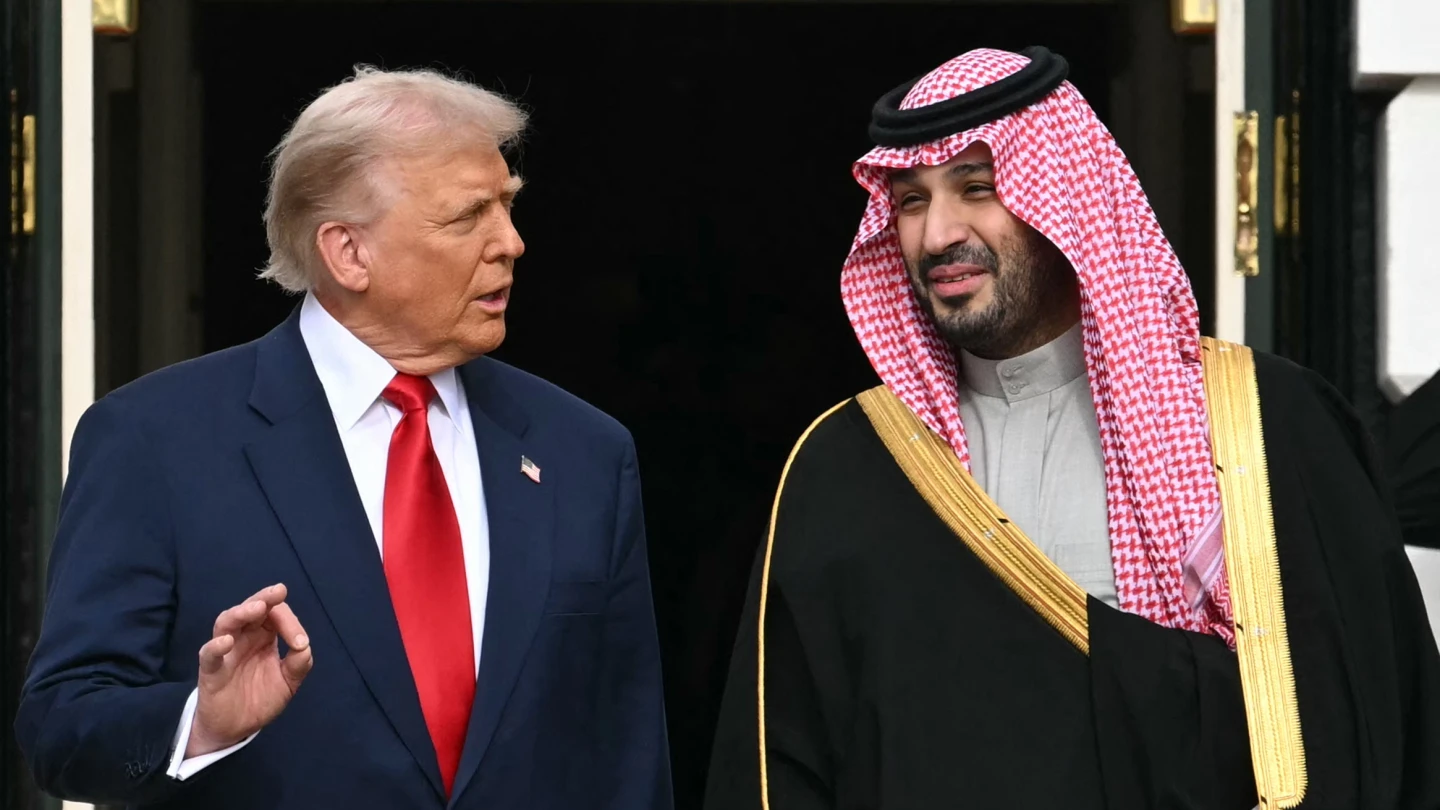
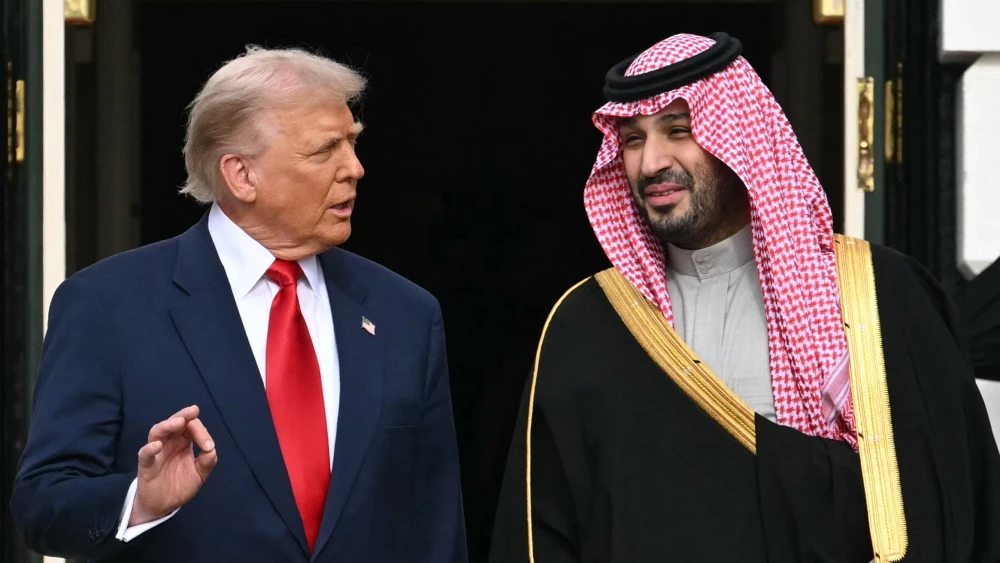

U.S. President Donald Trump announced “Operation Project Freedom” on May 3, a mission to escort commercial shipping through the Strait of Hormuz, which Iran had closed by force.
Within hours, Saudi Arabia informed Washington that American aircraft could not fly from Prince Sultan Air Base and could not cross Saudi airspace in support of the operation. Kuwait followed suit. Forty-three American warplanes sat grounded on a Saudi runway as a result. A direct phone call between the president and Saudi leader Crown Prince Mohammed bin Salman (MBS) failed to move Riyadh. Trump paused the operation within two days and told the public it was because of substantial progress in talks with Tehran.
That is the relationship as it now stands: A supposed American ally physically halted an active American military operation, on ground that American taxpayers pay to defend, in the middle of a war in which Iranian missiles were falling on Saudi oil infrastructure and being intercepted by batteries that American contractors maintain, running American software, fed by American radar and guarded by American soldiers who had already taken casualties at that very base in March.
Riyadh’s explanation for all this is that it will not lend its airspace to a war it is not a party to. This would be more persuasive if Iranian drones had not struck the American embassy in Riyadh; Iranian missiles had not been aimed at Ras Tanura; and the Royal Saudi Air Force had not reportedly conducted its own quiet strikes on Iranian launch sites and Iran-backed militias in Iraq. Riyadh is a party to the war. It simply prefers plausible deniability and no return address.
Consider what the kingdom has been handed in the space of nine months: In November, the White House ratified a joint declaration on civil nuclear energy and approved a major defense package including future deliveries of F-35s, an aircraft no Arab state has ever received. Saudi Arabia holds major non-NATO ally status. It has an interceptor supply line; a maintenance and targeting architecture it cannot operate without American personnel; and a Section 123 Agreement now heading to Congress that would sponsor a multibillion-dollar nuclear industry on Saudi soil.
Consider what Washington has received in return: A public condemnation of Israeli military action at every opportunity. A demand, restated as recently as May through a Saudi source to CNN, that normalization with Israel be contingent on a clear and irreversible path to a Palestinian state. A hedging strategy that has Riyadh convening a new quartet with Turkey, Pakistan and Egypt while its foreign ministry lectures Washington about restraint. An operational veto exercised at the exact moment American power was being applied against the one regime that has spent nearly half a century trying to destroy the House of Saud.
This is having the cake, eating it, and then explaining to the baker how he ought to have made it and why he can’t have any. A senior Gulf official summarized this posture to Fox News with more candor than he perhaps intended: The kingdom advises the United States toward a better outcome and advises the Iranians as well. Riyadh will not fight, but it will referee. It wants clean hands as well as a seat in the American war room.
The tail is wagging the dog. Worse, the tail has learned that wagging works.
There is one encouraging fact in this record, and it deserves to be studied rather than buried: When Riyadh grounded American aircraft, the White House did not plead. According to The Wall Street Journal, it threatened to withhold delivery of the Patriot and THAAD interceptors that Saudi Arabia was using to shoot Iranian missiles out of its own sky. Riyadh had grounded the aircraft for four days by then, and it was the interceptor threat that reopened the runway. Access was restored, and the operation resumed without further Saudi obstruction.
Four days is how long Saudi defiance survived contact with American leverage honestly applied.
The lesson of this is not that coercion is unpleasant, though it is. The lesson is that leverage is real and decisive, and it was spent on something trivially small. Washington used the most powerful instrument it possesses to buy back access it was already paying for. It won a week. It should have won a treaty.
On July 23, Trump wrote that a civil nuclear agreement is subject to Saudi Arabia joining the Abraham Accords. That instinct is exactly right, but the scope is far too narrow. One item is a bargaining chip. The whole relationship is a policy.
Every aspect of the package should carry the same condition, in writing, with dates attached. The nuclear cooperation agreement does not go to Congress until Riyadh signs. F-35 deliveries do not enter the production queue until Riyadh signs. Priority in the interceptor resupply line, which Lockheed cannot fill fast enough for existing customers as it is, goes to Abraham Accords signatories first. The American force posture in the Gulf, which the administration is already reported to be reconsidering, with some accounts indicating a possible shift toward Israel and Jordan, moves on schedule unless Riyadh signs.
None of this is a punishment. It is simply the end of unreciprocated generosity and the restoration of American interests to first place.
Moreover, the Palestinian statehood condition must finally be named for what it is. It is not a moral position. It is a surcharge. Riyadh is demanding that Israel pay for a Saudi signature with a state, handed to the losing side of a war, on the exact territory from which the Oct. 7 massacre was launched, and in Judea and Samaria as well.
That final condition is the most dangerous. It would give the very terror organizations that carried out Oct. 7 a strategic vantage point on the ridgeline above Israel’s coastal plain, looking down on the Dan region, Ben-Gurion International Airport and the corridor that holds the majority of the country’s population and nearly all its economic core. Israel is asked to hand over the down payment while Saudi Arabia collects the goods. No American administration should endorse such conditions.
The standard objection to what I have written is that MBS needs domestic cover, that Saudi public opinion has hardened and that the man cannot simply sign. But this is a ruler who broke the clerical establishment, jailed his own cousins in a hotel, reopened the cinemas, put women behind the wheel and rewrote the Saudi social contract by decree while his public looked on. He told former Secretary of State Antony Blinken in January 2024 that he did not personally care about the Palestinian issue, but his people did.
That is not a constraint. That is an opening bid and a lame excuse. A leader who can remake a country by fiat can survive a signing ceremony. He is holding out because holding out has, thus far, come at no price.
The Abraham Accords were built on a simple premise, which is that peace with Israel is a benefit the Arab states seek and for which they are willing to pay. Riyadh has quietly inverted it. In the Saudi narrative, peace with Israel is a favor the kingdom might one day bestow. America is expected to cover the cost, Israel is expected to cover the deposit, and the Saudis are expected to cover nothing at all.
Trump has the leverage. He demonstrated it in May and then put it down. He should pick it up again and, this time, hold it until there is a signature on the deal.

Get the latest updates in our WhatsApp group.




© All rights to the original article belong to the source. Din Online shows a headline, an excerpt and a link only. The objectivity rating is computed automatically and is an estimate only.
Discussion
No comments yet — be the first to comment.