The threat Israel is too tired to see


The 36th NATO summit opened in Ankara on July 7-8—the first time in 22 years that Turkey hosts the alliance on its own soil. It included 32 leaders and tens of billions of dollars in new defense contracts, with Ukrainian President Volodymyr Zelenskyy among the guests and Turkish President Recep Tayyip Erdoğan as the host. For a state that runs the harshest anti-Israel rhetoric in the region, this is a moment of peak legitimacy in years.
Israel barely looked. After three years of war, the country is worn out, and the public’s attention is elsewhere: the unfinished settlement in Gaza, the cost of living, internal political division. Turkey has slipped to the periphery. And here, a gap opens that is worth stating plainly: Israeli society sees the Turkish threat—and cannot find the strength to respond to it.

This is not a guess. It’s what two Dor Moriah Center surveys—conducted in May and June, and taken together—actually show.
The mass survey, conducted among 1,007 respondents (the maximum sampling error is ±3.1%), leaves no doubt: The Turkish threat has been identified. The most common answer to how Turkey is perceived is “a serious strategic threat,” according to 34.4%. Another 28.5% called it “an unfriendly country.” The share seeing a friend or potential partner in Turkey is negligible: 4.9%.
Turkey’s presence in eastern Jerusalem is rejected almost by consensus. Ankara’s diplomatic activity in the city is rated negatively by 69.9% of Jews; Turkish cultural, educational and religious projects there by 63.5%. This is not the fringe anxiety of activists. It is the settled position of a majority.
So, at the level of diagnosis, Israeli society is not mistaken. It notices who stands in front of it.
What comes next matters more than the diagnosis itself. Recognition of the threat does not turn into a readiness to act.
Ask an Israeli what to do about Turkish activity in eastern Jerusalem, and you’ll not hear a call for a hard response. The most common choice (45.5%) is to permit such activity under limited conditions and strict control. Not to ban it. Not to push it out. To control it. Another 26.0% even allow that it may bring benefit—provided there is Israeli oversight. What dominates is not rebuff but the management of risk.
Ask about Israel’s position in the disputes between Greece and Turkey, and the majority (41.3%) will answer that Israel should stay out of it. Active support for Greece—the natural anti-Turkish move—is favored by only 35.8%.
Ask about the risk of Turkish influence on Israel’s domestic politics, and the “low or no risk” reading prevails: 48% against 37%. A society that calls Turkey a strategic threat sees, at the same time, little risk in its penetration inward. This is not a logical error on the respondents’ part. It is fatigue showing through the numbers: There is simply no resource left for one more source of anxiety.
Even on how Azerbaijan would behave in a conflict with Turkey, what dominates is not calculation but the expectation of neutrality (36.4%)—the posture of an observer, not a player.
Put it together, and the structure of an exhausted society emerges: “I see the threat, I don’t want to open a second front, let me somehow keep it under control but without me.”
What the experts prescribed; why the remedy won’t work
Here, the second study enters. In May, Dor Moriah ran an expert survey, “Turkey and Israel’s Geopolitical Environment”—11 specialists, from secular leftists to religious right-wing politicians and analysts. The main result is not any single assessment but the very fact of convergence across the ideological spectrum: What we have is not a partisan interpretation but a structural picture.
The structural picture looks like this. European pressure cannot be relied on: The European Union blocks sanctions against Turkey by consensus of the council, and Athens’s démarches yield a declaration, not a result. American pressure is even less so: The Countering America’s Adversaries Through Sanctions Act (CAATSA) remains a tool Washington applies at its own discretion and systematically declines to bring to bear against Turkey, while the U.S.-Turkish relationship swings like a pendulum—and that pendulum is a structural vulnerability, not an accident.
The one conclusion shared by experts in every camp: Israel must ensure itself through a deterrence configuration of its own, rather than count on someone else’s pressure on Ankara.
Here, the two studies collide head-on. The experts prescribe self-insurance. The mass survey shows a society that’s not ready for it—not for lack of understanding but for lack of strength. After all, an independent strategic configuration takes political determination, sustained attention and a willingness to bear costs on a second front while the first stays open. All of this is precisely the resource that the Iran war has drained.
The result is a trap. A threat that cannot be handed off to Brussels or Washington arrives at a society with nothing left in reserve for its own answer. Fatigue doesn’t merely dull the reaction; it cuts the power to the one strategy that works.
The experts pointed to a vector Israeli analysis underrates: Turkish secular cultural export, building long-term sympathy among Israel’s Arab citizens. And not by tanks and missiles, but by television, educational programs and a humanitarian presence, soft and patient.
This is not a hypothesis hanging in the air. The mass survey measures it. In the Arab sector, the index of perception of Turkey is positive (+29.7); a favorable assessment prevails. In the Jewish sector, it is deeply negative (−49.5), with the perception of threat dominant. Arab respondents rate Turkish activity in eastern Jerusalem positively, and only 9.3% favor strict control over it, against 52.4% among Jews. The process the experts warn about is already under way—and already visible in the data.
Working against such a vector calls not for a forceful answer but for a long, painstaking presence of the state in its own rear: an alternative, transparent, non-religious infrastructure in place of the Turkish one. This is the most resource-intensive of all strategies—and the least compatible with exhaustion. A prohibitive gesture is even harmful here: It hands Turkey, as the experts note, the image of a “blocked benefactor.” And for a patient alternative, a worn-out society has neither the attention, nor the money, nor the political mandate.
The experts’ consensus forecast through 2030 is “managed hostility”: cold functionalism, diplomatic relations kept to a minimum and demonstrative confrontation alongside the real avoidance of a rupture.
It is a scenario in which nothing blows up, but nothing gets resolved either. It is precisely this scenario that lulls. It lets society postpone the answer because catastrophe does not arrive tomorrow.
The problem is that “managed hostility” is not a pause but a process. While Israel rests, the Turkish presence in eastern Jerusalem accumulates; sympathy in the Arab sector grows; and the Western alliance seen at the summit in Ankara arms and legitimizes Ankara. Not one of these processes waits for Israeli society to recover its strength.
Get the latest updates in our WhatsApp group.



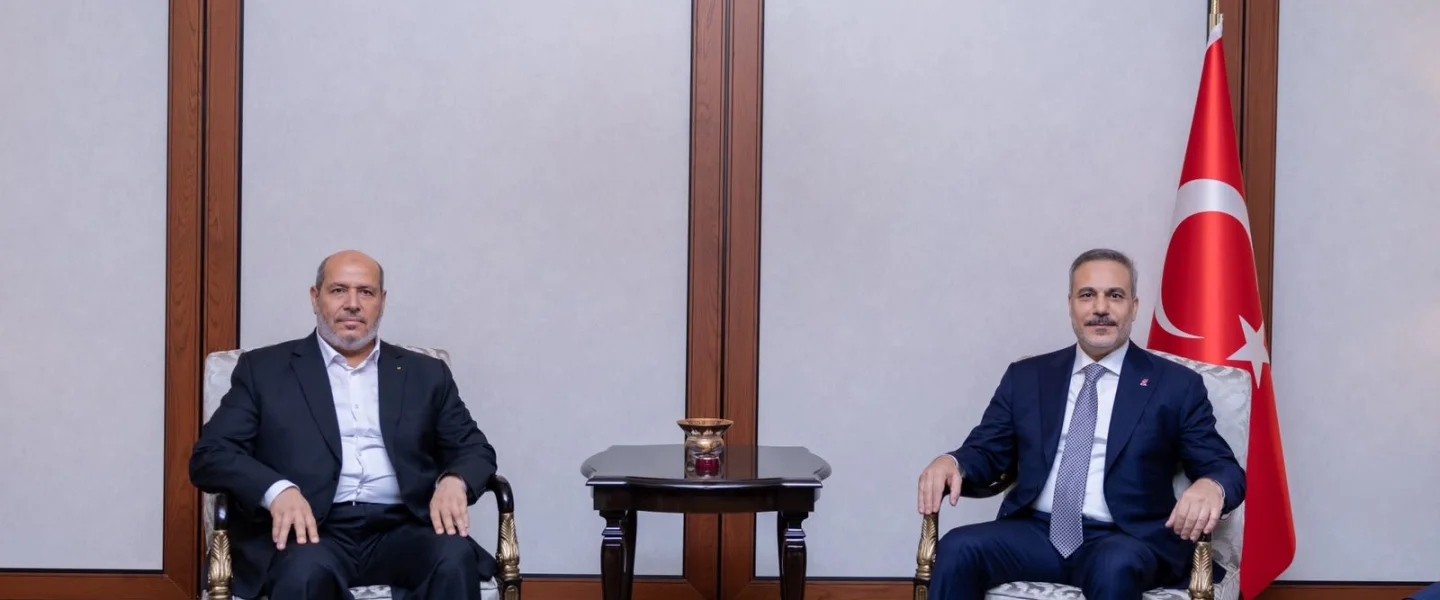

Despite Turkey hosting the NATO summit in Ankara, signaling increased legitimacy, Israeli society, exhausted from ongoing conflicts and internal issues, largely overlooks the growing Turkish threat. Two Dor Moriah Center surveys in May and June reveal that 34.4% of Israelis perceive Turkey as "a serious strategic threat," and 28.5% as "an unfriendly country." However, this recognition does not translate into a readiness to act, with most favoring limited control over Turkish activities in eastern Jerusalem (45.5%) rather than outright opposition. Experts recommend Israel develop its own deterrence against Turkey, but the public lacks the strength and resources for such a commitment. Furthermore, while Jewish Israelis view Turkey negatively, Arab Israelis show a positive perception (+29.7), indicating the success of Turkey's "soft power" cultural and educational exports. The consensus expert forecast is "managed hostility" through 2030, a scenario where the threat is not resolved but continues to accumulate while Israel remains fatigued.
© All rights to the original article belong to the source. Din Online shows a headline, an excerpt and a link only. The objectivity rating is computed automatically and is an estimate only.
Discussion
No comments yet — be the first to comment.