‘There’s plenty of water in the river’: Israelis trickle north amid tourism drought

Reporter at The Times of Israel
UPPER GALILEE — Keren and Nadav Bocobza made the six-hour round trip from the southern Israeli city of Ashkelon with their four children to spend a day in the north and “support local businesses.”

They said they hadn’t been in the area since before October 7, 2023, when during the Hamas onslaught, their house was damaged by rocket fire. They were evacuated for six months and then moved back home.
“We call on all people in Israel to come and spend their money here in the north,” Nadav said. “We have a beautiful country.”
The Bocobza family is not alone in its desire to support the north: Every day, people call the staff at Kfar Blum Kayaks to find out if the Iran-backed terror group Hezbollah is about to launch another rocket or missile barrage on northern Israel. With its location just under four miles from the Israeli-Lebanese border, their concern is understandable.
“People ask if it’s safe because they’re still scared about coming up to the north,” Eyal Greenwald, 48, the company’s marketing manager, told The Times of Israel on a recent morning. “I tell them, ‘Come to the north.'”
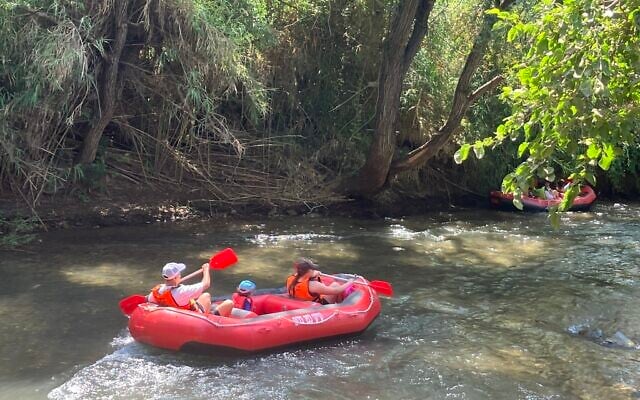
At the visitors’ center, tourists were starting to purchase tickets for rafting trips on the Jordan River. Tens of thousands of visitors flocked to the Upper Galilee each summer before October 7, 2023, when Hamas-led terrorists invaded southern Israel, killing some 1,200 people and kidnapping 251 into Gaza.
But after almost three years of war — including a year of near-daily Hezbollah bombardment from Lebanon that emptied much of the northern region before residents began returning in early 2025 — visitors remain reluctant to come back.
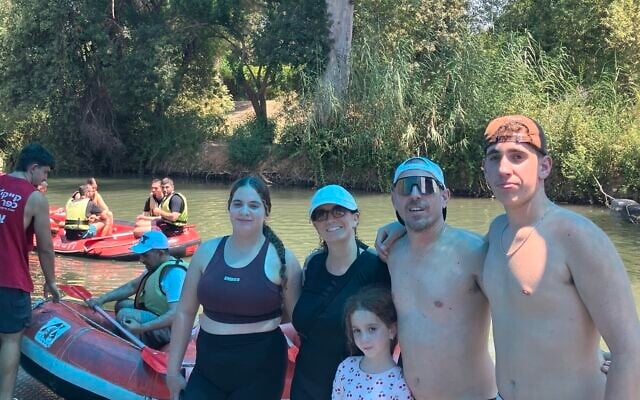
Local businesses are struggling to survive with tourism down by as much as 50 percent. Foreign visitors are absent, and Greenwald said, “A sense of uncertainty hangs over us.”
Behind him, the Jordan River flowed with a steady current along a three-mile trail lined with enormous, shady trees.
“There’s plenty of water in the river, but not so many visitors,” Greenwald said. “I understand their concerns, but I don’t have solutions. How can I build shelters along the river?”
Constant threat: the ‘new normal’
As thousands of Gazan terrorists poured into southern Israel on October 7, invading communities, music festivals and army posts in the deadliest attack on Jews since the Holocaust, northern residents began fleeing as well, in anticipation of a Hezbollah attack.
The following day, the Lebanon-based terror group began firing near-daily barrages of rockets and drones at northern Israel. The government then ordered the evacuation of residents — roughly 60,000 people — from 32 northern communities.
After on-again-off-again fighting since the Hamas invasion, another ceasefire between Israel and Hezbollah, mediated by the Trump administration, was implemented on June 19 of this year, but it too has been periodically broken.
On August 5, two military reservists were killed and four seriously wounded after being hit by an explosive device in the southern Lebanon town of Majdal Zoun, 22 miles from Kfar Blum.
While a war is being waged just over the nearby Lebanese border, residents of Israel’s north remain stoic, carrying on with everyday life — including cultural activities — as best as they can. As such, the Galilee Development Authority has partnered with northern municipalities and regional councils to sponsor “Yalla Galil” from August 8 through August 20, with performances and activities at 15 sites across the Galilee and Golan Heights.
The festival includes events in Druze and Circassian villages, workshops, wine-tasting, and outdoor concerts to draw visitors.
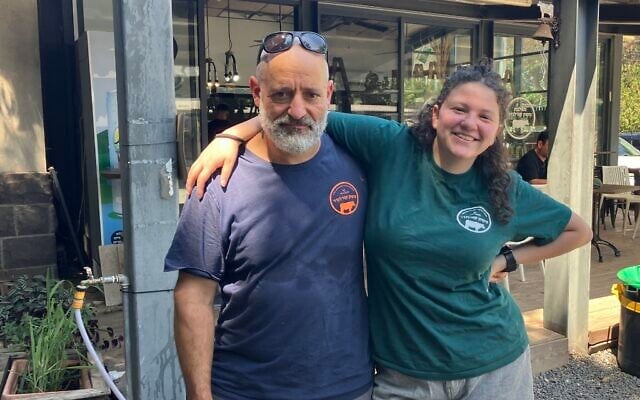
About two and a half miles from the Israeli-Lebanese border is Beit Hillel, a pastoral community with winding roads and tall trees, dotted with guesthouses and family farms.
In 1951, after World War II, Levichi and Lily Kurlender, Romanian immigrants, settled there with their toddler son, Tommy, to start a dairy farm, and received a pregnant cow from the Jewish Agency to get started.
Today, the Kurlenders have a herd of about 500 cows, fruit orchards, and a shop that sells homemade cheeses.
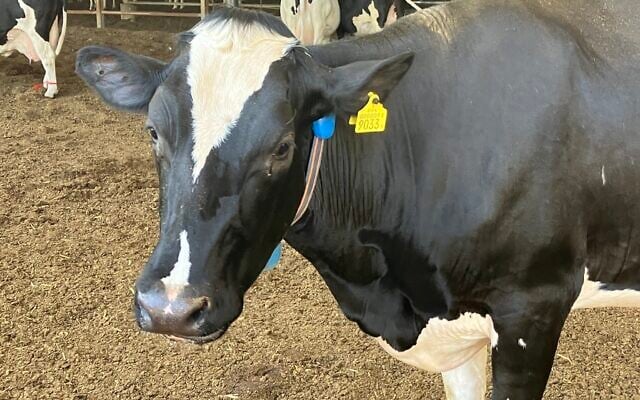
Omer Kurlender, who now manages the farm with his brother, Dror, said that even during the war with Hezbollah, when the family was evacuated, “we didn’t miss one day of milking our cows.”
Omer said that his father Tommy, 79, is “like the sheikh and rabbi of the family who still works on the farm.”
On a recent afternoon, several fourth-generation Kerlunders gave tours of the farm, where visitors fed calves, learned about the milking process, and sampled fresh chocolate milk.
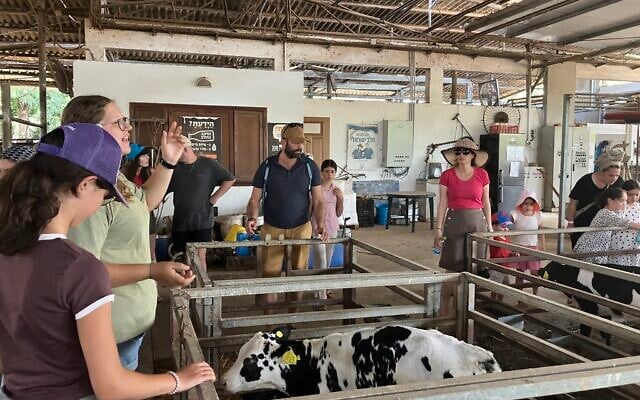
However, Omer said that bookings are down to about 80%, with people reserving space “at the last minute.”
“But I don’t feel any uncertainty,” said Omer, who spent much of the war performing military reserve duty. “The quiet we had before October 7 was fake. Hezbollah had three times more munitions than what Israel estimated.”
Yet he now thinks that the chance of an October 7-style invasion by terrorists from Lebanon is “almost zero.”
“The only problem is that they will bomb us again,” he said.
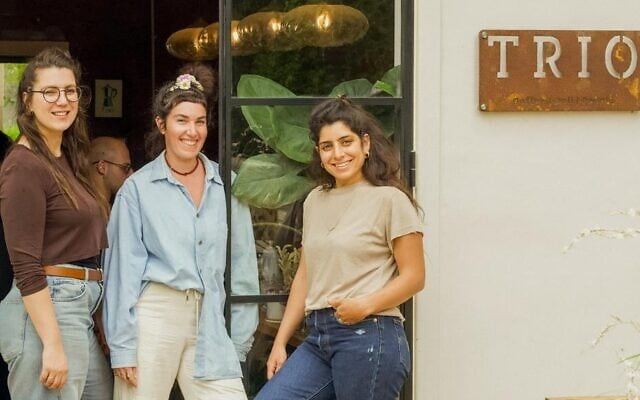
Unlike longstanding family businesses in the region, three young friends decided to take a chance by opening a new cafe in Moshav Sha’ar Yashuv, less than two miles from the Lebanese border, on February 26, 2026.
The grand opening came two days before the US and Israel launched Operation Roaring Lion against Iran, which lasted until early April. A fragile open-ended ceasefire has since been extended multiple times, though repeated Iranian strikes on targets in the Persian Gulf and disagreements over control of the Strait of Hormuz threaten to throw the region back into conflict at any moment.
“We closed after only two days,” said Tamara Nataf, who runs the colorful cafe Trio on the edge of the community’s park with her friends, Dasha Barengolts and Or Kaplan.
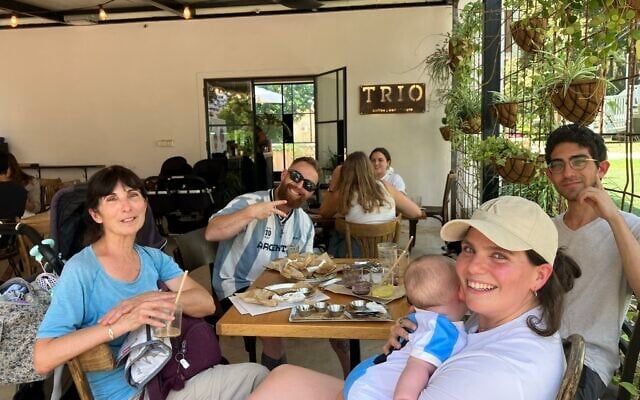
After shuttering for a week, the cafe reopened. Nataf said she and her co-owners are “committed” to staying open even though business is “slow.”
“Tourists haven’t really returned,” Nataf said, looking around. “Almost all the customers here are locals who support us.”
“But we believe that the north needs to exist and develop, and it is especially important now to have a business here, despite the difficulties,” Nataf said. “This is home.”

As a multimedia journalist, my job is to take the quality, fact-based journalism produced by The Times of Israel newsroom and make it accessible across every platform — from Instagram posts to podcasts to short-form videos.
This is how many, especially young people, consume news these days. But misinformation is rampant on social media. Our team at ToI produces accurate, responsible short-form reporting on Israel and the Jewish world.
If you believe in the importance of factual social media journalism, please consider joining our reader support group, The Times of Israel Community. Your financial support is essential to sustain responsible multimedia reporting.
— Gabriella Jacobs, multimedia journalist

We’re really pleased that you’ve read X Times of Israel articles in the past month.
That’s why we started the Times of Israel – to provide discerning readers like you with must-read coverage of Israel and the Jewish world.
So now we have a request. Unlike other news outlets, we haven’t put up a paywall. But as the journalism we do is costly, we invite readers for whom The Times of Israel has become important to help support our work by joining The Times of Israel Community.
For as little as $6 a month you can help support our quality journalism while enjoying The Times of Israel AD-FREE, as well as accessing exclusive content available only to Times of Israel Community members.
Thank you, David Horovitz, Founding Editor of The Times of Israel






Despite ongoing security concerns following the October 7th attacks and subsequent Hezbollah bombardments, Israeli tourism to the Upper Galilee remains significantly reduced, impacting local businesses. Families like the Bocobzas are making day trips to "support local businesses" and encourage others to visit. Eyal Greenwald, marketing manager for Kfar Blum Kayaks, notes a 50% drop in tourism, stating, "There’s plenty of water in the river, but not so many visitors."
- The Galilee Development Authority is sponsoring "Yalla Galil," a festival from August 8-20, featuring cultural activities and performances across 15 sites to attract visitors.
- Omer Kurlender, who manages a long-standing dairy farm in Beit Hillel, reports an 80% decrease in bookings but expresses confidence in the region's future.
- Tamara Nataf and her partners opened Trio cafe in Moshav Sha’ar Yashuv in February 2026, just two days before Operation Roaring Lion, and despite initial closure and slow business, they are committed to staying open, believing "the north needs to exist and develop."
© All rights to the original article belong to the source. Din Online shows a headline, an excerpt and a link only. The objectivity rating is computed automatically and is an estimate only.
Discussion
No comments yet — be the first to comment.