To Palestinians and their supporters: How’s the resistance going?


Here is a question for Palestinians and their supporters around the world: How is the resistance going? Is everyone pleased with the results? Has it benefited Palestinian Arabs themselves?
After decades of war, intifada, rocket fire, mass murder, kidnappings, international campaigns, boycotts, rejected peace offers and billions of dollars in humanitarian aid, the Palestinian people remain stateless and impoverished.
 ThirdReality Zigbee Smart Plug Review: Power Monitoring & Range Extending in 2026
See the review →
ThirdReality Zigbee Smart Plug Review: Power Monitoring & Range Extending in 2026
See the review →
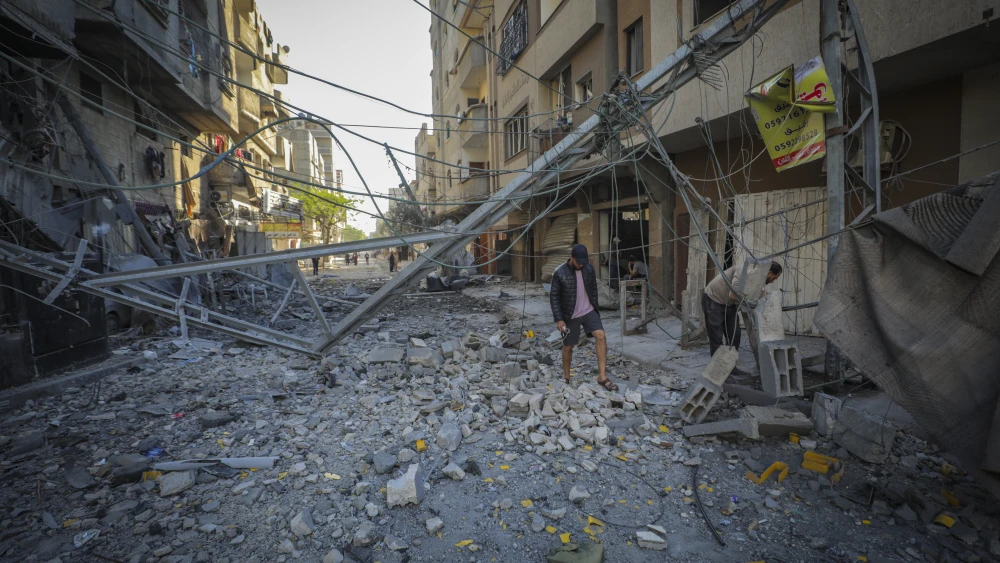
Gaza now lies in ruins after the Palestinians regained control of it in 2005. Perhaps 70,000 people—civilians and combatants—have been killed since the Oct. 7, 2023 Hamas massacre, assuming Hamas figures are accurate. The cumulative death toll rises to 85,000 when those killed in the broader conflict since 1948 are included.
Judea and Samaria are carved into disconnected enclaves. Jerusalem is lost as a Palestinian political capital. So-called Jewish “settlements” have multiplied. With offers of statehood in 1947, 2000 and 2008 turned down by the Palestinian leadership, the Arab world has largely moved on, normalizing relations with Israel without first securing a Palestinian state.
The one area in which Palestinians have objectively succeeded is marketing. They have won an overwhelming victory in the court of public opinion.
Top universities in North America are awash with student camps promoting the Palestinian cause. The New York Times and its ilk have become a gigantic anti-Israel megaphone. The cry of “genocide” reverberates worldwide, particularly in Europe, but as far away as Australia. Jews fear wearing the Star of David, kippahs or anything else that identifies their religion. Armed guards are stationed outside temples, synagogues, Jewish community centers and day schools.
The International Criminal Court accuses Israeli leaders of war crimes. New York City Mayor Zohran Mamdani threatens to arrest Israeli Prime Minister Benjamin Netanyahu before acknowledging that he has no authority to do so.
The United Nations has found the only democracy in the Middle East guilty of criminal behavior more than twice as often as all other nations on the planet put together. There are even “Queers for Palestine,” although gays would likely be tortured or killed in the Gaza Strip. In sharp contrast, Israel features Pride parades. Tel Aviv is widely known as the LGBTQ+ capital of the Middle East and one of the world’s most gay-friendly cities.
In view of these “massive accomplishments,” again: How’s the resistance working out? Sure, you may have won the PR war, but how has that translated into any real accomplishments on the ground?
This is not a hostile or inconsiderate question. It is perhaps the most important question anyone who actually cares about Palestinians could ask. The resistance strategy—violent, stubborn and uncompromising—has been one of history’s most expensive strategic failures. Yet it continues, sustained in part by a global industry whose financial survival depends on it never ending.
Since 1993, more than $50 billion in international aid has flowed to the Palestinian cause. The U.N. Relief and Works Agency for Palestine Refugees (UNRWA) has received billions since it was founded in 1949, with the United States alone providing more than $7.3 billion from 1950 to 2016. Private charities devoted to Palestinian relief collectively raise hundreds of millions more annually. There are now thousands of careers, institutions and funding streams whose existence depends on the Palestinian crisis remaining unresolved.
When a problem becomes an industry, the incentive is not to solve it but to sustain it. Who loses their funding when Palestinian refugees are finally settled and integrated? What happens to UNRWA if there are no longer any refugees?
Do the people who most loudly claim to speak for Palestinians actually serve Palestinian interests or do they serve their own? The people most loudly advocating for the Palestinians are frequently the ones with the most to lose from a peaceful, prosperous Palestinian society that no longer requires their services.
What would it look like for Palestinians to succeed? Not in the sense of defeating Israel, but in the sense of their people living well?
Hong Kong, Taiwan and Estonia, among other countries surrounded by hostile neighbors, built prosperity not through military resistance but through trade, rule of law, open markets and human capital development.
What if Palestinian leadership had, at any point, decided that the primary measure of their success is the economic well-being, education and individual freedom of their people? What if, instead of funneling resources into armed factions and international lobbying campaigns, they had built transparent institutions, embraced civil liberties, cultivated a tech sector and made the present Palestinian enclaves a destination for investment? In other words, what if they actually built a vibrant country?
At least one person is trying this by creating a technology hub in Judea and Samaria. Rawabi, the planned Palestinian city developed by entrepreneur Bashar al-Masri, is a tentative proof of concept. It has faced enormous obstacles, many of them political. But it is at least an attempt at a different strategy, and it points toward a different kind of future.
The definition of strategic failure is not losing a single battle. It is pursuing the same approach, decade after decade, and watching it produce more destruction, more poverty, more displacement and more death than the alternatives you refused to consider. One definition of mental illness is doing the same thing over and over, and expecting a different result each time.
The most radical thing that Palestinian leadership could do right now is not to launch another resistance campaign or fire rockets at Israel. It would be to announce, credibly, that henceforth it will measure success by the flourishing of its people; by school-enrollment rates; per capita income; startup formation; and the quality of hospitals, courts and roads.
The strategy of perpetual resistance has produced perpetual suffering. What if Palestinian leaders choose prosperity instead? That would indeed be revolutionary.



Get the latest updates in our WhatsApp group.







The article questions the effectiveness of the Palestinian "resistance" strategy, arguing that decades of conflict, rejected peace offers, and billions in aid have left Palestinians stateless and impoverished. It highlights the destruction in Gaza since 2005 and the rising death toll, noting that "Judea and Samaria are carved into disconnected enclaves" and Jerusalem is lost as a Palestinian political capital. While acknowledging Palestinian success in public opinion and marketing, the author contends this has not translated into tangible improvements for the Palestinian people. The piece suggests that the "resistance strategy—violent, stubborn and uncompromising—has been one of history’s most expensive strategic failures." It proposes that Palestinian leadership should instead prioritize the well-being, education, and economic prosperity of its people, citing examples like Rawabi as a different approach. The author concludes that measuring success by the flourishing of its people, rather than perpetual conflict, would be a truly revolutionary step.
© All rights to the original article belong to the source. Din Online shows a headline, an excerpt and a link only. The objectivity rating is computed automatically and is an estimate only.
Discussion
No comments yet — be the first to comment.