Trump says US ‘low-keying’ Iran conflict, giving economic pressure time to work
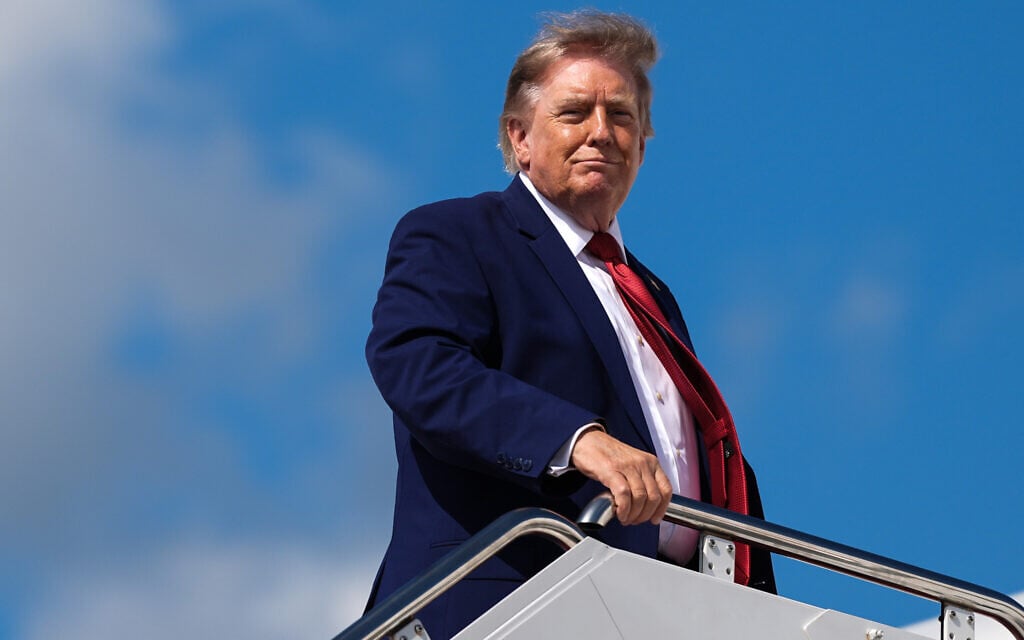
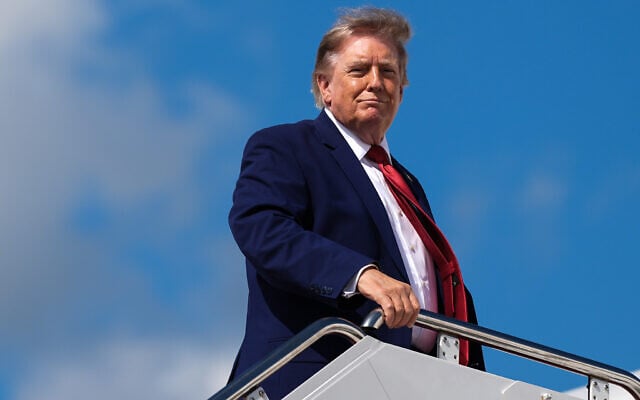
US President Donald Trump said Sunday that Washington was “low-keying” its approach to Iran and only “semi-negotiating” with the Islamic Republic, as it suffers in dire economic straits.
The remarks, made in a brief phone interview with Barak Ravid of Channel 12 and Axios, signaled Trump was forgoing a military strike on Iran and instead preparing to let the mounting economic pressure take its toll.
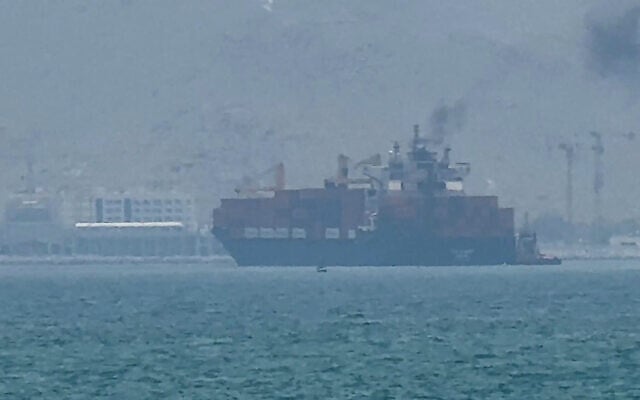
Trump’s comments came after Iran on Saturday laid out drastic new conditions for lifting the blockade on the Strait of Hormuz, which carried about one-fifth of the world’s commercial oil shipments until the US and Israel launched the war on Iran on February 28.
A separate report on Sunday said Trump was preparing to declare victory in the war as long as the strait reopens, even without a deal to secure the end of Iran’s nuclear program. Meanwhile, Tehran doubled down on its demands, and denied holding any direct talks with the US.
Iran’s new demands stymied mediators’ hopes last week that Iran, Oman, and the US would announce a deal to reopen the key waterway, Ravid reported. Trump himself had threatened massive military strikes on Iran only to backtrack at the start of last week, citing a breakthrough in talks.
Nonetheless, according to Ravid, Trump in the phone interview did not threaten Iran or rail against it for holding up the deal, which would give Iran unprecedented control over maritime traffic in the strait.
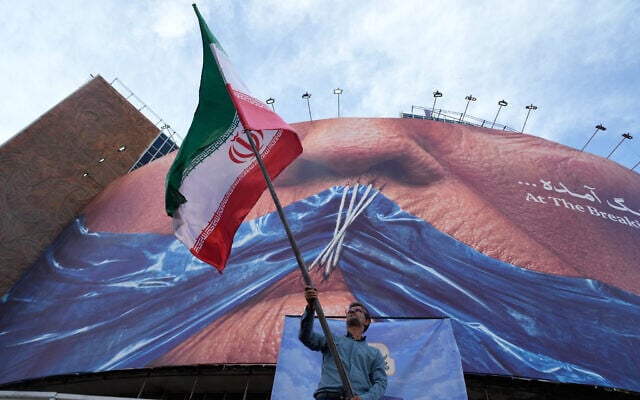
Speaking to Ravid, Trump said, “We are low-keying it,” in the talks with Tehran.
“We are only semi-negotiating with them. We are just watching Iran with its huge inflation and the fact they have no money,” he said. “It will work out. It always works out. It’s like a chess game.”
Trump claimed Iran’s regime was “in very bad shape” financially, with insufficient funds to pay soldiers, and that the US naval blockade on Iran-linked shipping made the Islamic Republic’s economic crisis even worse, according to Ravid.
On the other hand, Trump noted that oil prices, which hiked to over $100 a barrel after Iran shut Hormuz early in the war, have since dropped to about $75, easing the weight of the war on US consumers.
US officials cited in the report said Trump had been convinced since last week to de-escalate the war, with one official saying the halt in the fighting forces Iran to confront its domestic economic crisis.
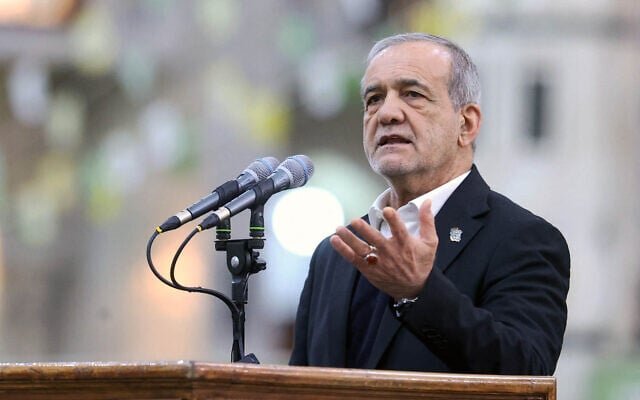
As has been reported elsewhere, the officials cited disagreements within Iran between a camp led by President Masoud Pezeshkian, which supports a deal to avoid economic collapse, and a camp led by Revolutionary Guard Corps commander Ahmad Vahidi, which opposes concessions to the US.
Both sides claim the support of Iran’s Supreme Leader Mojtaba Khamenei, who has not been seen in public since reportedly being wounded in the strike that killed his father and predecessor, Ali Khamenei, at the start of the war.
On Sunday, Mojtaba Khamenei’s office claimed he recently met with Pezeshkian “at the start of his third year in the presidency” and the two “discussed in detail the country’s issues and problems,” including the “current military situation and future prospects.”
Pezeshkian, who took office in July 2024, had said in early May that he met with Khamenei, also without specifying the date, but the supreme leader’s office did not issue any statements at the time.
The president had said on Wednesday that communication with Khamenei was “very difficult at the moment,” amid speculation about the supreme leader’s health.
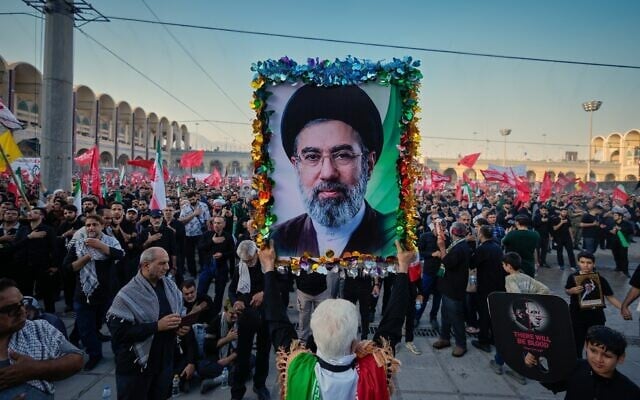
Mojtaba Khamenei has remained in hiding since becoming supreme leader after his father’s death. To avoid being targeted, he reportedly communicates with other senior regime figures via a slow array of intermediaries. Khamenei has produced no recordings, though Iranian state media has published written statements attributed to him.
On Sunday, Iran’s semi-official Tasnim news agency cited an IRGC general as saying images of Khamenei among people and in meetings would be published “in the future.” The general did not offer a timeline.

As a multimedia journalist, my job is to take the quality, fact-based journalism produced by The Times of Israel newsroom and make it accessible across every platform — from Instagram posts to podcasts to short-form videos.
This is how many, especially young people, consume news these days. But misinformation is rampant on social media. Our team at ToI produces accurate, responsible short-form reporting on Israel and the Jewish world.
If you believe in the importance of factual social media journalism, please consider joining our reader support group, The Times of Israel Community. Your financial support is essential to sustain responsible multimedia reporting.
— Gabriella Jacobs, multimedia journalist

We’re really pleased that you’ve read X Times of Israel articles in the past month.
That’s why we started the Times of Israel – to provide discerning readers like you with must-read coverage of Israel and the Jewish world.
So now we have a request. Unlike other news outlets, we haven’t put up a paywall. But as the journalism we do is costly, we invite readers for whom The Times of Israel has become important to help support our work by joining The Times of Israel Community.
For as little as $6 a month you can help support our quality journalism while enjoying The Times of Israel AD-FREE, as well as accessing exclusive content available only to Times of Israel Community members.
Thank you, David Horovitz, Founding Editor of The Times of Israel



US President Donald Trump stated on Sunday that Washington is "low-keying" its approach to Iran, opting for economic pressure over military action. In a phone interview, Trump indicated the US is "only semi-negotiating" with Iran, which is experiencing severe economic difficulties. This strategy follows Iran's new conditions for reopening the Strait of Hormuz, a critical oil shipping route, which the US and Israel blockaded in February. Trump believes Iran's regime is in "very bad shape" financially, exacerbated by the US naval blockade. Meanwhile, internal disagreements within Iran's leadership regarding a deal to avoid economic collapse are reported, with Supreme Leader Mojtaba Khamenei's health and public appearances remaining a subject of speculation.
© All rights to the original article belong to the source. Din Online shows a headline, an excerpt and a link only. The objectivity rating is computed automatically and is an estimate only.
Discussion
No comments yet — be the first to comment.