Trump: ‘Unbelievably duplicitous’ Iran begged for talks, now denies they’re happening
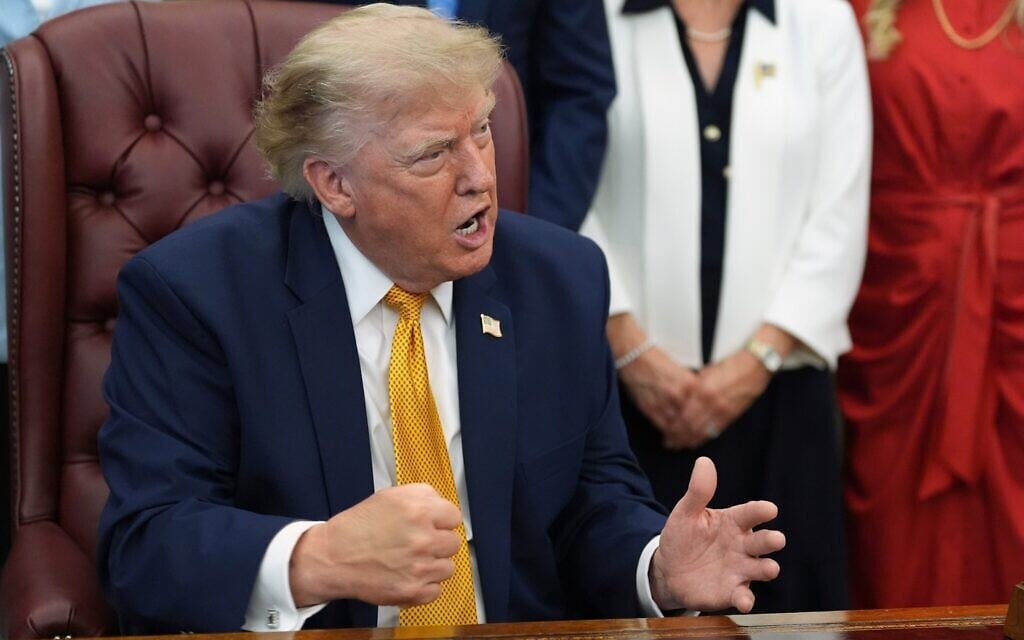
US President Donald Trump on Monday said that Washington and Tehran were currently engaged in talks, pushing back on Iranian claims to the contrary and accusing the Islamic Republic of being “unbelievably duplicitous.”
In a post on his Truth Social platform, Trump lashed out at Iran and insisted that negotiations over reopening the Strait of Hormuz had already begun and that more were scheduled imminently.
“Iranian Leadership is unbelievably duplicitous! They ask for a meeting, some would say ‘beg.’ Talks begin, with more scheduled in the immediate future, and they say, openly and proudly, that they’re not having any discussions, that nothing is being talked about, and they’re only dealing with Oman,” Trump wrote.
“They then go on to give their usual blather in saying, the Strait of Hormuz will be operated powerfully by them, when it is already completely controlled by the United States Navy and our blockade,” the US president asserted.
“Nothing gets through to Iran, unless we want it to, and nothing will get through unless a deal or total surrender is accomplished,” Trump added. “Whether Iran wants to admit it or not we are, in fact, talking of a solution to a problem that they have caused for decades,” he continued. “It is very simple, IRAN WILL NEVER HAVE A NUCLEAR WEAPON!”
However, the CBS News site reported Monday, citing unnamed US officials, that no “new” talks were planned beyond the ongoing indirect talks between American envoys Steve Witkoff and Jared Kushner and the Iranian team.
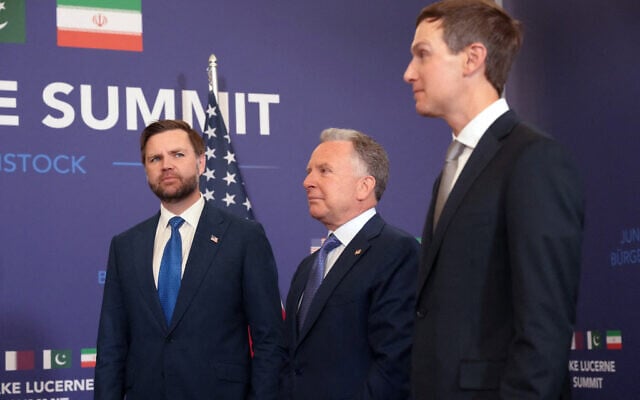
Earlier Monday, Iranian foreign ministry spokesman Esmaeil Baqaei said that Tehran is “not currently negotiating with the United States. Our negotiations are with Oman to secure passage through the Strait of Hormuz.”
Speaking to reporters in the White House later Monday, Trump asserted again that the US was engaged in talks with Iran that could see the Strait of Hormuz fully reopened by as early as Tuesday.
After that, the sides will hold talks on an agreement aimed at the “denuclearization” of Iran, he said.
“The first phase is the opening of the straits. The second phase will be the denuclearization,” the US president said. “And that will take a little while.”
Trump claimed that the current talks with Iran are its “last chance to sign a good document.”
Asked by a reporter how Americans view him repeatedly making grim threats on Tehran before backing away, Trump responded that he is showing patience out of a consideration for Iranian life.
“I want to give them every last chance before decapitation,” Trump said. He added, “Hopefully, they’ll come to their senses.”
The US president also said that major oil companies are making “too much money” due to high prices stemming from the crude shortage caused by the Iran war.
Trump said he decided to hold off on ordering American forces to carry out new massive strikes against Iran at the urging of Gulf allies Qatar, Saudi Arabia, and the United Arab Emirates.
He said that a plan was in place for US forces to carry out “the biggest attack since World War II” on Sunday. But he decided to scrap the plan and give diplomacy more time to play out after hearing from key Gulf leaders — including Saudi Crown Prince Mohammed bin Salman — as well as at the request of unnamed Iranian officials.
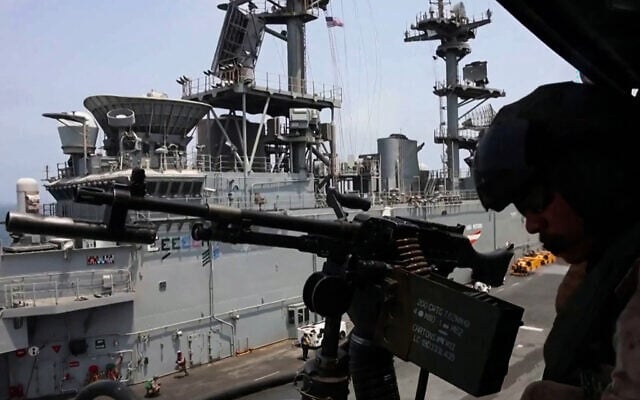
Trump has threatened to escalate attacks on Iran only to edge away from his threats several times since the start of US and Israel strikes on February 28.
Critics say his hesitation might reflect an unspoken understanding inside the administration that US military might alone may not be enough to compel Iran to back down and bring an end to a now months-long war that Trump had earlier downplayed as a weeks-long excursion.
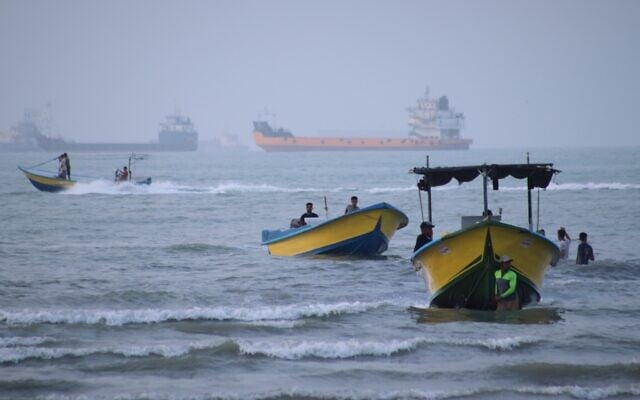
The Hormuz strait is a major sticking point in efforts to end the war. Since a ceasefire broke down, Iran has reprised a blockade of the critical trade corridor it first imposed early in the war, obstructing vessels attempting to pass and firing on commercial ships.
On Sunday, Baqaei told state television that a deal was close on managing Hormuz together with Oman, which sits on the other side of the narrow waterway.
“We are now going to reach an understanding on a route acceptable to both sides — neither the northern route nor the southern route — but one that respects the sovereign rights of both sides and safeguards our national interests and security,” he said.
But he insisted that such an agreement did not mean the reopening of the strait.
Times of Israel staff contributed to this report.

The war with Iran has been draining for all of us in Israel. But when I heard about a high casualty incident – ballistic missile impacts in Arad and Dimona that left nearly 200 people wounded – I drank a cup of coffee, packed a bag, and headed south.
There, I spoke with Shilgit, the head of an after-school program for underprivileged youth. Standing outside her destroyed center, Shilgit said it was a miracle that no children were hurt and spoke about the community coming together in the hours since.
As a Times of Israel reporter, I’m committed to telling stories of resilience like Shilgit’s. But my colleagues and I can't do this alone. If you value work like this, please consider joining our reader support group, The Times of Israel Community. Your financial support is essential to keep real human reporting like this going.
— Stav Levaton, military reporter

We’re really pleased that you’ve read X Times of Israel articles in the past month.
That’s why we started the Times of Israel – to provide discerning readers like you with must-read coverage of Israel and the Jewish world.
So now we have a request. Unlike other news outlets, we haven’t put up a paywall. But as the journalism we do is costly, we invite readers for whom The Times of Israel has become important to help support our work by joining The Times of Israel Community.
For as little as $6 a month you can help support our quality journalism while enjoying The Times of Israel AD-FREE, as well as accessing exclusive content available only to Times of Israel Community members.
Thank you, David Horovitz, Founding Editor of The Times of Israel
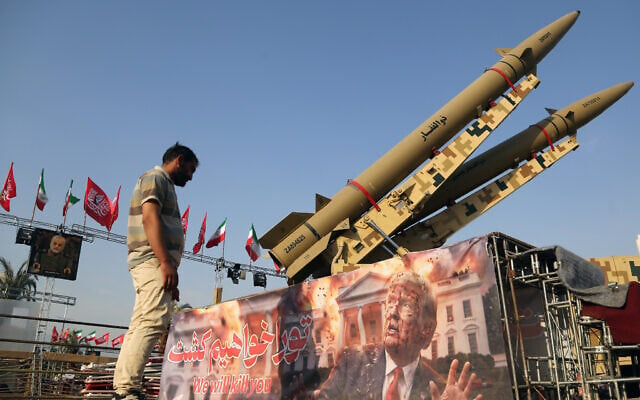
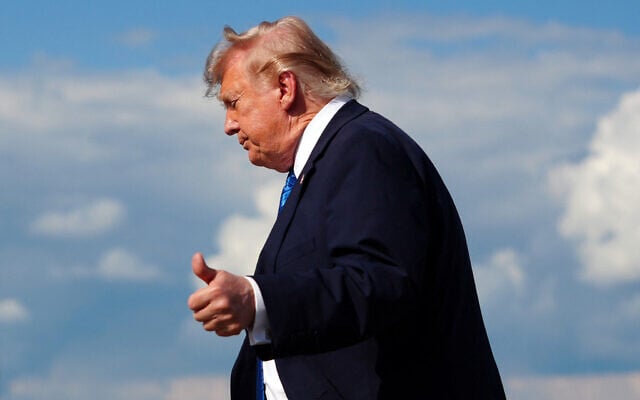

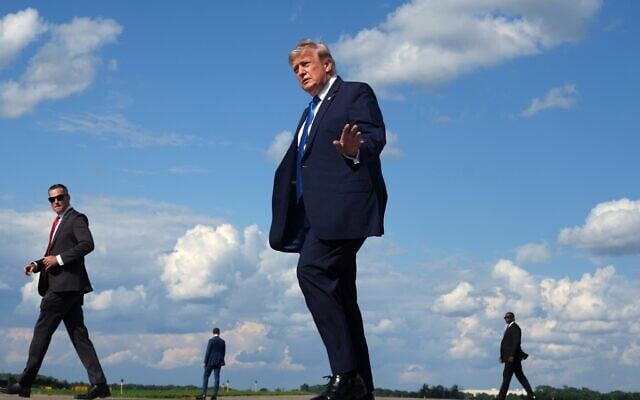




US President Donald Trump stated on Monday that Washington and Tehran were engaged in talks, despite Iranian denials, accusing Iran of being “unbelievably duplicitous.” Trump asserted that negotiations over reopening the Strait of Hormuz had begun, with more scheduled, and that Iran was also giving “their usual blather in saying, the Strait of Hormuz will be operated powerfully by them, when it is already completely controlled by the United States Navy and our blockade.” He claimed these talks were Iran's “last chance to sign a good document” and that the first phase would be the opening of the straits, followed by denuclearization. Earlier, Iranian foreign ministry spokesman Esmaeil Baqaei stated Tehran was “not currently negotiating with the United States,” but rather with Oman regarding the Strait of Hormuz. CBS News, citing unnamed US officials, reported no new talks were planned beyond ongoing indirect discussions.
© All rights to the original article belong to the source. Din Online shows a headline, an excerpt and a link only. The objectivity rating is computed automatically and is an estimate only.
Discussion
No comments yet — be the first to comment.