Vance: Confrontation will end with Tehran having no nuclear weapons
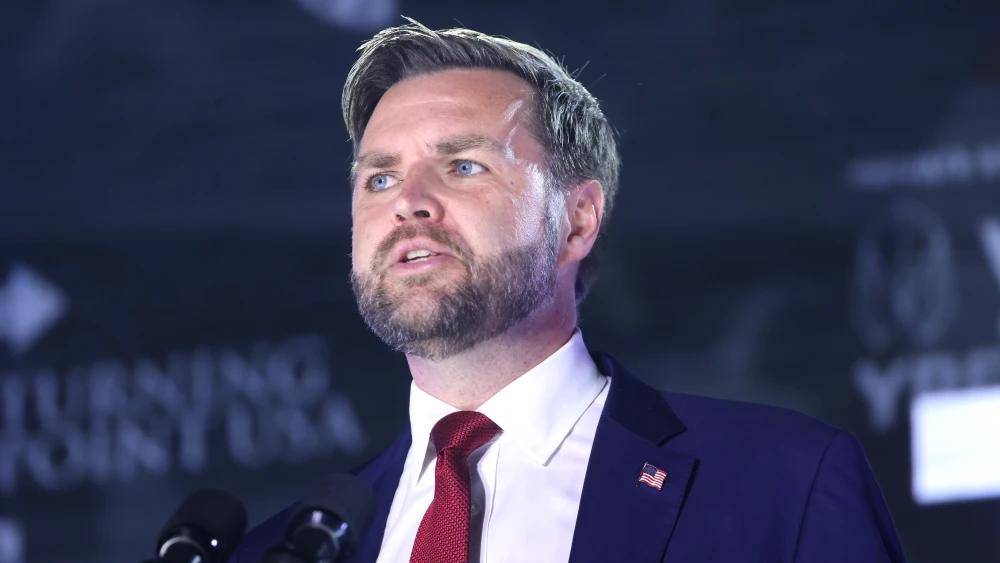
The confrontation with Iran will end with the United States in a stronger position and Tehran prevented from producing nuclear weapons, U.S. Vice President JD Vance said on Thursday.
“The thing I can say with confidence is I think this ends with the United States in a stronger position, with Iran not having a nuclear weapon, and with the Strait of Hormuz returned to a place where oil and gas prices are stable for the American people,” Vance told “The Will Cain Show” on Fox News.

The vice president was responding to a question about the seemingly shifting nature of the Trump administration’s approach to Iran, including alternating threats of military action and prospects for a diplomatic agreement. Vance attributed the uncertainty in part to Tehran’s conduct.
“The Iranians sometimes make commitments that they don’t honor. They make a deal, they don’t honor the deal,” he said.
U.S. President Donald Trump is using the tools at his disposal “very selectively, very strategically” to achieve Washington’s objectives, Vance said.
“What is really happening is that you’re seeing a president of the United States at the height of his authority with a lot of tools, diplomatic, military and economic,” he said.
He identified two principal goals: maintaining the flow of energy from Gulf states to the global economy, and preventing Iran from obtaining nuclear weapons.
“Goal No. 1, keep oil and gas cheap for Americans all over our country,” Vance said. “And then obviously, goal No. 2 is to ensure that Iran never gets a nuclear weapon.
“I feel confident we’re accomplishing both of those goals, but it’s inherently an unpredictable thing, because the Iranians themselves are unpredictable, and they sometimes don’t honor the commitments they’ve made to us,” he added.
Vance’s remarks came a day after Trump signaled that the United States would maintain its blockade of Iranian ports, which Washington reinstated on July 14.
“The USA has total control over the Strait of Hormuz. I think we will keep it!” Trump wrote on Truth Social on Wednesday. “Our naval blockade is being called, by everyone, ‘a wall of steel,’ and there is nothing Iran can do about it.”
U.S. Central Command said on Wednesday that American forces had redirected 59 commercial vessels as part of the renewed naval blockade. Three vessels had been disabled and two boarded, according to the command.
Trump also reiterated this week that he does not trust Tehran to honor its commitments.
“I don’t trust Iran. Why—are you saying I trust Iran? I’m the last person to trust Iran. They’ve lied to me constantly,” Trump told reporters on Tuesday at Joint Base Andrews in Maryland.
“We have total control over the Hormuz strait right now. They don’t have control. We have total control. We own it,” he added.
The president has nevertheless signaled that he is prepared to allow economic pressure on Tehran to build rather than immediately resume major military operations.
“We are low-keying it,” Trump said on Sunday, adding that Washington was “only semi-negotiating” with Tehran as the Iranian economy comes under increasing pressure.
Trump said Iran was “in very bad shape” economically and unable to pay its troops because of the blockade.


Get the latest updates in our WhatsApp group.



U.S. Vice President JD Vance stated on Thursday that the confrontation with Iran will conclude with the U.S. in a stronger position, preventing Tehran from acquiring nuclear weapons, and stabilizing oil and gas prices via the Strait of Hormuz. Speaking on Fox News's "The Will Cain Show," Vance addressed the Trump administration's approach, noting that Iran's unpredictability and failure to honor commitments contribute to the shifting strategy. He emphasized that President Trump is using diplomatic, military, and economic tools to achieve two main goals: maintaining the flow of energy from Gulf states to the global economy and ensuring Iran never obtains a nuclear weapon. Vance's remarks followed President Trump's affirmation of the U.S. naval blockade of Iranian ports, which he described as a "wall of steel," and his assertion that the U.S. has "total control over the Strait of Hormuz." Trump also reiterated his distrust of Iran, stating, "I don’t trust Iran. They’ve lied to me constantly." Despite this, Trump indicated a preference for continued economic pressure over immediate major military operations, noting that Iran is in "very bad shape" economically due to the blockade.
© All rights to the original article belong to the source. Din Online shows a headline, an excerpt and a link only. The objectivity rating is computed automatically and is an estimate only.
Discussion
No comments yet — be the first to comment.