Al-Sharaa is looking for freedom of action
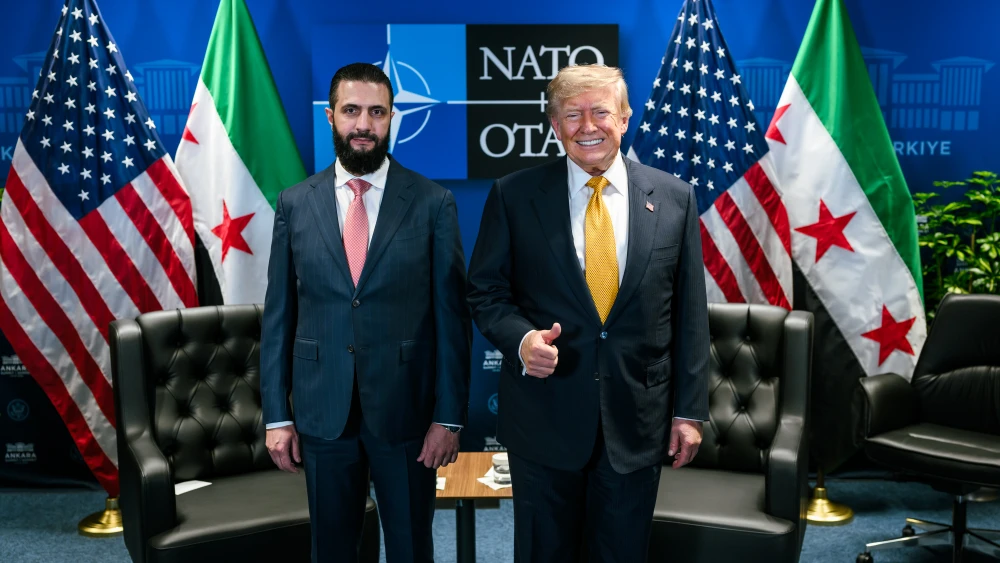
Less than two years ago, it would have been difficult to imagine Ahmed al-Sharaa, the man whose forces overthrew longtime Syrian President Bashar Assad, reaching an understanding with the country that kept Assad in power, bombed his opponents for years and eventually provided refuge to the deposed Syrian president.
Yet that is precisely what has now happened.

On Aug. 9, Syria and Russia announced understandings regarding the future of Russia’s presence at the Hmeimim airbase and the port of Tartus after some 18 months of negotiations. Under the new framework, Damascus is to regain greater control over the sites, while Russia maintains a reduced military role.
Moscow is not being expelled from Syria, but neither is it retaining the extraordinary freedom of action and privileged position it enjoyed under Assad. Nonetheless, the arrangement is already moving from paper to practice. On Aug. 12, Syria began operating a commercial berth at Tartus previously used by Russian forces while Russian military personnel are expected to remain.
The timing makes the development even more interesting. Only days earlier, Damascus reportedly told Washington that it was prepared to sharply reduce its imports of Russian oil as Washington moved to complete Syria’s removal from the U.S. list of state sponsors of terrorism, the last major American sanctions designation still in place.
At first glance, the two moves appear contradictory. Al-Sharaa is signaling to Washington that he is willing to reduce Syria’s economic reliance on Moscow while simultaneously allowing Russia to maintain a military foothold in the country.
But the contradiction may be the point. Al-Sharaa does not appear to be searching for a new patron to replace Syria’s old ones. He seems to be trying to ensure that Syria will never again become dependent on a single patron in the first place.
Under Assad, Syria’s dependence on Russia and Iran became nearly existential. Tehran provided money, weapons, militias and strategic depth. Moscow supplied air power, diplomatic protection and the decisive military intervention that allowed Assad’s regime to survive long after it might otherwise have collapsed.
That dependence saved the regime, but it came at a price. Syria gradually became an arena in which foreign powers acquired enormous influence over Syrian territory, military infrastructure and strategic decision-making.
Al-Sharaa seems determined to build a different model. He needs Turkey, but that does not mean he wants Syria to become a Turkish client state. He needs Gulf investment, but he has little reason to replace military dependence on Tehran with financial dependence on any single Arab capital. He needs Washington to complete Syria’s return to the international system, attract investment and remove remaining restrictions, but he cannot afford to present himself as the leader who moved Syria into the Western camp.
Russia, despite everything it did to keep Assad in power, may still have something to offer Syria. If Moscow’s influence can be reduced, contained and converted from domination into leverage, there is little reason for Damascus to eliminate it.
This is the emerging pattern: Turkey for trade, security and geographic access; the Gulf states for capital and reconstruction; Washington and Europe for international legitimacy and economic integration; and Russia for whatever military, diplomatic or strategic value can still be extracted from the relationship.
Instead of being dependent on one or two powers, Damascus may be trying to become moderately dependent on many. That is not indecision. It is a strategy of diversification.
I argued recently in these pages that the strategic window opened by Assad’s fall was beginning to close, and unless Israel, the United States, and pragmatic Arab states acted, Turkey was best positioned to fill the vacuum and become the dominant external power shaping Syria’s future.
That assessment still stands. But the latest developments add an important layer to it: Al-Sharaa himself may understand the danger of replacing one dependency with another. His objective might not be to exchange Russia for Turkey. It could be to balance Turkey, Russia, Saudi Arabia, the United States and Europe against one another in a way that steadily increases Damascus’s freedom of action.
Israel should pay close attention, because it changes the question Israel should be asking about Syria. The most common question is whether al-Sharaa is a friend or an enemy. There is no basis for Israel to treat al-Sharaa as a friend. His jihadist past cannot simply be erased, nor should Israel ignore the violence against minorities that has occurred under the new Syrian order or Damascus’s opposition to Israel’s presence in southern Syria. Israel should judge the new regime by its actions, not by Western hopes or reassuring speeches.
But there is another question that may be equally misleading: Which camp does Syria now belong to? Perhaps al-Sharaa does not want Syria to belong to any camp at all. That is not necessarily bad for Israel.
Israel does not need a pro-Israel Syria. Such an expectation would be unrealistic for the foreseeable future. What Israel needs is a Syria that does not once again become an Iranian corridor, does not allow jihadist organizations to establish themselves along Israel’s border and does not become an exclusive strategic platform for Turkey, Russia or any other regional power.
A more sovereign Syria could therefore become more challenging for Israel tactically while being preferable strategically. The stronger the Syrian state becomes, the less willing it will be to tolerate a prolonged Israeli military presence on Syrian territory. Damascus has already made clear that it seeks a security arrangement with Israel while insisting on the restoration of Syrian sovereignty. Israel cannot ignore that demand, nor can it abandon the security requirements that led it to act in southern Syria in the first place.
The challenge for Israel is to protect its legitimate security interests without creating new strategic incentives for Damascus to seek external protection. If the Syrian leadership concludes that it cannot safeguard its sovereignty or withstand Israeli pressure on its own, it will have a stronger incentive to deepen its reliance on Turkey, Russia or another external power. Israel should not, through its own policies, give al-Sharaa a reason to search for a protector.
The strategic objective should be a Syria capable of resisting foreign domination without becoming a direct security threat to Israel.
If every Syrian move toward Washington is dismissed as deception, every agreement with Moscow treated as proof that nothing has changed and every relationship with Ankara seen as evidence that Syria has already become a Turkish satellite, Israel risks misunderstanding the strategy taking shape in Damascus.
Al-Sharaa appears to be keeping as many doors open as possible. Israel should maintain clear red lines regarding Iranian activity, jihadist organizations, southern Syria and the security of the Druze population, while remaining skeptical, alert and prepared to act when its security is threatened.
At the same time, Israel should recognize a potentially important strategic interest: a Syrian government strong enough to resist becoming someone else’s proxy. For decades, Syria was valuable to its allies precisely because it depended on them. Al-Sharaa may now be attempting the opposite, making Syria useful to many powers so that no single one can dominate it.
Israel should understand the difference before its own policies help push Damascus back into a dominating protector’s arms.


Get the latest updates in our WhatsApp group.

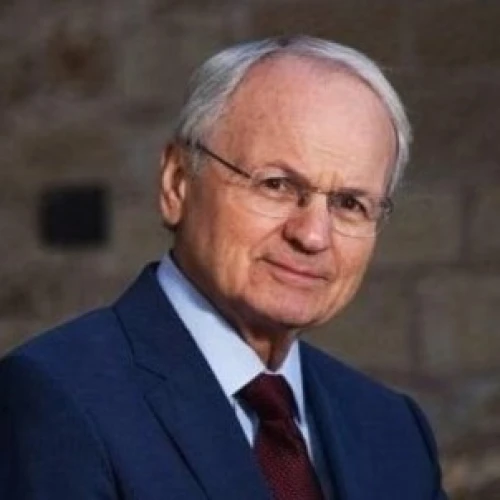
Ahmed al-Sharaa, the new leader of Syria, is pursuing a strategy of diversification to prevent the country from becoming dependent on a single foreign power. This approach is evident in recent understandings with Russia, announced on August 9, where Syria is regaining greater control over the Hmeimim airbase and Tartus port, while Russia maintains a reduced military presence. Concurrently, Damascus has reportedly signaled to Washington a willingness to reduce Russian oil imports as the U.S. considers removing Syria from its list of state sponsors of terrorism.
Al-Sharaa does not appear to be searching for a new patron to replace Syria’s old ones.
Instead, he aims to balance relationships with multiple powers—Turkey for trade, Gulf states for investment, Washington and Europe for legitimacy, and Russia for military and diplomatic value—to increase Syria's freedom of action. For Israel, this shift means a more sovereign Syria could be tactically challenging but strategically preferable, as it might resist becoming a proxy for other regional powers. Israel should maintain clear red lines but avoid policies that push Damascus towards a new dominating protector.
© All rights to the original article belong to the source. Din Online shows a headline, an excerpt and a link only. The objectivity rating is computed automatically and is an estimate only.
Discussion
No comments yet — be the first to comment.