His pelvis was made for walking. Hers? Not so much, claims study of Neanderthal bones
Zev Stub is the Times of Israel's Diaspora Affairs correspondent.The reason men and women walk differently may derive from an evolutionary development that made human males more efficient walkers than their Neanderthal ancestors, according to a new Tel Aviv University study published in Scientific Reports.While male pelvises have adapted over time to cushion the body from the impact of walking and minimize energy expenditure, women’s pelvises did not evolve the same way, due to constraints related to female reproductive systems. Female pelvises therefore remained anatomically similar to those of our Neanderthal ancestors who lived between 130,000 and 40,000 years ago, according to research led by Prof. Yoel Rak of TAU’s Department of Anatomy and Anthropology. The study was conducted in collaboration with researchers from Spain, the Technion, Bar-Ilan University and Ono Academic College.The findings — admittedly based on a small sample size — may have new implications for the study…

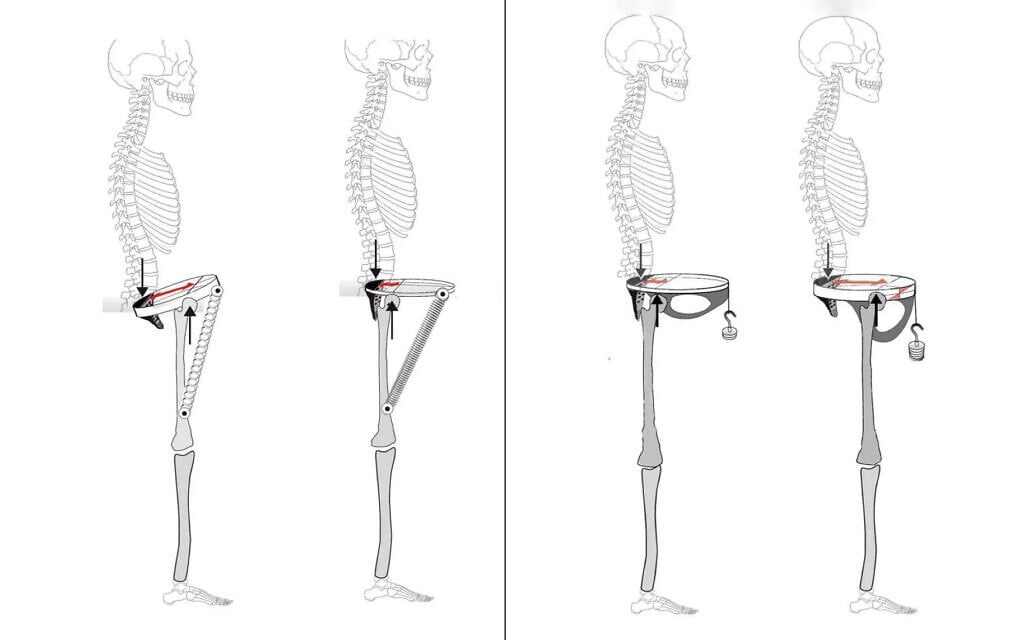
A new Tel Aviv University study published in Scientific Reports suggests that differences in male and female walking efficiency stem from evolutionary changes in the male pelvis. Research led by Prof. Yoel Rak indicates that the male pelvis evolved to position hip joints farther forward, creating a biomechanical shock-absorbing mechanism that makes long-distance walking more efficient. This adaptation, which enables thigh muscles to "cushion the drop of the body's center of mass, store potential energy during the step, and then release that energy immediately afterward," was not adopted by females due to constraints related to childbirth, leaving their pelvic structure more akin to Neanderthals. The study, based on two nearly complete male Neanderthal pelvises, challenges previous assumptions about Neanderthal pelvic structure and has implications for understanding historical gender roles and modern musculoskeletal medicine.
© All rights to the original article belong to the source. Din Online shows a headline, an excerpt and a link only. The objectivity rating is computed automatically and is an estimate only.
Discussion
No comments yet — be the first to comment.