Hundreds of underage migrants stuck in Ceuta after border breach
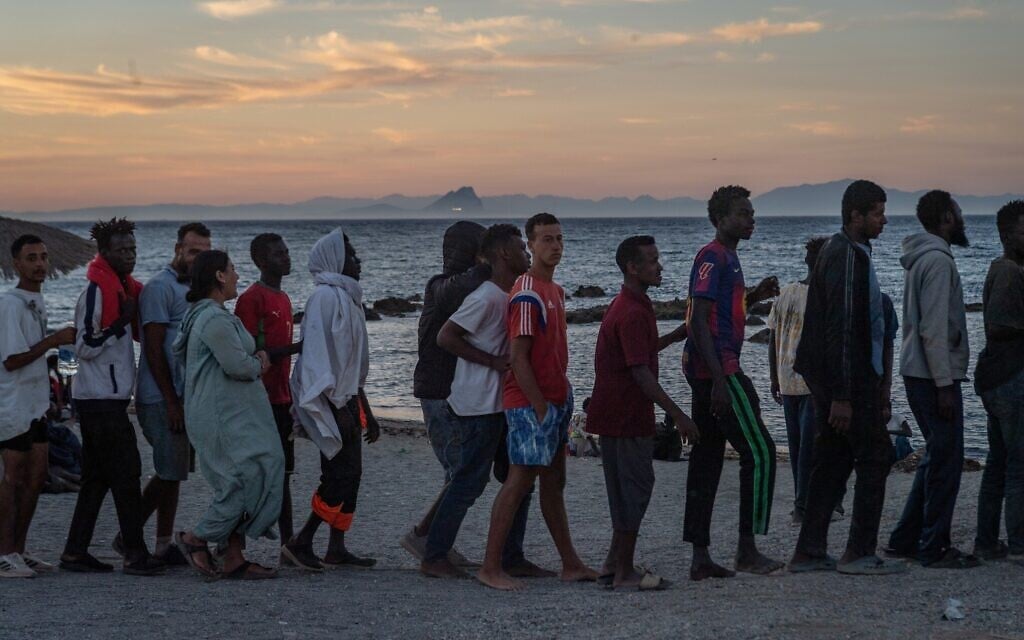
CEUTA, Spain (AP) — The teenage girl made it through the waves to Spanish territory. Her little brother did not, drowning in the Mediterranean, while their mother disappeared in the chaos when tens of thousands of people surged through the breakwater, trying to leave Morocco behind.
The tragic story of a 17-year-old from Tangier is representative of the plight of many of the more than 800 minors who, four days after the collective push by migrants into Ceuta, face a scary present and an uncertain future.
She told an Associated Press photojournalist how she and her family joined the massive crowd that tried to swim around a border fence to reach the Spanish territory on Thursday. Like many, she said they did so seeking better opportunities. The AP is withholding her identity because she is a minor in a vulnerable situation.
She described how she saw Spanish police pull the body of her 8-year-old brother from the water.
She made it to the shore but became separated from her mother, and has spent the last four days on her own. She said some locals gave her food and some clothing, with one woman taking her into her home so she could bathe. She then went to a center for youths run by the government for some help, but found it was full.
“I saw people stepping on the dead,” she said through a translator since she doesn’t speak Spanish. “Now we are children begging on the street.”
She is one of some 860 minors who remained in Ceuta on Monday after crossing over, according to local officials. AP journalists saw other minors asking for food.
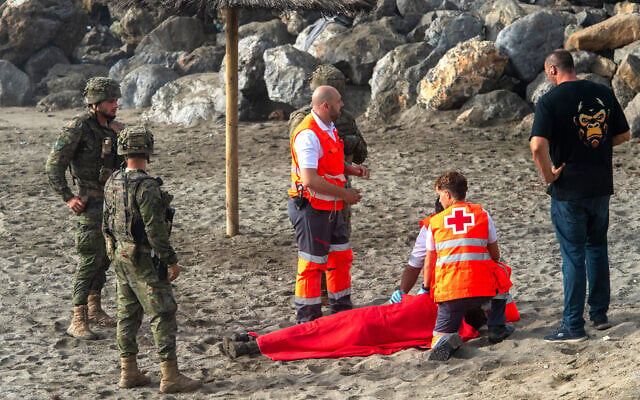
Those minors now make up a large part of the 3,000-5,000 migrants who have avoided expulsion from Ceuta, of the original 60,000 who came across. Spanish authorities confirmed 72 people died, mostly in the water, during the crossing. Morocco reported 11 deaths, which are not included in the Spanish total, the Spanish Interior Ministry said.
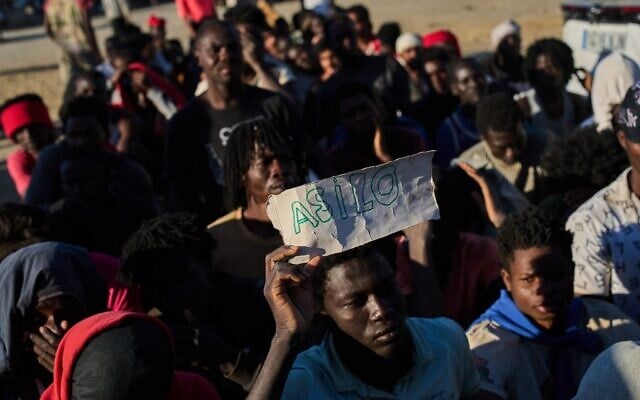
Spanish law says that adult migrants can apply for asylum. If rejected, they will face expulsion procedures. The bar is normally very high for Moroccans to be granted humanitarian protection.
Migrant minors who are unaccompanied by adults, however, are supposed to be granted protection and taken care of by Spanish authorities.
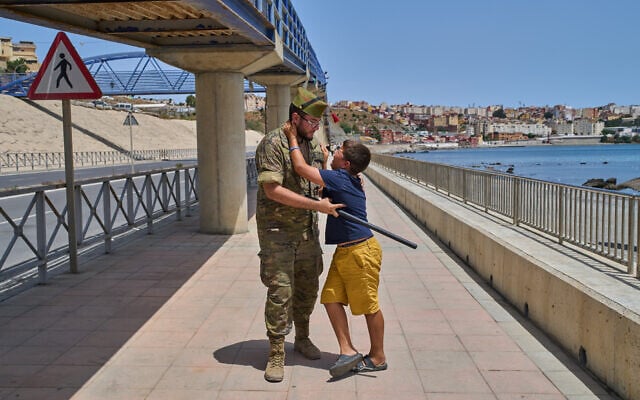
An AP journalist witnessed Spanish soldiers escorting an unaccompanied Moroccan boy who was crying and begging not to be sent back to Morocco. A few meters before reaching the border, and due to pressure from local residents who insisted he was a minor, as well as the presence of the media, a lieutenant colonel in the Spanish Army stopped the repatriation and transferred the boy to the Spanish Civil Guard.
Most of the Moroccan adults have either voluntarily gone home or were pushed back by Spanish police. Among those who remain in Ceuta are significant numbers of people from other countries, including Sudanese fleeing their war-torn country, Palestinians from Gaza, and Afghans, as well as people from several African nations.
The city’s migrant center with a capacity for 600 people is completely full. Food is scarce among the migrants, according to reporting by AP journalists.
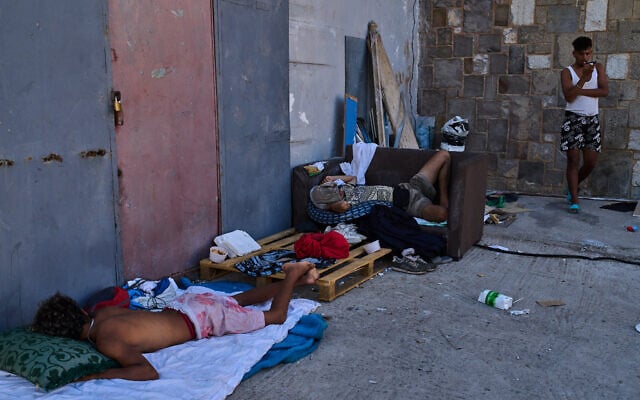
“The strategy is that hunger, thirst and exhaustion forces these people to finally decide to voluntarily return to Morocco,” said local migration activist Ramsés Mohamed Azumik of Asociación Elín.
Many migrants sleep or rest on the beach or hills surrounding the speck of Spain. In the hazy distance, mainland Europe, their ultimate goal, lies across the sea.
It started with Instagram posts that suggested Spain’s border with Morocco was opening up. Then came Facebook users tracking coast guard patrols and TikTok videos showing where to swim.
After many shares and comments, thousands of Moroccans became convinced that Europe was suddenly within reach.
Within hours, young people began heading toward the border with Ceuta. Packed buses rolled into the neighboring Moroccan city of Fnideq. Regional trains filled up. Taxis did too.
In the northern Moroccan city of Larache, about 93 miles (150 kilometers) from Ceuta, three friends watched a video posted by an Instagram account called Haraga Ceuta claiming the border would be open. Haraga refers in Moroccan dialect to young migrants who destroy their identification papers and try crossing illegally into Europe.
The post convinced Anas Amrani, Yahya Harak and Ismail Atik that it was worth risking the journey.
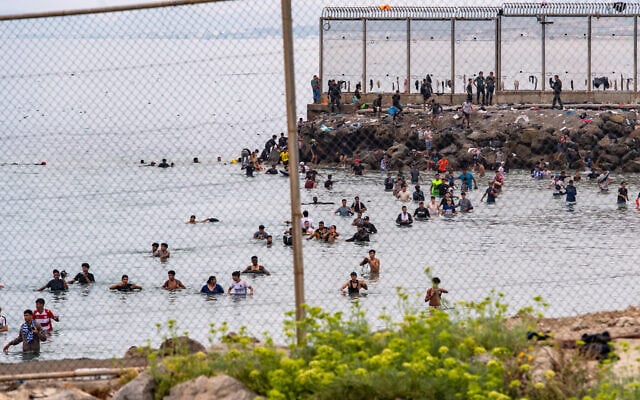
For migrants hoping to reach Spanish territory, the most common route begins in Fnideq, where many attempt the roughly 3-mile (5-kilometer) swim around the border breakwater. Others leave from the nearby village of Belyounech.
One TikTok video mapped the exact route swimmers should follow.
On Facebook groups such as Fnideq Bab Sebta, users shared screenshots from vessel-tracking platforms to identify moments when coast guard patrols appeared lighter. Some sought advice on using inflatable boats. Others advertised wetsuits for sale.
“I saw online that the border was open, and I decided to go,” said 17-year-old Omar Danbor from Fnideq, walking back exhausted along the coast.
It’s unclear who was behind the claims that the border was open or who operated many of the social media accounts, several of which were deleted soon after the crossings. The Associated Press contacted several accounts but received no response.
As migrants reached the shores of Ceuta, mass chaos erupted at a narrow concrete breakwater where many tried to climb onto land.
According to multiple migrants interviewed by AP, people rushed to scramble over the slick rocks at the same time, pushing and climbing over one another. Several said they saw people knocked back into the water and forced beneath others, leaving them unable to resurface as migrants sought to reach land.
“I stepped on the face of a dead man while I was climbing out. I hope God forgives me and all those whose bodies were found,” said Lahcen Kalouch, a Moroccan migrant who reached Ceuta before returning home distraught.
Some migrants misunderstood recent legal developments in Spain, including Prime Minister Pedro Sánchez’s immigration regularization measures and a court ruling limiting authorities’ ability to immediately return migrants who swim into Ceuta.
Sánchez’s recent efforts to regularize migration were meant only for people already living in Spain prior to January 1, the majority of whom hail from Latin America and entered Spain legally but overstayed their visas. But some in Morocco misinterpreted his policy, believing they would be allowed to stay. That belief spread online.
“Pedro Sánchez is a liar. He told us if we came, we would get jobs and papers, but they sent us back,” said Adam Assil, a migrant from Casablanca, even though Sánchez never made such a promise.
While attempts to reach Ceuta are common, migration activists said this episode was different because of the way rumors snowballed online, encouraging thousands of people to head toward the enclave at the same time instead of in smaller, scattered groups.
Moroccan authorities said the migration wave was not spontaneous. The Interior Ministry blamed the “exploitation of the digital sphere” and “the spread of misinformation.” Officials offered no evidence but said an investigation had been opened. Spain’s government made similar statements.
Ceuta officials said that they had warned the Spanish government of a surge in arrivals before the massive crush on Thursday. The Spanish Interior Ministry said Monday that it had not received “any report or warning regarding the mass arrival of people in Ceuta,” and it praised cooperation with the Moroccan authorities in sending most of the migrants back.
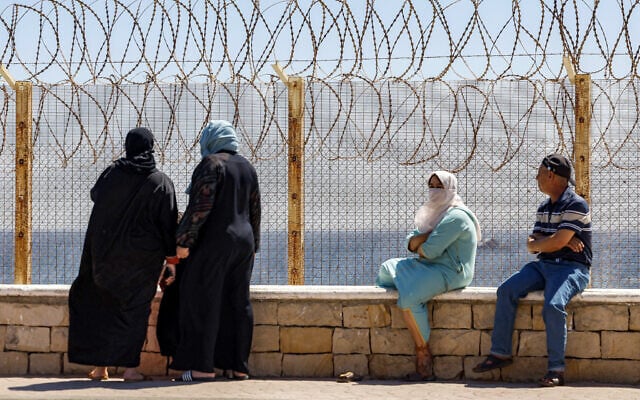
“Nobody addressed how these individuals managed to breach the border,” said Mustapha Azaitraoui, a Moroccan geographer specializing in migration dynamics. “If a large group of people can cross the border under these circumstances, it suggests a broader security issue that has yet to be acknowledged publicly.”
Both Morocco and Spain blamed the Ceuta crisis on human smugglers and trafficking networks, saying organized criminal groups encouraged the mass crossings.
But returning Moroccan migrants interviewed by AP largely rejected that explanation.
“No one smuggled me there. I wanted to go of my own free will, but that country is not worth all this sacrifice,” Kalouch said.
“There are no mafias. The border was open, and I crossed. But now I regret it,” said Danbor, his clothes still wet after making the journey back.
The Spanish Interior Ministry said investigations into smuggling networks are ongoing and noted that Spain and Morocco have carried out joint operations against trafficking groups. The Moroccan Interior Ministry did not respond to questions about smuggling networks.
Morocco’s economy is projected to grow by 4.5 percent this year, boasting major factories, advanced ports and ambitions to become a regional hub for the car industry.
Yet for many young Moroccans, that transformation has not translated into stable work. Youth unemployment remains high, with 37% of people ages 15 to 24 out of work. Among university graduates, unemployment stands at nearly 20%. The dream of migration is often reinforced by stories of relatives who left and returned with cars, new clothes and foreign currency.
One of those who breached the border was a 16-year-old who grew up a few dozen miles from Ceuta. Europe had always seemed a dream close enough to see, yet impossibly far.
So when he saw a post on Facebook suggesting the border was open, and thousands were making it across, he joined the rush.
Days later, he was back on the Moroccan side, crying as he asked strangers for money for a taxi home.
“They fired tear gas at me and beat me with batons. There’s nothing for me there,” said the teen, who spoke on condition of anonymity out of fear of being stigmatized following his failed border crossing attempt.
“I just wanted to provide for my mom,” he said, wiping his tears.

The war with Iran has been draining for all of us in Israel. But when I heard about a high casualty incident – ballistic missile impacts in Arad and Dimona that left nearly 200 people wounded – I drank a cup of coffee, packed a bag, and headed south.
There, I spoke with Shilgit, the head of an after-school program for underprivileged youth. Standing outside her destroyed center, Shilgit said it was a miracle that no children were hurt and spoke about the community coming together in the hours since.
As a Times of Israel reporter, I’m committed to telling stories of resilience like Shilgit’s. But my colleagues and I can't do this alone. If you value work like this, please consider joining our reader support group, The Times of Israel Community. Your financial support is essential to keep real human reporting like this going.
— Stav Levaton, military reporter

We’re really pleased that you’ve read X Times of Israel articles in the past month.
That’s why we started the Times of Israel – to provide discerning readers like you with must-read coverage of Israel and the Jewish world.
So now we have a request. Unlike other news outlets, we haven’t put up a paywall. But as the journalism we do is costly, we invite readers for whom The Times of Israel has become important to help support our work by joining The Times of Israel Community.
For as little as $6 a month you can help support our quality journalism while enjoying The Times of Israel AD-FREE, as well as accessing exclusive content available only to Times of Israel Community members.
Thank you, David Horovitz, Founding Editor of The Times of Israel









Hundreds of underage migrants are stranded in Ceuta, Spain, following a mass border breach from Morocco. Over 800 minors remain in the Spanish enclave, part of the 3,000-5,000 migrants who avoided expulsion after approximately 60,000 people attempted to cross into Ceuta. Many, like a 17-year-old girl who lost her brother and mother during the crossing, are seeking better opportunities.
"I saw people stepping on the dead," she said. "Now we are children begging on the street."
Spanish law mandates protection for unaccompanied minors, but facilities are overwhelmed. The surge was fueled by online rumors, particularly on Instagram, Facebook, and TikTok, suggesting the border was open, and by misinterpretations of Spanish immigration policies. Both Spanish and Moroccan authorities have blamed misinformation and the "exploitation of the digital sphere" for the incident, though migrants largely deny involvement of smugglers.
© All rights to the original article belong to the source. Din Online shows a headline, an excerpt and a link only. The objectivity rating is computed automatically and is an estimate only.
Discussion
No comments yet — be the first to comment.