Iran buys time as sanctions tighten and talks go nowhere
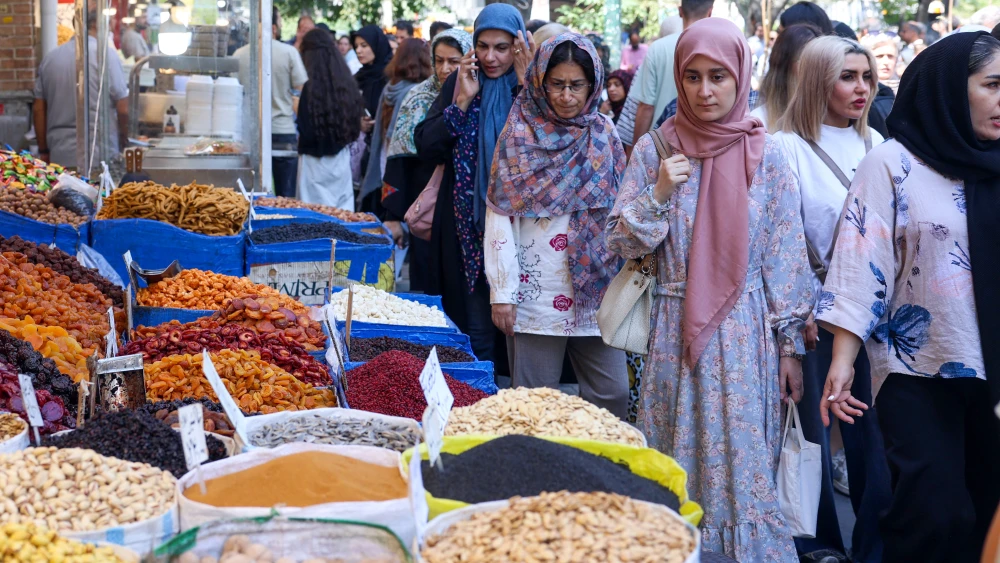
The main story in Iran in August 2026 is not the existence of U.S. sanctions themselves. The Iranian public has lived under such restrictions for years. What has changed this time is the level of detail: Washington is trying to turn a general political message into a clear list of individuals, companies, vessels and sectors that can be identified, isolated and cut off from foreign partners.
According to reports, the U.S. Treasury and State departments recently imposed restrictions on more than 60 individuals, entities and vessels. The list includes targets that U.S. authorities have linked to nuclear and missile programs, cyber activity, oil revenues, and intermediary and shipping networks operating, among other places, in the United Arab Emirates, China, Singapore and Europe. The State Department also offered rewards for information on five commanders in the Islamic Revolutionary Guard Corps.

The claims about each target’s precise role come from the U.S. side and Iranian media has not independently verified them. But the publication of the list itself, and the expansion of the sectors exposed to pressure, are policy developments with immediate significance.
The Iranian response seeks to play down what is new. Central Bank Gov. Abdolnaser Hemmati argued that Washington has already used most of the tools at its disposal and that the new measures therefore contain no single instrument capable of bringing down the economy.
Yet even the effort to dismiss the importance of the measures contains an acknowledgment of the problem. If the sanctions truly were insignificant, there would be no need to immediately present a plan to raise hundreds of trillions of tomans for industry, promise an allocation of $20 billion by the end of the year, or emphasize that the financing would be provided without printing money. The rapid shift from a political argument to an emergency financial plan suggests that the government does not regard the package as mere noise.
(One toman is equivalent to 10,000 rials. The toman is commonly used in everyday transactions in Iran, while the rial remains the official currency.)
Meanwhile, the visit by Pakistan’s army chief to Tehran ended with positive statements but without a new date for talks, a compromise formula, or a practical commitment to reopen the Strait of Hormuz. The mediator left with encouraging words. The market was left with uncertainty.
The new sanctions: Pressure is also directed at those doing business with Iran
The important new element in the U.S. package is not merely the number of names added to the list. It is the expanded ability to impose secondary sanctions in the areas of digital assets, technology, gold, aviation and shipping.
Secondary sanctions are not necessarily aimed at an American company or a transaction conducted in the U.S. They allow Washington to threaten foreign companies as well; if they continue conducting certain business with Iran, they could lose access to banks, dollars or the U.S. market.
For Iran, this is the immediate threat. Over the years, Tehran has developed networks of intermediary companies, maritime carriers, oil traders and financial service providers intended to allow it to operate outside the Western system. When the U.S. publishes the names of ships, executives and companies, it is trying to raise the cost not only for Iran itself but also for everyone operating around it.
Even so, there is a limit to what can be concluded from the initial announcement. The U.S. did not impose sanctions in this round on major Chinese banks, a step that could have created a much more significant confrontation with Beijing and disrupted international trade. In other words, this represents tougher enforcement and an expansion of the threat to additional sectors, but it still does not amount to the use of every available tool.
Hemmati’s plan also points to genuine constraints. The governor said the central bank intends to allocate $20 billion to industry by the end of the year and raise roughly 700 trillion tomans without expanding the monetary base. Expanding the monetary base essentially means creating new money through the monetary system, an action that could add to inflationary pressures.
The problem is the source of the funding. Hemmati acknowledged that revenues from taxes and insurance contributions are below projections. In other words, the government is promising industry more support precisely as the flow of available foreign currency is weakening.
The visit by Field Marshal Asim Munir, Pakistan’s army chief, was a prominent diplomatic development. Pakistan’s military plays a central role in the country’s foreign and security policy, so Munir’s visit was not merely a ceremonial military event. He met with Iranian President Masoud Pezeshkian and other senior officials.
According to a statement by the Pakistani military, the talks addressed preventing further escalation, resuming negotiations, breaking the deadlock between the U.S. and Iran, reopening the Strait of Hormuz, and ending the confrontation. Pakistani Interior Minister Mohsin Naqvi described the talks as very positive and claimed that significant progress had been made.
But the word “progress” was not accompanied by any detail that would make it measurable. No date was announced for another round of talks, no agreed formula was presented regarding uranium enrichment, the nuclear stockpile or inspections, and no Iranian commitment to reopen the Strait of Hormuz was disclosed.
That does not mean the visit failed. The fact that Tehran, Islamabad and Washington continue to discuss preventing escalation, reopening shipping routes, and returning to talks indicates that the channel remains open. Pakistan can carry messages between the sides and allow each of them to explore a compromise without publicly committing to it.
But there is a difference between having a mediator and having a process. As of the end of August, Pakistan has managed to keep the door open. It has yet to show that there is a corridor
A new maritime incident has added to the diplomatic tension. An oil tanker was struck by an unidentified projectile about nine nautical miles northeast of Ash Shishah, Oman. Ash Shishah lies near the route leading to the Strait of Hormuz, the narrow maritime passage through which a substantial share of the world’s traded oil and gas passes.
At this stage, there is no basis for attributing the incident to Iran, Israel, the U.S. or any other party.
But even an incident with no identified perpetrator can affect the market. Shipping and insurance companies price risk according to the frequency of incidents and the likelihood that a vessel will be hit, not only according to the identity of the attacker. The less predictable the region appears, the higher the costs of insurance, security and transportation.
At the same time, no new Iranian document was published concerning its uranium stockpile, the entry of inspectors, or a timetable for a visit by the International Atomic Energy Agency, the U.N. body responsible for monitoring nuclear activities. There is therefore no basis for concluding that the nuclear dispute has advanced, but neither is there a basis for saying that all professional-level contact has ceased.
The market votes: Gold and the dollar are still rising
Market prices cannot tell us what the entire public thinks, but they do show how people with savings are responding to uncertainty.
On the open market, the dollar traded at around 202,220 tomans, compared with approximately 199,900 the previous day. The daily increase was more modest than the surges recorded during other periods, but it did not represent a reversal of the trend. The dollar remains above the psychologically significant threshold of 200,000 tomans, while gold continues to rise.
According to a calculation published by the Iranian Labor News Agency, the monthly base wage stands at about 16.625 million tomans, equivalent to roughly $83 at an exchange rate of 200,000 tomans to the dollar. The minimum wage for a married worker with one child, including allowances, reaches about 24.9 million tomans, or approximately $124 at the same exchange rate.
Converting wages into dollars is not a complete measure of living standards. Some goods and services in Iran are priced domestically, and government subsidies are available. But the conversion illustrates the gap when it comes to imported goods, raw materials, medical equipment, and savings assets whose prices are affected by the exchange rate.
The pressure is also visible in the Producer Price Index, which measures what producers pay before goods reach store shelves. According to figures attributed to the Statistical Center of Iran, the overall index rose by about 28.3% in the spring compared with the previous quarter, by about 98.9% compared with the same period last year, and by about 66.7% on an annual basis. In agriculture, the annual increase was about 86.9%, while production prices were 144.3% higher than in the same quarter last year. In the electricity sector, the quarterly increase was about 65.7%.
A similar pattern is visible in food vouchers. A basket of 11 basic products, estimated to have cost about one million tomans when the program began, is now valued at roughly 1.6 to 1.7 million tomans. By contrast, the proposed increase in the voucher is about 23% to 25%. This is a market estimate rather than a complete official series, but it points to a possible gap between the pace at which support is increasing and the pace of price increases.
The conservative press does not completely deny the economic cost. It seeks to separate acknowledgment of that cost from the political conclusions drawn from it.
Trend assessment: The state is buying time, but not yet trust
Iran is not paralyzed. The central bank is operating, the state is raising financing, a senior mediator is being received in Tehran, Parliament continues to deliberate, and trading networks continue to function despite sanctions. These are genuine state capabilities, not merely propaganda.
But the ability to continue functioning is not the same as the ability to convince people that conditions are about to improve. The sanctions package will not transform the entire economic structure overnight, but it increases the risks for foreign companies. The Pakistani visit keeps a channel open but provides no timetable.
The next developments will be tested across several interconnected fronts. Will the U.S. stop at publishing lists, or will it succeed in deterring companies and vessels in practice?
As of late August, the regime has managed to buy time. It has not yet managed to buy trust.
Originally published by the Jerusalem Center for Security and Foreign Affairs.

Get the latest updates in our WhatsApp group.






In August 2026, the U.S. implemented new, detailed sanctions against Iran, targeting over 60 individuals, entities, and vessels linked to nuclear, missile, cyber, and oil programs, operating across various countries. These measures expand the ability to impose secondary sanctions on foreign companies doing business with Iran in sectors like digital assets, technology, gold, aviation, and shipping, aiming to raise costs for Tehran and its partners. While Iran's Central Bank Governor Abdolnaser Hemmati downplayed the impact, stating Washington has used most tools, the immediate presentation of an emergency financial plan to raise hundreds of trillions of tomans and allocate $20 billion suggests the government views the package as significant.
“Washington is trying to turn a general political message into a clear list of individuals, companies, vessels and sectors that can be identified, isolated and cut off from foreign partners.”
Concurrently, Pakistani mediation efforts, including a visit by Pakistan’s army chief to Tehran, yielded positive statements but no concrete breakthroughs on resuming talks, a compromise formula, or reopening the Strait of Hormuz. An unidentified projectile strike on an oil tanker near the Strait of Hormuz further heightened regional tensions and increased shipping risks. Despite these developments, there was no new information regarding Iran's uranium stockpile or IAEA inspections, indicating no advancement in the nuclear dispute. The Iranian market reflected uncertainty, with the dollar and gold continuing to rise against the toman.
© All rights to the original article belong to the source. Din Online shows a headline, an excerpt and a link only. The objectivity rating is computed automatically and is an estimate only.
Discussion
No comments yet — be the first to comment.