Is the Haredi draft crisis really about the draft?
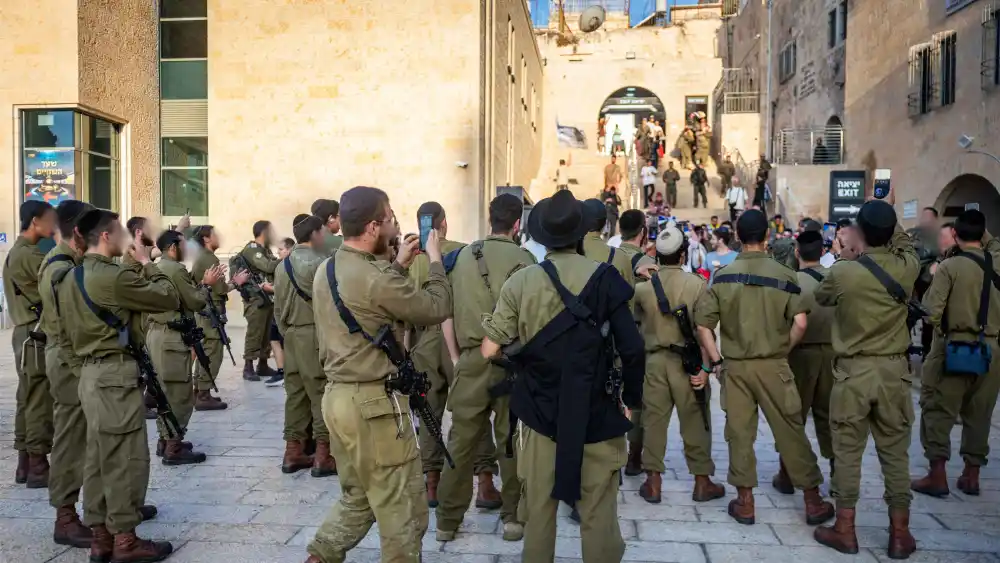

While Israel remains in the midst of war, it is also confronting a serious crisis over Haredi military service. A difficult question is increasingly being asked: Why have so many Haredim become so fiercely opposed to the draft, expressing this opposition in recurring demonstrations and even street blockages?
The conventional answer is that Haredim fear losing their Torah-centered way of life. That concern is certainly real. Torah study, religious education and a deeply structured communal lifestyle are central to Haredi identity. But there may be another factor that deserves greater attention: The growing perception that the draft issue has become a political weapon against the Haredi community and the current right-wing government.

From the Haredi perspective, the distinction is crucial.
If the debate were simply about military service, accommodations and the practical integration of young Haredi men into the IDF, there would be considerably more room for negotiation. But when Haredi leaders and their constituents perceive the campaign as an attempt to fundamentally reshape their society, the issue becomes existential rather than administrative.
That can trigger a powerful survival instinct.
The Haredi community is not merely debating whether its young men should serve in the military. It is debating what kind of society it wants to remain. For many Haredim, Torah study is not simply one value among many; it is the foundation upon which their community is built. Consequently, pressure surrounding enlistment can be interpreted not as a narrow policy disagreement but as a challenge to the legitimacy of their way of life.
This helps explain why demonstrations can become so intense.
There is also an argument—one that should be examined rather than dismissed—that elements of the Israeli left have political incentives to keep the draft controversy alive. The issue provides an effective means of portraying the current right-wing government as incapable of resolving one of Israel’s most divisive domestic challenges. It also places enormous political pressure on the Haredi parties that form an important component of the current governing coalition.
But political pressure can have unintended consequences.
When a community already feels threatened, increasing the pressure may not necessarily produce greater cooperation. It can produce the opposite. Instead of encouraging Haredi society to consider enlistment, it can convince many that they are being forced to defend themselves against a broader ideological campaign.
In that environment, the question changes from “How can we design a workable draft framework?” to “How do we protect our community?”
That is a fundamentally different conversation.
There are, moreover, signs that the military itself is attempting to create frameworks that are more compatible with Haredi religious requirements. Discussions and initiatives involving mehadrin kosher standards, gender-sensitive frameworks and environments designed to accommodate religious observance demonstrate that military service and Haredi religious life are not necessarily incompatible.
The existence of such frameworks should be part of the national conversation.
If the goal is genuinely to increase Haredi enlistment, then the most productive strategy would be to demonstrate that military service does not require abandoning Torah values. The more credible that assurance becomes, the easier it should be for rabbis, community leaders and families to consider participation.
This raises a provocative political question: Do all those demanding Haredi enlistment actually want the Haredim to enlist?
There is a significant difference between advocating for equal national responsibility and using the draft as a vehicle for a broader ideological struggle over religion and the character of Israeli society. If the latter becomes dominant, Haredi leaders are likely to interpret the campaign as something far larger than a dispute over military manpower.
That interpretation can harden opposition.
It is also important to distinguish between the Israeli left as a political movement and Israeli society as a whole. Not every secular Israeli, opposition politician or critic of the government is motivated by hostility toward Haredim. Many Israelis across the political spectrum sincerely believe that military service should be shared more broadly, particularly during wartime.
Those concerns deserve to be taken seriously.
At the same time, criticism becomes counterproductive when it treats an entire community as an enemy. The same principle applies to Haredi leaders: opposition to coercive policies does not justify every form of protest, particularly actions that obstruct ordinary Israelis or deepen social antagonism.
The country needs a way out of this cycle.
Rather than approaching Haredi society primarily through threats, public humiliation and political confrontation, the government and its critics should emphasize practical engagement. Speak with the rabbis. Speak with community leaders. Expand military frameworks that genuinely accommodate religious life. Identify the young men who are willing to serve. Build trust before demanding transformation.
The potential reward is substantial.
If Haredi society becomes convinced that military service can coexist with serious Torah observance, the number of volunteers could increase significantly. But that process requires confidence that enlistment is not merely the first step toward dismantling the community’s religious identity.
Ultimately, the Haredi draft crisis may be less about whether Haredim are capable of serving and more about whether they trust the system asking them to serve.
Israel needs more soldiers. It also needs social cohesion.
If policymakers genuinely want both, they should stop asking only how to pressure the Haredim into the army and start asking what would persuade them that serving in the army does not mean surrendering the values the Haredim are trying to protect.
That may be the beginning of a solution rather than another round of political war.


Get the latest updates in our WhatsApp group.




The Haredi draft crisis in Israel is increasingly perceived by the Haredi community as an existential threat to their Torah-centered way of life, rather than merely a debate about military service. While concerns about preserving their religious identity are genuine, the article suggests that the issue has become a political weapon, particularly for elements of the Israeli left, to challenge the current right-wing government and reshape Haredi society.
- Haredi leaders view the campaign as an attempt to fundamentally alter their community, triggering a survival instinct and hardening opposition.
- The military is developing frameworks compatible with Haredi religious requirements, such as mehadrin kosher standards and gender-sensitive environments, to demonstrate that service does not necessitate abandoning Torah values.
- The article questions whether all those demanding Haredi enlistment genuinely seek their integration or are using the draft for a broader ideological struggle over the character of Israeli society.
- To foster cooperation, the summary suggests that policymakers should prioritize practical engagement, build trust, and expand accommodating military frameworks, rather than relying on threats and political confrontation.
© All rights to the original article belong to the source. Din Online shows a headline, an excerpt and a link only. The objectivity rating is computed automatically and is an estimate only.
Discussion
No comments yet — be the first to comment.