Jews, tea and war in Sri Lanka
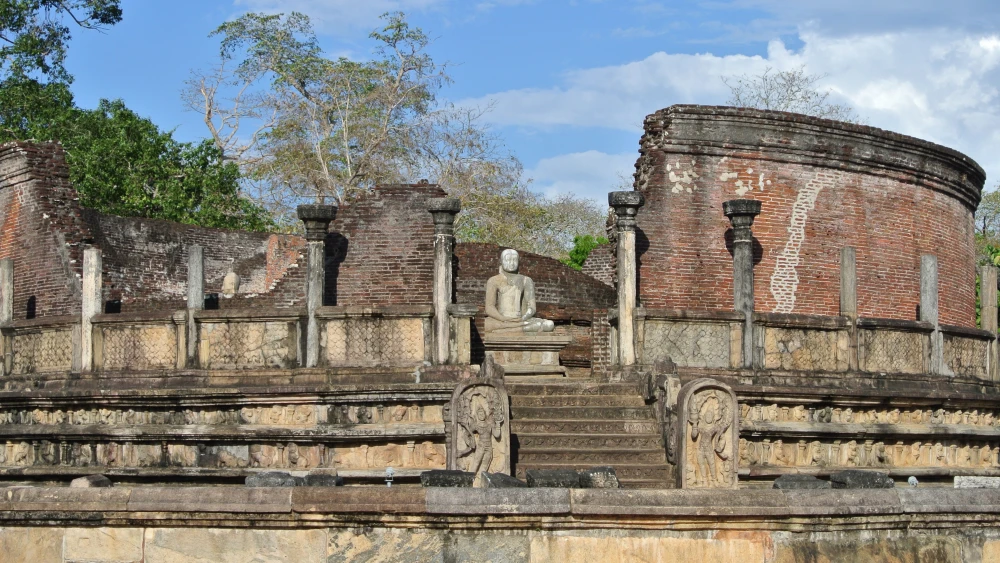

On Friday night, Aug. 14, an angry crowd gathered outside a new Chabad center in the Sri Lankan beach town of Hiriketiya as Jews were preparing to welcome Shabbat.
More than 100 protesters, including Buddhist monks, reportedly took part. They hurled stones and firecrackers at the building, and a window was shattered. The unrest resumed the following night.
 Xiaomi Smart Band 10 Review: The Ultimate Budget Fitness Tracker for 2026
See the review →
Xiaomi Smart Band 10 Review: The Ultimate Budget Fitness Tracker for 2026
See the review →
What made the episode all the more striking is that Jewish life is hardly something new to Sri Lanka. Long before Israeli backpackers began flocking to its beaches, Jews had been finding their way to the island for centuries.
Known for generations as Ceylon and to medieval Arab writers as Serendib, Sri Lanka lay along the great maritime trade routes linking the Middle East, India and the Far East. Jewish merchants were among those who passed through or wound up settling there.
The references go back more than a thousand years. The 10th-century Muslim writer Abu Zayd al-Hasan al-Sirafi noted the presence of Jews on the island, while the 12th-century geographer al-Idrisi claimed that four members of a 16-man council appointed by the ruler were Jews.
There are also tantalizing, if uncertain, traditions linking Sri Lanka to the medieval Jewish traveler and chronicler Benjamin of Tudela and even to the biblical Tarshish, destination of the ships of King Solomon. Whether either claim is true is impossible to know. But they reflect just how long the island has been tied to the commercial world through which Jewish traders moved.
By the time the European powers reached Sri Lanka, the Jewish presence on the island became easier to trace.
When the Portuguese arrived in the 16th century, some descendants of forcibly converted Jews, or bnei anusim, likely reached Ceylon. Later, under the Dutch, the island was drawn into a trading network that stretched from Amsterdam to the Jewish communities of southern India.
By the 18th century, a former Dutch Jew named Leopold Immanuel Jacob van Dort was teaching Hebrew at a Christian seminary in Colombo. He reportedly even translated the Quran into Hebrew.
Under British rule, the Jewish connection took an even more intriguing turn. In 1809, Sir Alexander Johnston, the chief justice of Ceylon, suggested encouraging large-scale Jewish immigration. Nothing came of it, but more than a century before the Balfour Declaration, a senior British official was contemplating the settlement of a sizable Jewish population in the region.
A few decades later, Maurice and Gabriel de Worms, members of a wealthy German Jewish family related to the Rothschilds, arrived in Ceylon and acquired plantations near Pussellawa.
They grew coffee and experimented with tea years before tea became virtually synonymous with Ceylon. Their property became known as the Rothschild Estate. Gabriel de Worms also won election to Ceylon’s Legislative Council in 1847, only to lose the seat, reportedly after refusing, as a Jew, to take the required Christian oath.
The Jewish story continued into the 20th century with Leonard Woolf, later the husband of English author Virginia Woolf. Born into a Jewish family in London, Woolf arrived in Ceylon in 1904 as a young colonial official and spent seven years there. His experiences inspired The Village in the Jungle, a bleak and sympathetic portrait of rural Sinhalese life that remains one of his best-known works.
Yet there is no evidence that these scattered Jewish presences ever developed into a large, continuous community. Strangely enough, that did not prevent antisemitic stereotypes from taking root. Muslim Moors were at times derided as the “Jews of Ceylon,” and Buddhist nationalist Anagarika Dharmapala invoked the word “Shylock” when attacking Muslim merchants.
Against this sparse Jewish backdrop, the story of Anne Ranasinghe stands out.
Born Anneliese Katz in Essen, Germany, in 1925, she was sent to England in 1939 to escape Nazi persecution. Her parents remained behind and were later murdered in the Holocaust.
After the war, she married a Sri Lankan physician and moved to Ceylon. Ranasinghe went on to become one of Sri Lanka’s leading English-language poets, writing repeatedly about the Holocaust, the parents she had lost and the memories of a childhood destroyed by Nazism. She died in Colombo in 2016.
Siegmund Feniger took a very different path. He came to Ceylon in the 1930s, embraced Theravada Buddhism and became a monk under the name Nyanaponika Thera. He later headed the Buddhist Publication Society in Kandy and helped bring Theravada teachings to an international audience.
By the middle of the 20th century, however, the story was no longer only about individual Jews who had made their way to Ceylon. With Israel’s establishment in 1948, a new chapter began.
Initially, relations between Colombo and Jerusalem were anything but straightforward.
Sri Lanka’s Foreign Ministry dates the establishment of diplomatic ties with Israel to 1956, but Colombo moved closer to the Arab states under Prime Minister Sirimavo Bandaranaike, severing ties with Israel in 1970.
The Sri Lankan civil war, however, changed the calculus.
Beginning in 1983, Sri Lanka was plunged into a brutal conflict against the Liberation Tigers of Tamil Eelam, or LTTE, which sought an independent Tamil state in the north and east. The Tamil Tigers became notorious for suicide bombings and political assassinations and were designated a foreign terrorist organization by the United States in 1997.
As the fighting intensified, Colombo turned to Israel.
An Israeli Interests Section opened in 1984 and, by the late 1980s, Israel had sold Sri Lanka roughly $30 million in military equipment, including Dvora patrol boats, weapons, ammunition and communications gear. Israeli personnel also trained Sri Lankan security forces.
In later years, Israeli-made Kfir fighter jets became an important part of the Sri Lankan Air Force. When U.S. authorities prosecuted LTTE operatives seeking anti-aircraft missiles, the FBI said the weapons were intended in part to shoot down those Kfirs.
Bilateral cooperation with Israel was not always politically comfortable. President Ranasinghe Premadasa ordered the Israeli Interests Section closed in 1990. A decade later, with the civil war still raging, full diplomatic relations were restored.
The 26-year conflict ended in 2009 with the military defeat of the LTTE. Whatever the later controversies over the conduct of the war, Israeli arms and training had clearly become part of Sri Lanka’s ability to fight one of the world’s most ruthless terrorist movements.
Today, ties are considerably warmer. Sri Lanka’s Foreign Ministry describes relations with Israel as friendly, encompassing trade, agriculture, employment and tourism. About 25,000 Israelis visited the country in 2025, and Chabad now operates several centers across the island.
That complicated history provides important context for what happened in Hiriketiya in mid-August.
Sri Lankan police intervened on both nights of unrest and increased security around the Chabad center. Rabbi Yossi Gabai has said the national authorities have been supportive, and this was not the first time Sri Lanka acted to protect Jewish visitors. In 2024, after intelligence warned of a possible terrorist attack targeting Israelis in Arugam Bay, police arrested suspects and deployed additional security. The following year, police announced round-the-clock protection for Chabad centers nationwide.
That record is worth noting. Colombo and Jerusalem have not always seen eye to eye, but the two countries have also cooperated when circumstances demanded it, most notably during Sri Lanka’s long struggle against the Tamil Tigers.
The same pragmatic approach would serve Sri Lanka well now: Questions about permits or regulations can be dealt with through the normal legal process while ensuring that Jewish visitors can worship, gather and travel in safety.
For more than a millennium, Jews have found their way to Sri Lanka. What happened in Hiriketiya will hopefully remain an ugly footnote to a long and fascinating saga.


Get the latest updates in our WhatsApp group.







Sri Lanka has a long and complex history with Jewish presence, dating back over a thousand years through trade routes, with notable figures like the de Worms family establishing tea plantations in the 19th century and Leonard Woolf serving as a colonial official. Despite this, antisemitic stereotypes emerged, and a continuous Jewish community never fully developed. Diplomatic relations with Israel, established in 1956, were severed in 1970 but restored due to Sri Lanka's civil war against the LTTE, during which Israel provided significant military aid and training. Today, relations are friendly, with increased Israeli tourism and several Chabad centers operating on the island. Recent unrest at a Chabad center in Hiriketiya in August, involving over 100 protesters, was met with police intervention and national support, reflecting Sri Lanka's commitment to protecting Jewish visitors, as seen in past security measures against potential terrorist threats.
© All rights to the original article belong to the source. Din Online shows a headline, an excerpt and a link only. The objectivity rating is computed automatically and is an estimate only.
Discussion
No comments yet — be the first to comment.