Netanyahu's congressional call for a NATO-style alliance to counter Iran gives way to a Sunni state alliance
When Israeli Prime Minister Benjamin Netanyahu stood at the podium before a joint session of the U.S. Congress in July 2024, he laid out a bold vision for the future security architecture of the Middle East. Confronting what he described as an existential struggle between civilization and barbarism, Netanyahu called on Washington to help build a permanent regional defense coalition, a NATO-style alliance designed explicitly to neutralize the existential threat posed by the Islamic Republic of Iran.“In the Middle East, Iran’s axis of terror confronts America, Israel and our Arab friends,” Netanyahu told lawmakers. “America and Israel can forge a regional security alliance in the Middle East to counter the growing Iranian threat. All countries that are at peace with Israel and all those countries that will make peace with Israel should be invited to join this alliance.”Netanyahu dubbed this vision the “Abraham Alliance,” pointing to the historic April 2024…

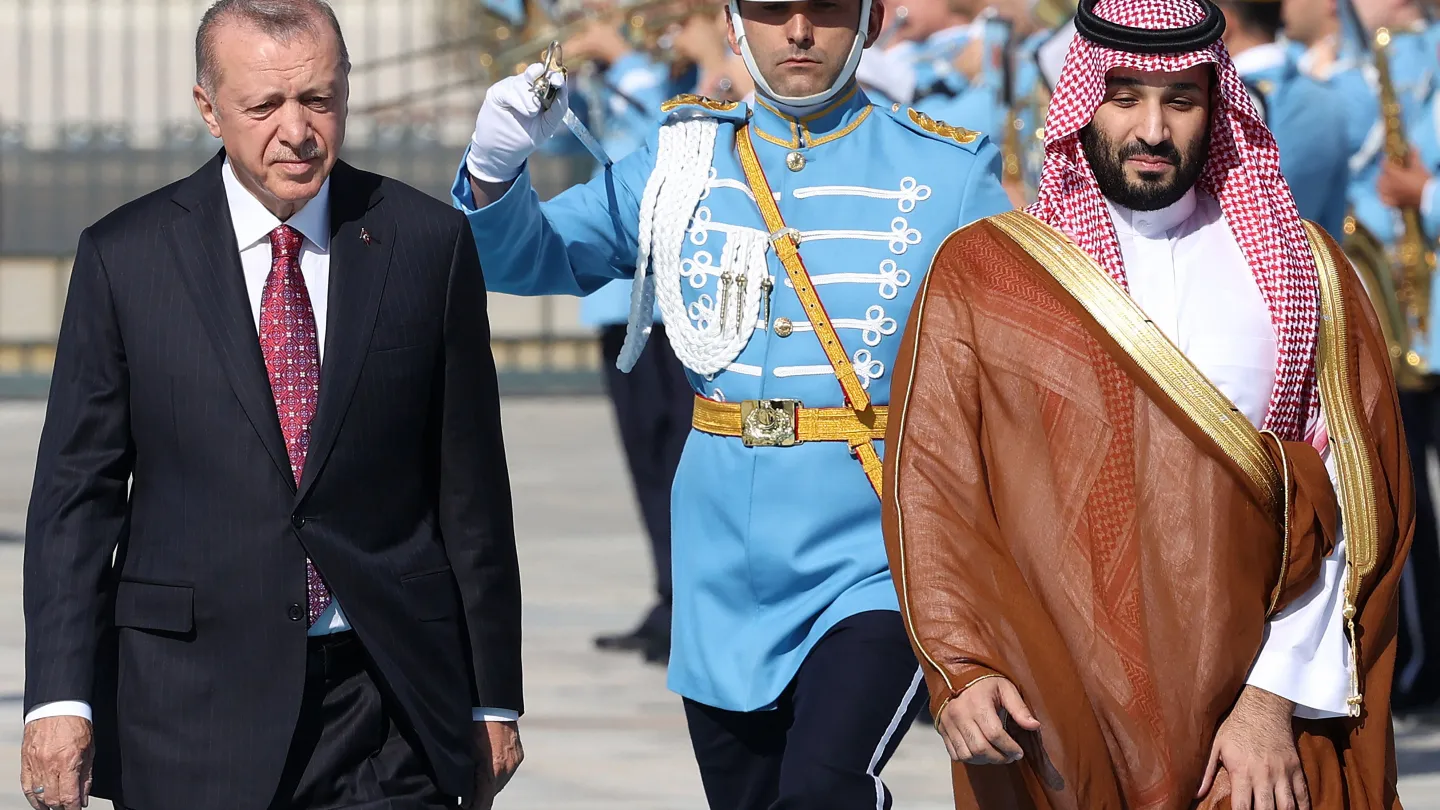
In July 2024, Israeli Prime Minister Benjamin Netanyahu proposed a NATO-style "Abraham Alliance" to the U.S. Congress, aiming to counter Iran's regional threat. He stated, "America and Israel can forge a regional security alliance in the Middle East to counter the growing Iranian threat." This vision was inspired by the April 2024 interception of Iranian drones and missiles by a coalition including American, Israeli, and Arab forces. However, a new development has seen Saudi Arabia, Turkey, and Pakistan form a mutual defense agreement, effectively a Sunni axis, with a provision similar to NATO's Article 5.
- This new Sunni alliance, driven by Saudi Arabia's need for security against escalating Iranian proxy attacks, presents a complex situation for Israel.
- While Turkey's involvement requires scrutiny due to President Erdoğan's past rhetoric, the alliance's focus on containing Iran could align with Israel's strategic interests.
- The U.S. is seen as a potential quiet facilitator, supporting a regional containment mechanism against Iran without direct American ground forces.
- This shift counters Iran's long-standing strategy of a Shi'ite terror crescent, now facing a dual front from Israel and the emerging Sunni defense bloc.
© All rights to the original article belong to the source. Din Online shows a headline, an excerpt and a link only. The objectivity rating is computed automatically and is an estimate only.
Discussion
No comments yet — be the first to comment.