Rebuffing Trump, Iran insists no talks with US over Hormuz, strait staying closed
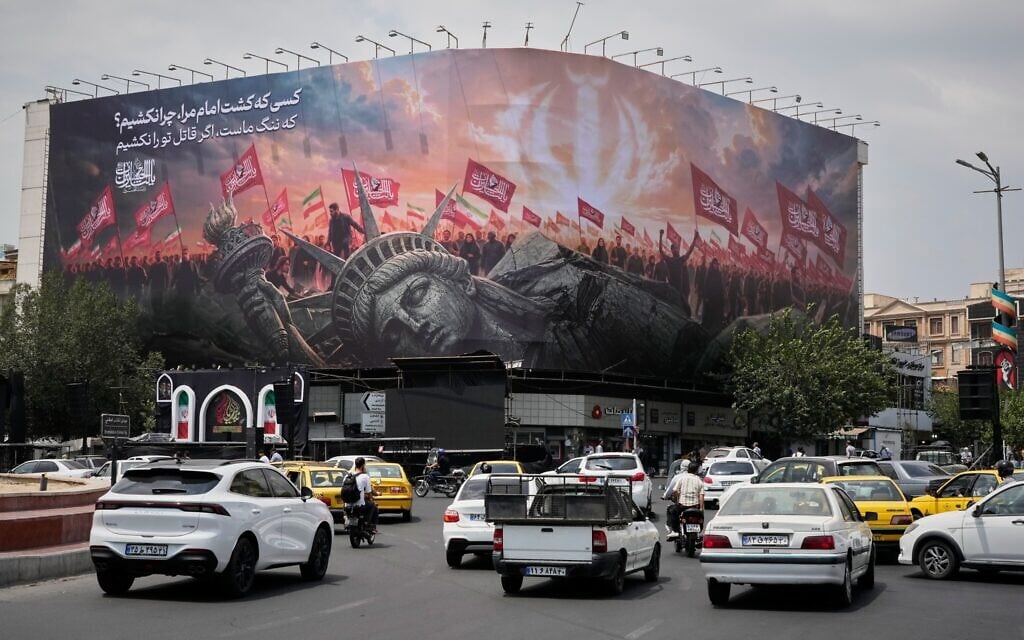
Iran on Monday denied that any negotiations were taking place with the United States, following comments from US President Donald Trump that talks on ending the war and reopening the Strait of Hormuz were set to resume Monday.
Over the weekend Trump repeated a pattern that has emerged throughout the past five months, in announcing plans for “massive attacks” on Iran, only to cancel them at the last minute. He said Sunday that a plan had been in place for US forces to carry out “the biggest attack since World War II,” but said he scrapped the plan to give diplomacy more time to play out after hearing from Gulf leaders, as well as at the request of unnamed Iranian officials.
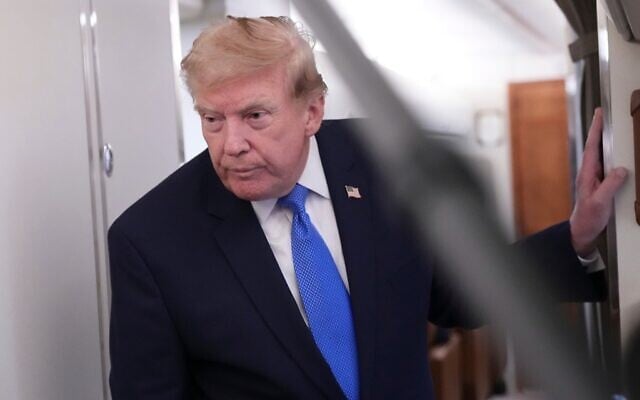
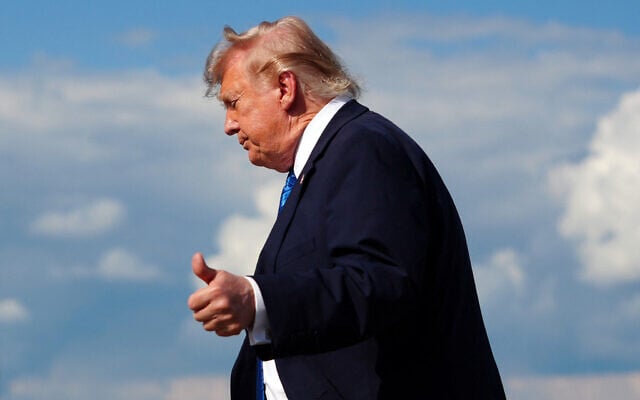
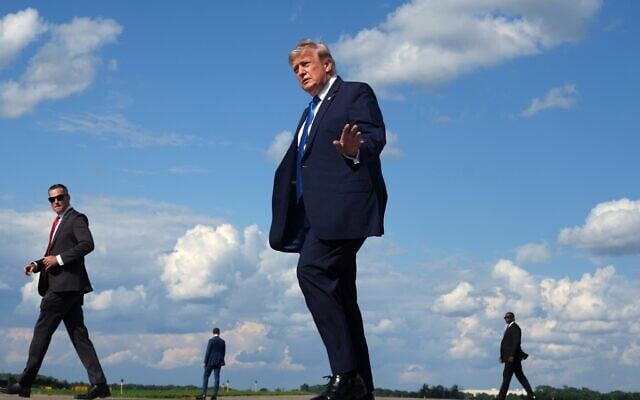
“Would I rather make a deal? I’m not looking to kill people,” Trump said aboard Air Force One on Sunday.
“Now what we’re doing is talking to them, in the form of a negotiation. It begins tomorrow afternoon,” Trump claimed, without providing further details or saying who would be involved in the talks.
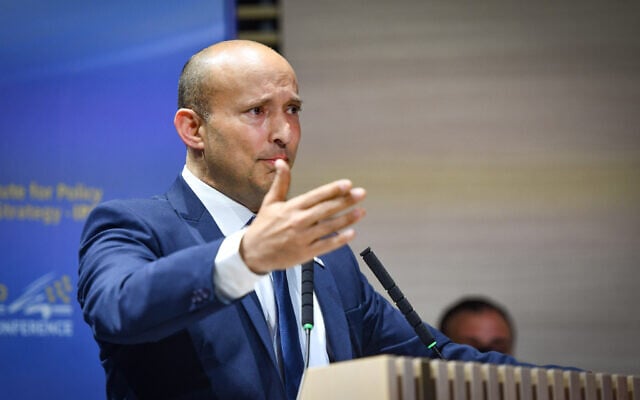
But Iran’s Foreign Ministry spokesman Esmail Baghaei on Monday rejected the claim, saying no negotiations with the US were taking place and no meetings were scheduled.
Iran had no plans to host foreign delegations or send negotiators abroad in the coming days, he said. Tehran has publicly rejected negotiations with Washington since a June memorandum of understanding aimed at ending the conflict collapsed in early July.
Baghaei added Monday that all Iranian negotiators were currently in the country, apart from Foreign Minister Abbas Araghchi, who was on a religious pilgrimage in Iraq.
“We are not currently negotiating with the United States. Our negotiations are with Oman to secure passage through the Strait of Hormuz,” he said during a weekly press briefing. “We hope that both regional and extra-regional actors will appreciate this responsible move by Iran and adopt a constructive approach.”
He maintained Iran’s position that as long as a US naval blockade on Iranian ports continues, “the situation in the Strait of Hormuz will remain unchanged.”
A senior Iranian source also told Reuters that no talks were planned and that Araghchi would be unavailable at least until the end of the week.
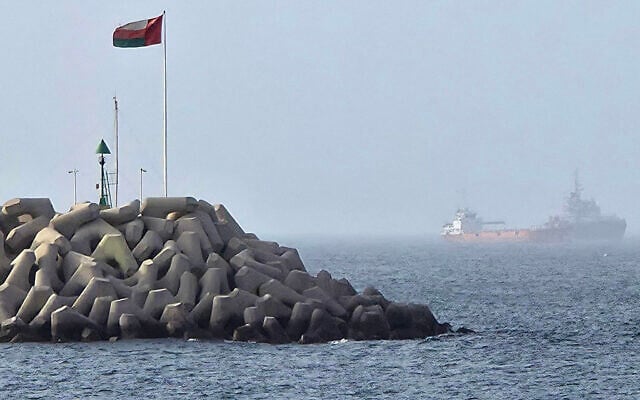
On Sunday, Baghaei told state television that a deal was close on managing Hormuz together with Oman, which sits on the other side of the narrow waterway.
“We are now going to reach an understanding on a route acceptable to both sides — neither the northern route nor the southern route — but one that respects the sovereign rights of both sides and safeguards our national interests and security,” he said.
Also Sunday, Iranian lawmaker Hassan Ghashghavi, spokesman for the parliament’s national security commission, said that mediators were trying to revive the US-Iran memorandum of understanding that was agreed in June. That agreement was not intended as a final peace deal, but as a stepping stone to negotiations on a comprehensive agreement, though it did include provisions on Hormuz.
“They know that the main issue and, in fact, the key to the matter right now is the issue of the Strait of Hormuz, so yes, there is an exchange of views,” Ghashghavi said.
Posting on X, Iranian President Masoud Pezeshkian said: “We must strive to compel the enemy to remain committed to what it has signed.”
Meanwhile, the master of a tanker off the coast of Oman on Sunday night reported hearing an explosion near the vessel, the United Kingdom Maritime Trade Operations (UKMTO) Centre said Monday morning.
“The vessel and crew are all reported as safe,” said the UKMTO. The master is the highest-ranking person on an oil tanker. The incident happened 20 nautical miles (37 kilometers or 23 miles) northeast of Khasab, in Oman, near the entrance to the Hormuz waterway.
Iran has targeted a ship in the Strait of Hormuz tonight. The projectile missed, but loud explosions were heard, per UKMTO. pic.twitter.com/0uNQnQP4js
— DC_Global_News (@DC_Global_News) August 2, 2026
“Vessels are advised to transit with caution and report any suspicious activity,” the UKMTO advised.
The Hormuz shipping route is a major sticking point in efforts to end the war. Iran has obstructed vessels attempting to pass the critical trade corridor, firing on commercial ships.
Before the war, there was free passage through the strait, but Iran now insists on retaining control and charging fees, something the US rejects. Tehran has refused to let ships travel any route other than one which hugs the Iranian coast.
Additionally, CNN reported Monday that the US military is asking its troops for new ideas for pressuring Iran, signaling that Washington is not satisfied with the results achieved via conventional pressure tactics, namely military action and financial sanctions.
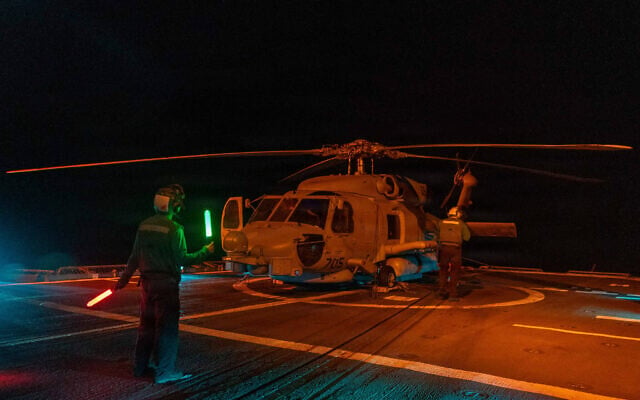
“We are looking for new creative and unconventional ways to pressure and punish Iran,” a US Central Command intelligence officer wrote in an email to analysts, according to the US outlet.
“US Central Command has a long history of thinking and working in innovative ways,” Capt. Timothy Hawkins, a spokesperson for CENTCOM, told CNN.
“[CENTCOM chief Admiral [Brad] Cooper, in particular, reaches out to members of our great team, regardless of rank, to achieve the highest levels of operational performance possible,” he said.

The war with Iran has been draining for all of us in Israel. But when I heard about a high casualty incident – ballistic missile impacts in Arad and Dimona that left nearly 200 people wounded – I drank a cup of coffee, packed a bag, and headed south.
There, I spoke with Shilgit, the head of an after-school program for underprivileged youth. Standing outside her destroyed center, Shilgit said it was a miracle that no children were hurt and spoke about the community coming together in the hours since.
As a Times of Israel reporter, I’m committed to telling stories of resilience like Shilgit’s. But my colleagues and I can't do this alone. If you value work like this, please consider joining our reader support group, The Times of Israel Community. Your financial support is essential to keep real human reporting like this going.
— Stav Levaton, military reporter

We’re really pleased that you’ve read X Times of Israel articles in the past month.
That’s why we started the Times of Israel – to provide discerning readers like you with must-read coverage of Israel and the Jewish world.
So now we have a request. Unlike other news outlets, we haven’t put up a paywall. But as the journalism we do is costly, we invite readers for whom The Times of Israel has become important to help support our work by joining The Times of Israel Community.
For as little as $6 a month you can help support our quality journalism while enjoying The Times of Israel AD-FREE, as well as accessing exclusive content available only to Times of Israel Community members.
Thank you, David Horovitz, Founding Editor of The Times of Israel
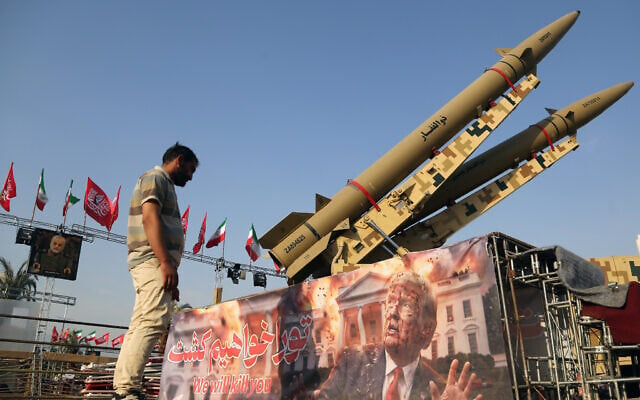




Iran has rejected claims by US President Donald Trump that negotiations between the two countries were set to resume regarding the war and the reopening of the Strait of Hormuz. Iranian Foreign Ministry spokesman Esmail Baghaei stated that no talks with the US were scheduled or taking place, and that Iran's current negotiations are with Oman to secure passage through the Strait of Hormuz. Baghaei reiterated Iran's stance that the situation in the Strait of Hormuz will remain unchanged as long as a US naval blockade on Iranian ports continues. Concurrently, a tanker off the coast of Oman reported an explosion near its vessel, and the US military is reportedly seeking "new creative and unconventional ways to pressure and punish Iran."
© All rights to the original article belong to the source. Din Online shows a headline, an excerpt and a link only. The objectivity rating is computed automatically and is an estimate only.
Discussion
No comments yet — be the first to comment.