Service suspended at a Saudi airport after attack claimed by Houthis
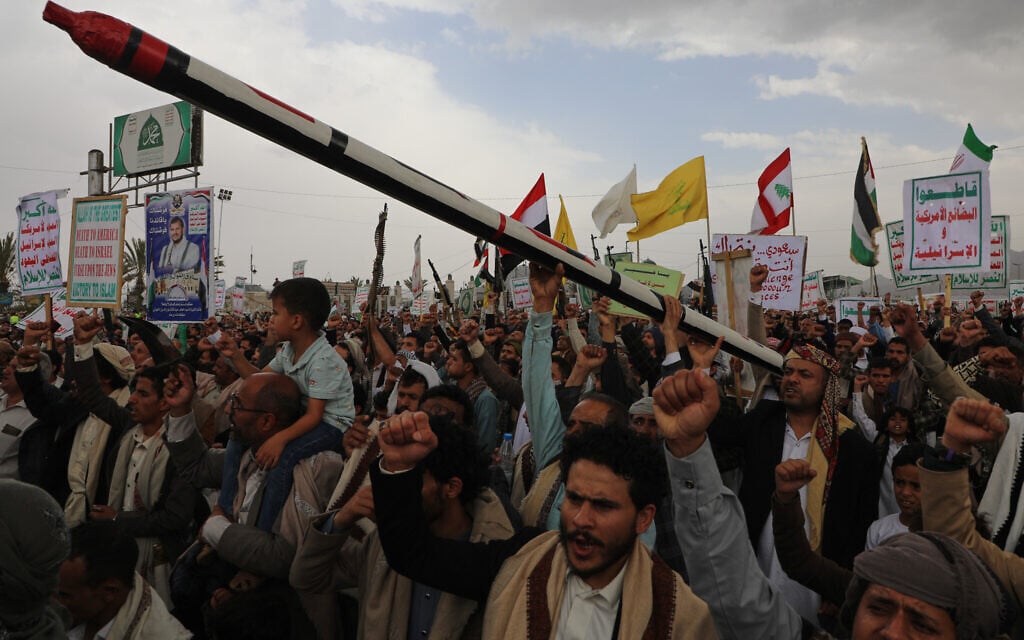
SANAA, Yemen — Operations were suspended on Tuesday at an airport in Saudi Arabia, a regional source with knowledge of the matter said, after Yemen’s Iran-backed Houthis announced they had attacked the site.
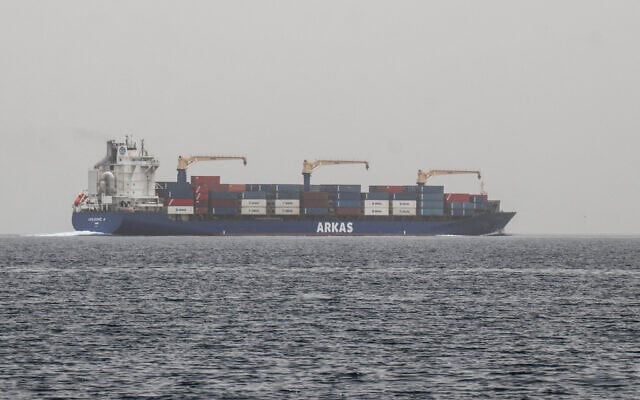
Last month, the Houthis declared a maritime blockade of Saudi Arabia, the world’s largest exporter of crude, and has since claimed several attacks on oil tankers and infrastructure.
Saudi Arabia has retaliated with strikes targeting Houthi positions.
Houthi military spokesman Yahya Saree on Tuesday said the rebels “successfully targeted a sensitive target belonging to the Saudi enemy at Najran Airport using a drone.”
He added that the strike on the southern airport was “in response to the Saudi enemy’s violation of airspace over the Saada and Hajjah governorates using drones.”
The source told AFP that the airport’s main radar was hit, affecting operations.
The airport website listed as “unknown” the status of flights scheduled for the next few days.
Saudi Arabia has not, so far, issued any comment on the claimed attack.
The small airport is located near the Yemeni border and has a single terminal handling a few flights per day.
Fighting erupted last month, marking the first time that Saudi Arabia and the Houthis have traded heavy fire since a 2022 truce.
A Saudi-led military coalition had been at war with the Houthis since 2015, after the rebels seized the capital Sanaa and forced out the internationally recognized government.
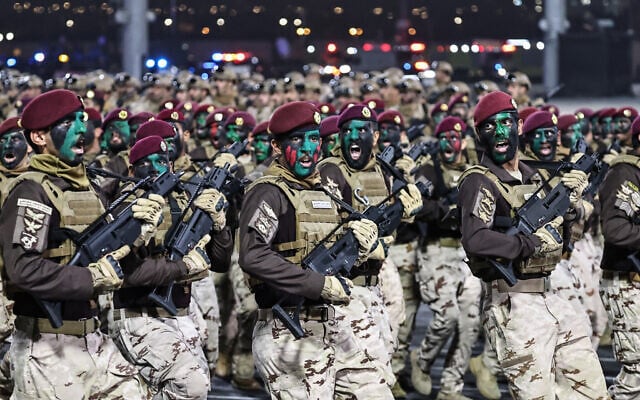
The renewed hostilities between Saudi Arabia and the Houthis are an example of how the war between the US and Iran has spread.
Saudi Arabia was reportedly gearing up for a major offensive against the Houthis, The Guardian reported on Thursday, as Saudi forces were reportedly seen withdrawing from eastern Yemen in what may signal preparations for a ground attack.
The report came just two days after Reuters reported, citing regional sources familiar with the matter, that the Houthis were considering imposing fees on commercial ships sailing through the southern Red Sea amid the group’s ongoing maritime blockade.
Times of Israel staff contributed to this report.

The war with Iran has been draining for all of us in Israel. But when I heard about a high casualty incident – ballistic missile impacts in Arad and Dimona that left nearly 200 people wounded – I drank a cup of coffee, packed a bag, and headed south.
There, I spoke with Shilgit, the head of an after-school program for underprivileged youth. Standing outside her destroyed center, Shilgit said it was a miracle that no children were hurt and spoke about the community coming together in the hours since.
As a Times of Israel reporter, I’m committed to telling stories of resilience like Shilgit’s. But my colleagues and I can't do this alone. If you value work like this, please consider joining our reader support group, The Times of Israel Community. Your financial support is essential to keep real human reporting like this going.
— Stav Levaton, military reporter

We’re really pleased that you’ve read X Times of Israel articles in the past month.
That’s why we started the Times of Israel – to provide discerning readers like you with must-read coverage of Israel and the Jewish world.
So now we have a request. Unlike other news outlets, we haven’t put up a paywall. But as the journalism we do is costly, we invite readers for whom The Times of Israel has become important to help support our work by joining The Times of Israel Community.
For as little as $6 a month you can help support our quality journalism while enjoying The Times of Israel AD-FREE, as well as accessing exclusive content available only to Times of Israel Community members.
Thank you, David Horovitz, Founding Editor of The Times of Israel








© All rights to the original article belong to the source. Din Online shows a headline, an excerpt and a link only. The objectivity rating is computed automatically and is an estimate only.
Discussion
No comments yet — be the first to comment.