Sometimes, the path to peace runs through victory
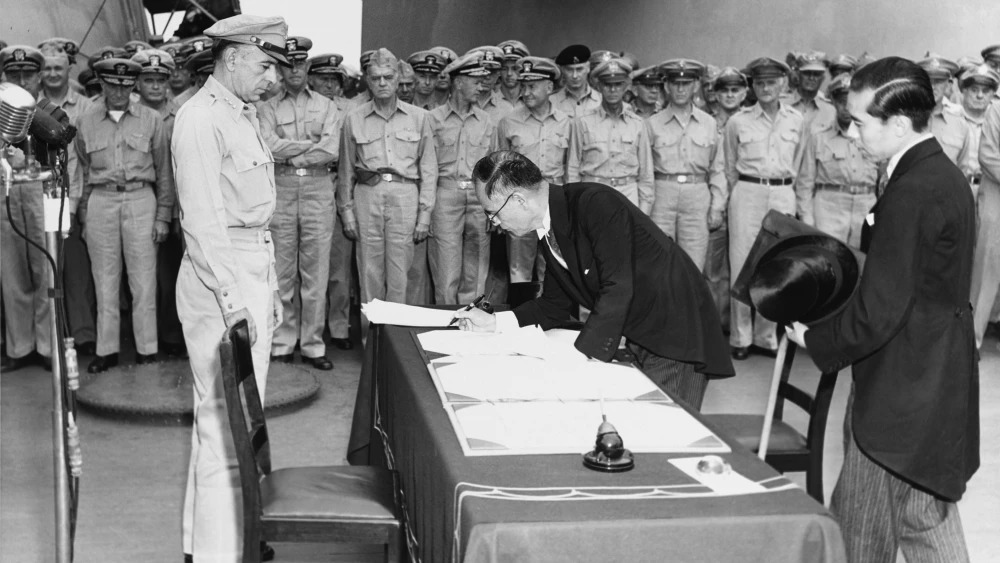
Today, 81 years ago, on Sept. 2, 1945, Japanese Foreign Minister Mamoru Shigemitsu boarded the American battleship Missouri, which was anchored in Tokyo Bay. Alongside him stood representatives of the Japanese military, and across from them stood Gen. Douglas MacArthur and representatives of the Allies.The ceremony was brief. In less than half an hour, Japan’s instrument of surrender was signed, and World War II officially came to an end. In fact, that morning did not just end a war. Peace began.And this is a distinction that is important to understand today of all days. Because looking back across eight decades, it is easy to look at Japan and see a democratic, prosperous, moderate country and one of America’s most important allies in Asia. It’s harder to remember what kind of Japan stood facing the United States just a few short years earlier.This was a militaristic empire imbued with ideology, which…
 48-Inch Flexible LED Strip Diffuser: A Look for DIY Ambient Lighting
AliExpress See the review →
The article reflects on the 81st anniversary of Japan's surrender on September 2, 1945, marking the end of World War II, to illustrate that peace sometimes necessitates decisive victory and the dismantling of aggressive regimes. It highlights how Japan, once a militaristic empire, transformed into a democratic ally of the U.S. following its unconditional surrender, demilitarization, and deradicalization under Allied occupation. The author argues that this historical precedent offers lessons for contemporary conflicts, particularly regarding Hamas in Gaza and the Iranian regime. The article emphasizes that "sometimes, there is no way to reach peace before the side that initiated the war fully understands that it has lost it," and that agreements with fanatic regimes may only postpone future conflicts. It concludes that demilitarization and deradicalization are crucial for long-term peace, not revenge, and that a nation is not forever bound to the ideology that once ruled it.
© All rights to the original article belong to the source. Din Online shows a headline, an excerpt and a link only. The objectivity rating is computed automatically and is an estimate only.
Discussion
No comments yet — be the first to comment.