The global reach of a renewed war in Gaza
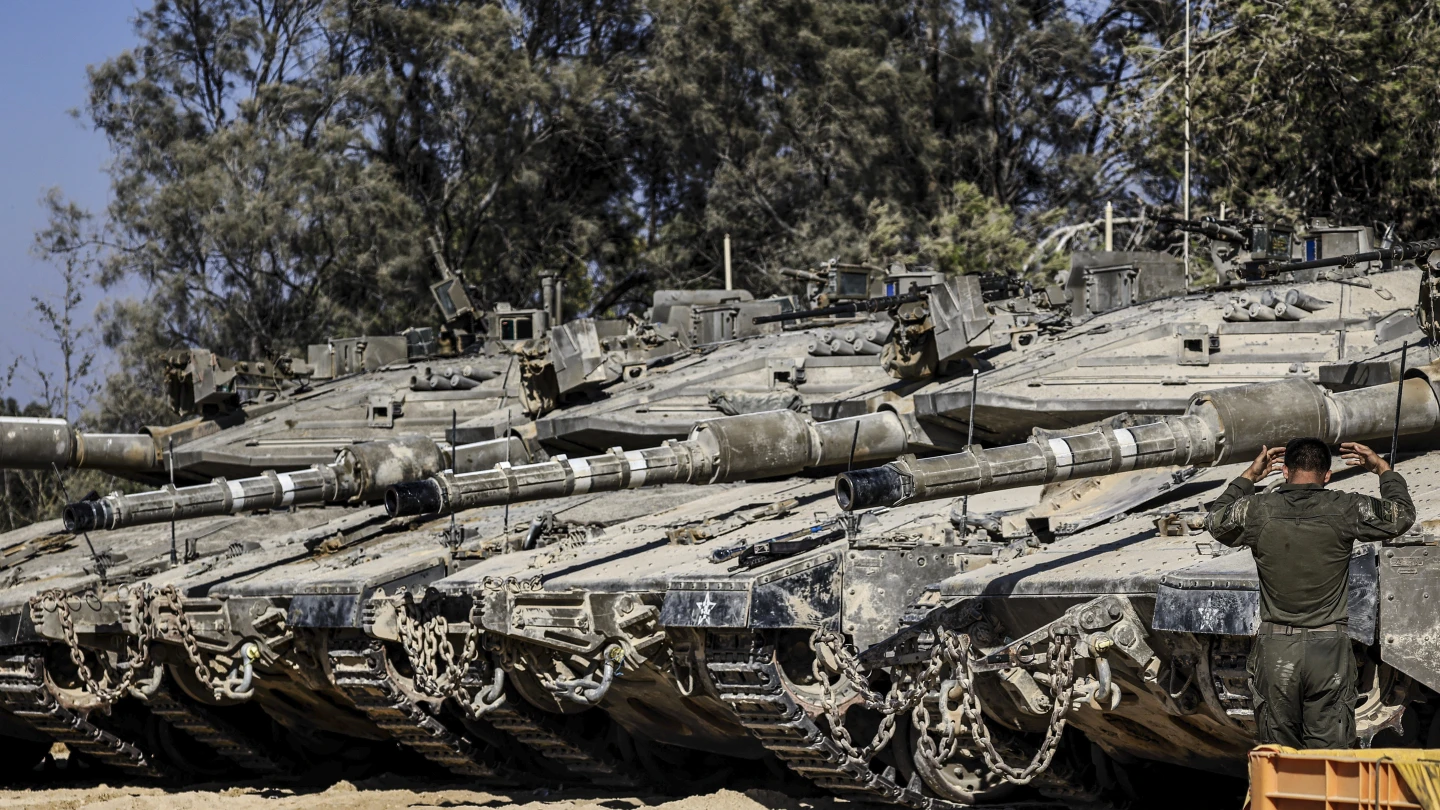
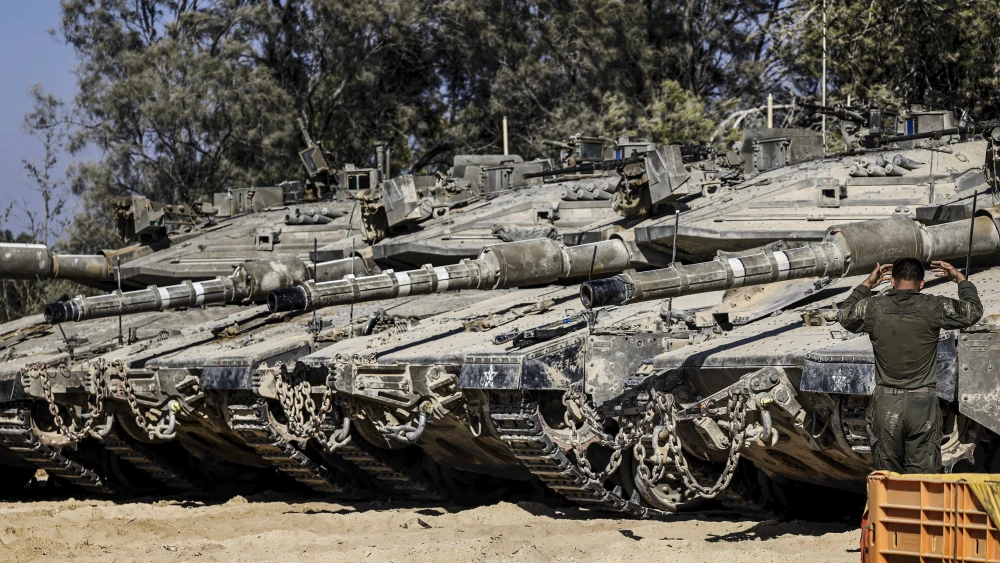

Diplomatic efforts to end the regional war launched by Hamas with its Oct. 7, 2023 pogrom in southern Israel have now returned to the place where it all started. Last week, the Board of Peace, the multinational body created by the Trump administration, announced its plan for implementing and solidifying the ceasefire that ended hostilities in the Palestinian enclave last October.
The heart of the plan revolves around the disarmament of Hamas and allied terrorist groups. Everything else, including the withdrawal of the Israel Defense Forces, is pegged to the surrender of the terrorists’ weapons.

Its ultimate goal is the creation of a Gaza with “One Authority, One Law, One Weapon” as its organizing principle. The board’s plan makes very clear that Hamas should possess no authority, should not decide the law and should control no weaponry.
Yet this is a plan whose merits will be judged not on the soundness of its approach on paper, but on the effectiveness of its implementation. Hamas remains the riskiest, most combustible variable in that regard. Securing its cooperation is therefore a necessary condition for the plan’s success.
But the terrorists will not cooperate. Like their Iranian masters, Hamas will rarely refuse a proposal outright; rather, the group’s leaders will seek to heavily amend whatever is on the negotiating table. In doing so, Hamas will marshal all the advantages it has—its control of the Gaza Strip on the other side of Israel’s “Yellow Line,” the fact that its weapons remain for now in its possession, and its willingness to harass Israeli forces so that the IDF responds militarily, delivering the headlines about supposed Israeli brutality against civilians that is the lifeblood of its propaganda about “genocide.” That cycle then provides Hamas with the justification to withhold handing over its arms.
Hamas may, therefore, need to be pummeled into submission. Only the IDF is capable of doing that. More importantly, only the IDF would be willing to do that. The much-vaunted International Stabilization Force is present in the board’s plan, but as an instrument for the delivery of aid and training of local law enforcement. Lightly armed foreign soldiers, who will likely have to deal with Hamas operatives on a daily basis, are not going to confront terrorists, particularly when those terrorists are brandishing the very weapons they are supposed to give up.
The prospect of a renewed war is, then, a real possibility. Even if Hamas voluntarily gives up some of its arsenal, it is only prepared to do so if the Palestinian Authority is the recipient. The only viable method to ensure that disarmament is permanent and irrevocable is to store the weapons in a separate territory under the control of the Board of Peace, which would then put them beyond use. Again, Hamas is not going to agree to that if it is not compelled to.
On the international level, the propaganda impact of a revival of war in Gaza will be much more dramatic than would be the case with any other conflict. Ironically, that impact will be felt most keenly in those countries where such a war would have little to no direct economic or national security consequences, but which are home to both sizable Jewish communities and a vocal pro-Hamas solidarity movement. In other words, the United States, Canada, the United Kingdom, France, most of the European Union, Australia and other Western democracies.
For Hamas, its one unvarnished success generated by the Oct. 7 atrocities lies precisely on this front. Over the last three years, the security and sense of confidence that prevailed for more than half a century among these Jewish communities has been shattered. Increasingly violent incidents targeting Jews have been normalized in all these countries. Zionism has been demonized beyond recognition in public discourse. In local government and in national legislatures alike, increasing numbers of candidates are being elected on the basis of how much they hate Israel.
Rarely—and whether we like it or not, this is Hamas’s great achievement—has a foreign conflict that has virtually no impact on people’s livelihoods, on the educational opportunities available to their children, on the quality of the healthcare they receive and so forth, exercised such sway over domestic politics.
What makes this state of affairs even more worrying is that the influencers and institutions shaping public perceptions are not simply arguing that Israel’s response to Hamas terror has been excessive and immoral, as bad as that is. They are openly and unabashedly antisemitic, and blatant in their insistence that Israel be destroyed. Anyone who has spent any time on social media will likely have their own list of individuals who conform to this description, but they include such execrable people as the American propagandist Max Blumenthal, the U.K.-based pro-Iranian commentator David Miller, the Palestinian author Susan Abulhawa and New York City Mayor Zohran Mamdani.
To study their contributions is to descend into a sewer of antisemitism created by historical figures from Henry Ford to Adolf Hitler, and from Joseph Stalin to the wartime Mufti of Jerusalem, Hajj Amin al-Husseini. There was a time when their demented rants about a “Jewish empire” and “Jewish supremacism” would have been consigned to the margins.
Now, in a terrible indictment of the intellectual qualities of our present civilization, these charlatans are taken seriously by a public that has rediscovered the therapeutic pleasures of antisemitism: blaming the Jews for your own personal failings, for the broken politics in your country or for the vast gaps in wealth between Western and developing countries—or for all of these and more.
Make no mistake. A new round of fighting in Gaza will further amplify these voices. That means more violence against Jewish communities and greater reticence among Jews to identify in public as Jews. Indeed, it is not outlandish to think that what we have witnessed so far is a mere taste of the venom still to come.
Should Israel, which cannot send the IDF to protect these communities, rein in its operations in Gaza in the hope of lessening pressure on Jews living elsewhere? Absolutely not. The first responsibility of the Israeli government is to its own citizens and the physical survival of the state. On that, there can be no compromise.
But in the twisted world of these influencers, that will be portrayed as the State of Israel stoking antisemitism in order to compete with the Palestinians for the coveted label of “victim.”
They will eagerly double down. We need to be ready.



Get the latest updates in our WhatsApp group.






A renewed war in Gaza is likely, with significant global political implications, according to a JNS analysis. The Board of Peace, a multinational body, has proposed a plan for a ceasefire, aiming for "One Authority, One Law, One Weapon" in Gaza, which necessitates Hamas's disarmament. However, Hamas is unlikely to cooperate, preferring to amend proposals and leverage its control of Gaza and its weapons. The article suggests that only the IDF can compel Hamas's submission, as the proposed International Stabilization Force is lightly armed and focused on aid and training.
"Rarely has a foreign conflict with virtually no impact on people’s livelihoods...exercised such sway over domestic politics."
A new round of fighting would amplify anti-Israel sentiment, particularly in Western democracies with Jewish communities and pro-Hamas movements. This has already led to increased antisemitism and violence against Jews globally. The article concludes that Israel must prioritize its citizens' safety and the state's survival, despite potential international backlash.
© All rights to the original article belong to the source. Din Online shows a headline, an excerpt and a link only. The objectivity rating is computed automatically and is an estimate only.
Discussion
No comments yet — be the first to comment.