יום ראשון, ספטמבר 13, 2026 עברית|English Log in Free sign-up
LIVE
John Malkovich to return to Israel with satirical theatrical-musical showWhat to watch this week: Gal Gadot speeds through The Runner, Hearsay delivers gripping thrillerHollywood’s Jews take sides in Mark Ruffalo-Paramount antisemitism rowIMPACT's Digital Defender 102 workshop helps Jews aged 55 and up fight online antisemitismUS, China to discuss AI safety risks, cooperation on monitoring AI-directed cyberattacksHouthis escalate fighting in Yemen, eyeing control over Mocha Port, Bab al-Mandab Strait – reportHow Israel became the Left’s organizing target for grievance coalitions – opinionFrom Saul's failure to David's reckoning, 'Human Kingship' examines the dangers of power – reviewWater sector 'fully stable' following assessment, reservoirs to be filled over weekendWater crisis in Israel raises fears over impact of Gaza sewage – The Spokesman-ReviewPalestinian football returns after nearly 3-year pause due to Israel’s genocideJohn Malkovich brings 'The Music Critic' to Israel in rare international bookingJohn Malkovich to return to Israel with satirical theatrical-musical showWhat to watch this week: Gal Gadot speeds through The Runner, Hearsay delivers gripping thrillerHollywood’s Jews take sides in Mark Ruffalo-Paramount antisemitism rowIMPACT's Digital Defender 102 workshop helps Jews aged 55 and up fight online antisemitismUS, China to discuss AI safety risks, cooperation on monitoring AI-directed cyberattacksHouthis escalate fighting in Yemen, eyeing control over Mocha Port, Bab al-Mandab Strait – reportHow Israel became the Left’s organizing target for grievance coalitions – opinionFrom Saul's failure to David's reckoning, 'Human Kingship' examines the dangers of power – reviewWater sector 'fully stable' following assessment, reservoirs to be filled over weekendWater crisis in Israel raises fears over impact of Gaza sewage – The Spokesman-ReviewPalestinian football returns after nearly 3-year pause due to Israel’s genocideJohn Malkovich brings 'The Music Critic' to Israel in rare international booking
World

When a self-described Zionist organization stops acting like one
אוג 20, 2026 ·  Source: JNS 86Objectivity score86/100

When a self-described Zionist organization stops acting like one

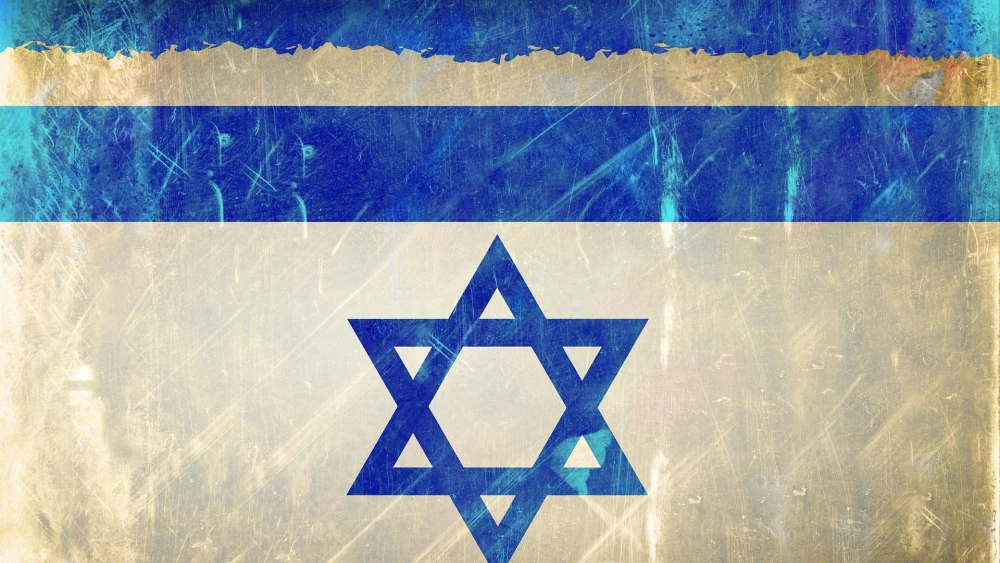
Star of David on the Israeli flag. Credit: Prawny/Pixabay.
Rabbi Stuart Weinblatt

T’ruah calls itself a Zionist organization. Yet its recent actions, increasingly legitimizing individuals, organizations and ideas that reject Zionism and deny the legitimacy of Israel’s continued existence as a Jewish state suggest otherwise.

As leading rabbis of the Zionist Rabbinic Coalition, an independent network of more than 2,000 North American rabbis spanning all denominational movements, we are deeply concerned about this contradiction. T’ruah says that it is “committed to the State of Israel’s (Medinat Yisrael’s) future as a Jewish and democratic state side by side with Palestine.” We welcome that declaration. But an organization is ultimately defined by its choices and actions, not its mission statement.

The decisions T’ruah has made in recent months are concerning, and they are not isolated lapses in judgment. They reflect a broader pattern that is becoming impossible to reconcile with the group’s stated identity.

As rabbis, we recognize that political disagreement within the Jewish community is both legitimate and necessary. Indeed, criticizing an Israeli government, opposing particular policies and advocating for Palestinian rights do not make a person or organization anti-Zionist. However, a rabbinic organization that claims a place within the Zionist community has a responsibility to distinguish such criticism from efforts to discredit Jewish national self-determination itself.

In recent months, T’ruah and its leadership have repeatedly elevated anti-Zionist figures and rhetoric.

T’ruah CEO Rabbi Jill Jacobs supported the effort to prevent Israeli President Isaac Herzog from addressing the Jewish Theological Seminary’s commencement in May, calling him “not an appropriate speaker” for the institution which ordains conservative rabbis. Her position treated the presence of Israel’s president, who plays a largely ceremonial and non-political role in the government, at a flagship American Jewish seminary as beyond acceptable communal bounds.

And yet, T’ruah gave New York City Mayor Zohran Mamdani, the country’s most prominent elected opponent of Israel’s existence as a Jewish state, a featured speaking role at its annual gala in June and publicized his participation without acknowledging his longstanding hostility toward the Jewish state, including calling for Israel’s prime minister to be arrested for war crimes.

As Rabbis David-Seth Kirshner, Erez Sherman and Neil Zuckerman observed: “There is something profoundly revealing about a moral framework that seeks to deny a platform to the president of the Jewish state while enthusiastically offering one to a politician openly hostile to its existence.”

At the same gala, T’ruah presented its Raphael Lemkin Human Rights Award to Gili Getz, who has publicly accused Israel of genocide and apartheid. Giving an award named for the jurist who coined the term “genocide” to someone who directs that accusation against the Jewish state represents a particularly disturbing degradation of moral and historical standards.

T’ruah also recently hired a national rabbinic organizer who describes herself as committed to doikayt, a favored term of Jewish anti-Zionists, and who, as recently as this past June, was the face of a Jewish Voice for Peace social-media campaign.

T’ruah’s tendency to showcase anti-Zionist voices did not begin this year. While Israel’s war against Hamas was still underway, it hired a rabbinical student organizer who had previously described her own position on Israel unequivocally: “Integral to my Jewishness is the activism I do with Jewish Voice for Peace, and my stance as anti-Zionist.”

She helped organize a “stop the genocide” rally less than two weeks after the Hamas-led terrorist attacks in southern Israel on Oct. 7, 2023.

T’ruah also operates a joint project with Jews for Racial and Economic Justice, an organization that says it works most closely on “Israel-Palestine” with JVP and IfNotNow, describes itself as “proudly anti-nationalist” and grounds its work “as an alternative to Zionism.” This ongoing institutional partnership provides further reason to question how T’ruah defines its own Zionist commitments.

Taken together, these decisions reveal a consistent pattern. T’ruah opposes platforms for representatives of the Jewish state while providing such platforms, honors, employment and partnerships to people and organizations that oppose Zionism itself.

Engagement is not the same as endorsement. Jewish organizations should speak with political leaders and activists with whom they disagree. But prominently featuring someone on an organization’s most celebratory stage, honoring that person, hiring activists to shape the next generation of rabbis or maintaining formal partnerships confers legitimacy. When those choices recur, a platform is no longer neutral. It becomes an expression of that organization’s values.

This is not a demand for ideological conformity. Zionism encompasses profound disagreement over governments, borders, war, occupation, religion and Palestinian rights. The question is whether Jewish national self-determination and Israel’s continued existence as a Jewish state remain core values T’ruah is prepared to defend.

We call on the organization and its leaders to answer that question plainly and to bring its actions into line with its professed commitments: reaffirm unequivocally the Jewish people’s right to national self-determination; stop elevating activists and political leaders who seek to eliminate Israel as a Jewish state; and restore a meaningful distinction between criticism of Israel and repudiation of Zionism.

Human-rights advocacy and Zionism are not opposing commitments. A Zionist rabbinic organization should be capable of defending both. Increasingly, the actions of T’ruah actions suggest that it is unwilling to do so.

And so we ask, T’ruah: Are you still a Zionist organization?

Mali and Liel Yahalomi after being located in Argentina. Credit: Israel Police Spokesperson's Unit.
A stone Greco-Buddhist relief depicting the Trojan horse. Credit: Public Domain via Wikimedia Commons.
Dr. Abdul El-Sayed, a candidate for the U.S. Senate in the state of Michigan, at a campaign event at Michigan Technological University, Oct. 22, 2025. Credit: Conlan Houston/Flickr via Wikimedia Commons.

Get the latest updates in our WhatsApp group.

Republican U.S. Senate candidate Mike Rogers speaks at his election watch party on November 5, 2024 in Novi, Michigan. Photo by Sarah Rice/Getty Images.
Danny Danon, Israeli Ambassador to the United Nations, in the Qatari Lounge in New York City, Aug. 19, 2026. Photo by Rikki Zagelbaum.
National Security Minister Itamar Ben-Gvir points to the hanging facility under construction where the death penalty for terrorists convicted of murder will be carried out, Aug. 18, 2026. Credit: Otzma Yehudit.
A military helicopter flies above a Syrian flag during the Syria Summer Family Festival in Damascus, Syria, on Aug. 9, 2026. Photo by Omar Albam / Middle East Images / AFP via Getty Images.
תמונת סיקור
James Sinkinson. Credit: Courtesy.
Morton A. Klein. Credit: Courtesy.
💬 רוצים להגיב ולהצטרף לדיון? הצטרפו — חינם, ומקבלים גם את הדיג׳סט השבועי.
🗞️ In-depth summary

The Zionist Rabbinic Coalition has expressed deep concern regarding T’ruah’s recent actions, questioning whether the self-described Zionist organization still upholds Jewish national self-determination and Israel’s existence as a Jewish state. The coalition, representing over 2,000 North American rabbis, argues that T’ruah’s choices increasingly legitimize individuals and ideas that reject Zionism. They cite several examples:

  • T’ruah CEO Rabbi Jill Jacobs opposed Israeli President Isaac Herzog speaking at the Jewish Theological Seminary.
  • T’ruah featured New York City Mayor Zohran Mamdani, a prominent opponent of Israel’s existence, at its annual gala. Rabbis David-Seth Kirshner, Erez Sherman, and Neil Zuckerman noted, “There is something profoundly revealing about a moral framework that seeks to deny a platform to the president of the Jewish state while enthusiastically offering one to a politician openly hostile to its existence.”
  • The organization presented its Raphael Lemkin Human Rights Award to Gili Getz, who has publicly accused Israel of genocide and apartheid.
  • T’ruah has hired national rabbinic organizers and partnered with organizations that identify as anti-Zionist or anti-nationalist.

The coalition urges T’ruah to unequivocally reaffirm the Jewish people’s right to national self-determination, cease elevating anti-Zionist figures, and distinguish between criticism of Israel and repudiation of Zionism.

Automatically generated summary based on the original article; quotes are from the source.
This story is based on reporting by JNS.
Read the full article at the source →
🏷

© All rights to the original article belong to the source. Din Online shows a headline, an excerpt and a link only. The objectivity rating is computed automatically and is an estimate only.

Related

Discussion

No comments yet — be the first to comment.

Add a comment