Barakat's Alleged Ambition: A Political Earthquake in Wartime
The Unseen Battle for Leadership Amidst War
In the tumultuous landscape of Israeli politics, where every utterance is scrutinized and every move calculated, a recent revelation has ripped through the already fractured consensus. The political commentator Amit Segal dropped a bombshell, alleging that Economy Minister Nir Barakat attempted to unseat Prime Minister Benjamin Netanyahu at the outset of the war. This claim, which has naturally become one of the most-searched topics on Google in Israel this week, has not only exposed the raw ambition lurking beneath the surface of wartime unity but also ignited a fierce debate about loyalty, timing, and the very nature of leadership during a national crisis.
Segal's report, detailed by Israel Hayom, paints a picture of a "clumsy and failed execution" of a plan by Barakat to "paralyze the government from the right and the left" and seize leadership of the Likud. The accusation is not merely a whisper in the corridors of power; it's a direct challenge to Barakat's political integrity and a stark reminder that even as the nation battles existential threats, the internal struggle for dominance never truly ceases.

Barakat's Vehement Denial and Segal's Challenge
Nir Barakat wasted no time in issuing a categorical denial, labeling Segal's report as "absolute fake news." Speaking to Walla, Barakat asserted, "I did not try to oust Netanyahu. I committed in the past – I commit today." He even went so far as to accuse unspecified media sources of attempting to damage his standing ahead of future Likud primaries. However, the plot thickened when Barakat refused to commit to filing a libel suit against Segal, nor would he agree to undergo a polygraph test, leading to further speculation and raising more questions than answers.
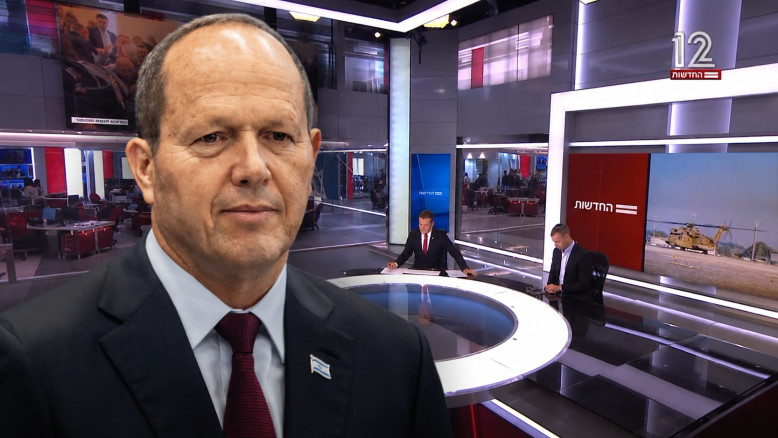
Amit Segal, for his part, has doubled down, challenging Barakat directly:
"If Barakat denies my publication about the plan to depose Netanyahu, the minimum required is a huge libel suit tomorrow morning. Money is not the problem, so what is?"
This public gauntlet thrown by Segal underscores the seriousness of the allegations and highlights the deep personal and political stakes involved. In the absence of a libel suit or a polygraph, Barakat's denial, however strong, is left hanging in the air, vulnerable to interpretation.
The Shadow Play of Succession and Leaks
The timing of this revelation is particularly salient. With Israel embroiled in conflict, the idea of internal political maneuvering to replace the Prime Minister is deeply unsettling to many. Yet, it's precisely in times of crisis that leadership vacuums or perceived weaknesses can embolden ambitious figures. This episode brings to mind historical parallels, where moments of national vulnerability have often been fertile ground for political challenges. Think of the internal party struggles in wartime Britain, where figures like Churchill faced immense pressure and internal opposition even as they led the nation against external threats.
Interestingly, some reports suggest that the Mossad may have been behind a separate, short report about a "sedation" exercise, implying a sophisticated information operation. Dr. Schleifer, interviewed by Arutz 7, posits that Israel likely intercepts Arab leaders and decided to disseminate this information, choosing Amit Segal as the ideal conduit due to his right-wing views and his platform on Channel 12, ensuring maximum exposure. This layer suggests that the media landscape is not merely reporting events but is itself a battleground for influence and strategic leaks, where journalists like Segal can become key players in a larger, unseen game.

Incentives and the Looming Primaries
The motivation behind Barakat's alleged actions, if true, is clear: political advancement. Netanyahu's current standing, while still powerful, has been tested by the events of October 7th and the ongoing war. For an ambitious Likud politician, a perceived weakening of the incumbent could present an opportunity to consolidate power and position oneself for future leadership. The mention of upcoming Likud primaries is not incidental; it provides a crucial context for understanding the internal pressures and rivalries within the party. The Likud secretariat's recent decision to reserve slots for figures like Gideon Sa'ar, Yisrael Katz, and Haim Katz, in addition to the Prime Minister's own appointments, hints at a broader restructuring and strategic positioning ahead of future elections.
This political chess game is further complicated by other internal party dynamics, such as the surprising report of Rabbi Yitzhak Yosef, the former Chief Rabbi, allegedly telling his students that "Netanyahu hates us" and that they should not vote for Shas, even suggesting that "the left respects" them. While Shas's spiritual leader denies this, it illustrates the multifaceted tensions within the broader right-wing bloc, extending beyond the Likud itself.
- Barakat's Ambition Under Scrutiny: The allegations place a spotlight on the economy minister's leadership aspirations at a sensitive time.
- Segal's Credibility Test: The commentator's willingness to challenge Barakat to a libel suit underscores his confidence in the report.
- Wartime Politics: The episode reveals that even in national crisis, internal political struggles for succession persist.
- Media as a Weapon: The suggestion of strategic leaks to specific journalists highlights the media's role in political power plays.
- Likud's Internal Tensions: The broader context of party primaries and reserved slots indicates a dynamic and competitive political environment.
"The execution was clumsy and failed."Israel Hayom, citing Amit Segal
The episode highlights the fragility of political unity during wartime and the ever-present shadow of succession battles. It's a stark reminder that even with external threats looming, the internal political currents can be equally turbulent and destabilizing. The incentives for such a move are clear: a chance to seize the reins of power, perhaps believing oneself better equipped to lead during a crisis, or simply capitalizing on perceived weakness. However, the political cost of a failed coup, especially one exposed publicly, can be immense.
What to Watch Next
The immediate aftermath of this controversy will be crucial. Will Barakat eventually buckle under pressure and file a libel suit, or will he attempt to let the storm pass? His refusal to take a polygraph test will likely continue to fuel speculation. Furthermore, observe how this saga impacts his standing within the Likud and among the broader public, especially as the party gears up for potential future primaries. The reactions from other Likud stalwarts and Netanyahu's inner circle will also be telling. This incident serves as a significant bellwether for the internal health and stability of the ruling party at a critical juncture for Israel.
Does the pursuit of power, even in times of national emergency, ultimately serve the public good, or does it merely expose the inherent self-interest that often overshadows statesmanship?

Coverage Sources & References:
- מאחורי הגב של נתניהו: הטענה הדרמטית של עמית סגל על ברקת [מעריב]
- עמית סגל: אם ברקת מכחיש את הפרסום שלי על התכנית להדחת נתניהו, המינימום המתחייב הוא תביעת דיבה ענקית מחר על הבוקר. כסף זו לא הבעיה אז מה כן? [רוטר]
- "הביצוע היה מגושם וכושל": כך ניסה ניר ברקת להדיח את נתניהו [ישראל היום]
- ברקת מכחיש: ''לא ניסיתי להדיח את נתניהו.'' מסרב להתחייב לתביעת דיבה נגד עמית סגל ולא מוכן לעבור פוליגרף [רוטר]
- ברקת מכחיש: "לא ניסיתי להדיח את נתניהו. התחייבתי בעבר – אני מתחייב היום" [וואלה]
- הרב יצחק יוסף לתלמידיו: נתניהו שונא אותנו – צריך להפיל את גוש הימין | דיווח [וואלה]
- חוץ מהשריונים של רה''מ, ישוריינו גם ישראל וחיים כץ וגדעון סער [רוטר]
- הערכה: המוסד מאחורי דיווח תרגיל ה''הרדמה'' [רוטר]
An original opinion-analysis column by the Din Online desk, based on current coverage from a range of sources. Views expressed are the desk’s own. Some content is produced with automated tools.
Discussion
No comments yet — be the first to comment.