Charred First Temple beams unearthed in City of David
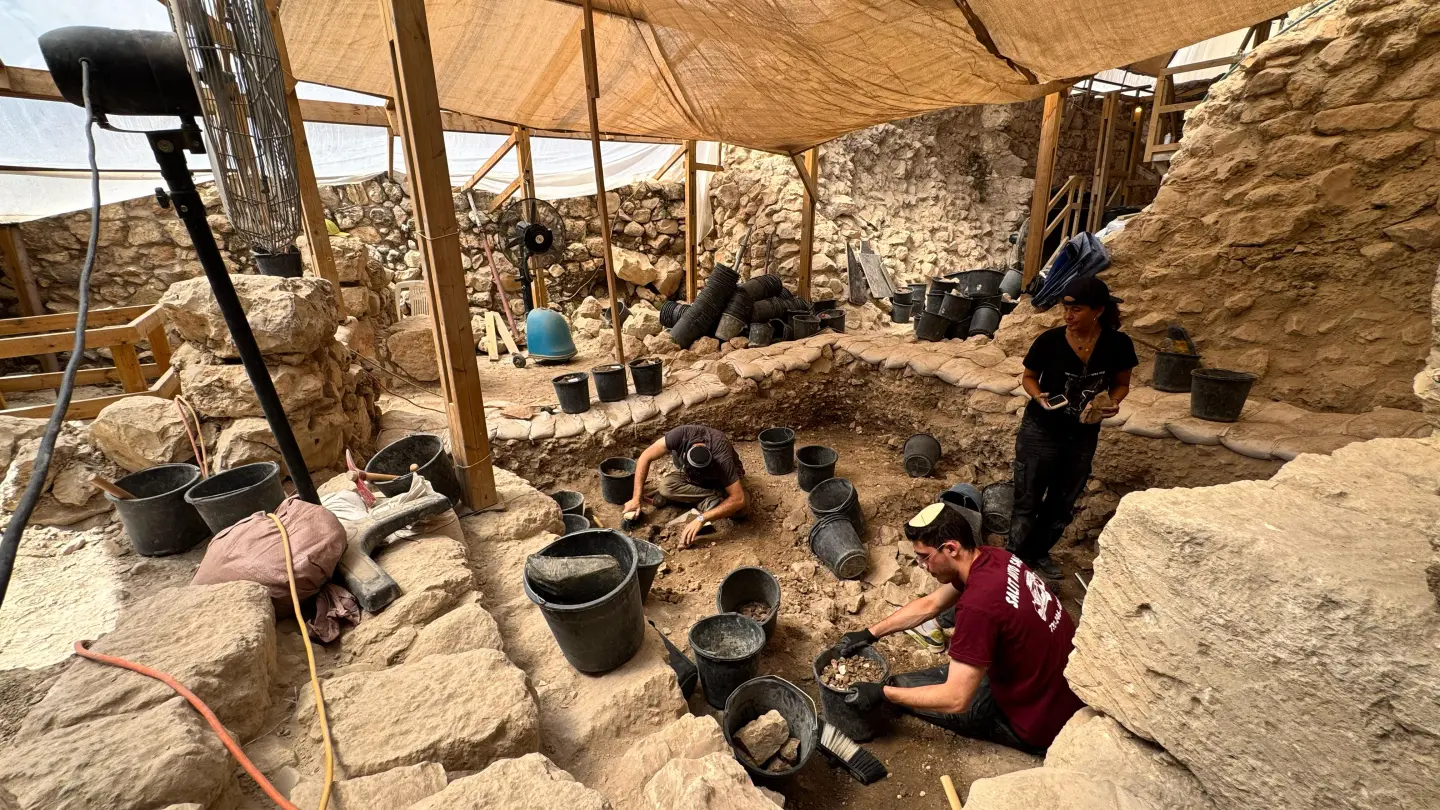
The wooden beams, preserved for some 2,600 years beneath melted plaster, offer a rare glimpse into the Babylonian destruction of Jerusalem in 586 BCE.
Archaeologists in Jerusalem's City of David have unearthed charred wooden beams, believed to be from the roof of a First Temple-period building, that collapsed during the Babylonian destruction of Jerusalem in 586 BCE. The beams, preserved for approximately 2,600 years under melted plaster, were discovered at the Givati Parking Lot site by the Israel Antiquities Authority and Tel Aviv University. This find is considered rare due to the exceptional preservation of wood in Israel's climate, allowing for precise dating within a 10-year range. Excavation director Efrat Bocher stated, "The beams appear to have served as the roof of an inner courtyard in a building from the First Temple period." Researchers suggest that returning Jewish residents intentionally left parts of the destruction layer intact when rebuilding, creating a "landscape of memory."
The summary and context on this page were written by the Din Online desk based on the original article; any quotes are from the source. The full article and all rights to it remain with the source. The objectivity rating is computed automatically and is an estimate only.
Discussion
No comments yet — be the first to comment.