Tehran issues drastic new demands for deal to reopen Hormuz, says US must ‘correct its behavior’
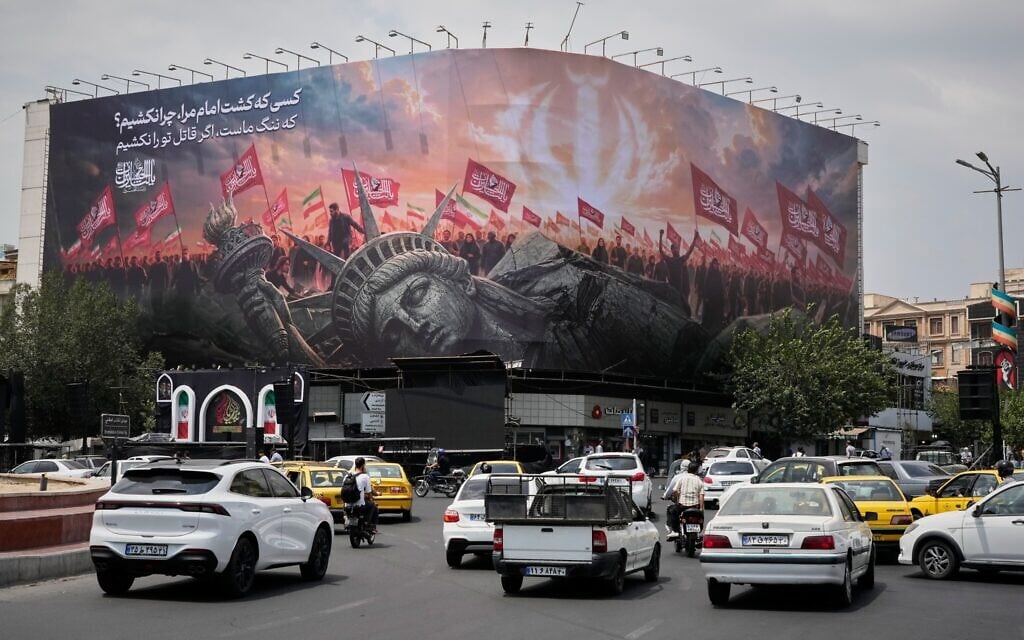

Iran’s politburo-like body known as the Supreme National Security Council on Saturday declared the Strait of Hormuz will not open until the United States “corrects its behavior,” issuing new demands that could shake up talks on a deal to manage the waterway and traffic on it.
Iran’s state broadcaster published the statement by the council’s secretary, Mohammad Bagher Zolghadr, who is also a commander in the powerful Islamic Revolutionary Guard Corps.
The United States must never threaten Iran again, the statement said, and must permanently end the war with Iran and its armed allies in the region. The US must lift the naval blockade of Iranian ports and withdraw its military from the area. It also must “completely compensate” Iran for war damage, lift sanctions and “unconditionally” release frozen assets.
The new list of demands reflected the demands Iran was previously making as a condition for a permanent accord with the US. That envisaged accord was intended by the US as also resolving the threat posed by Iran’s rogue nuclear program and its stockpile of 60%-enriched uranium. Instead, the demands were being issued as conditions for an accord under which Iran would merely consent to reopen the Strait of Hormuz.
Barak Ravid, Washington correspondent of Israel’s Channel 12 news, told the network that “clearly the US cannot accept” those demands and that they could potentially push US President Donald Trump back toward the military option that he shelved only days ago.
There was no immediate comment from the US, which has wanted an acceptable deal first on the strait before ending the blockade. According to the interim deal signed in June, a schedule to end sanctions and plan for compensation would be part of the final deal, and negotiations would address frozen assets.
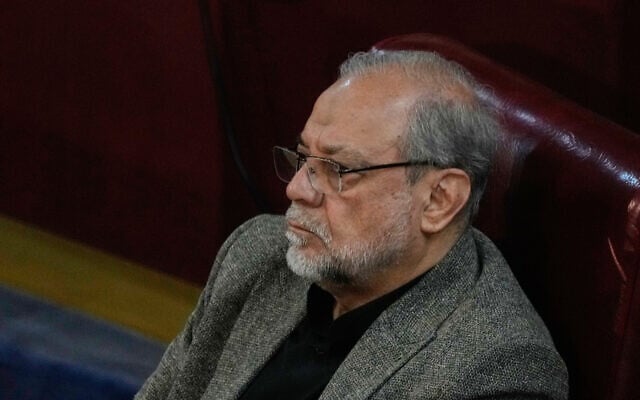
The 60-day period to negotiate a final deal will end in just over a week but could be extended.
Iran has said it was close to reaching a separate deal with Oman to manage the strait, which runs between the two countries.
Iranian Foreign Minister Abbas Araghchi earlier Saturday said they were close to reaching an agreement on navigation, “specifically the determination of a transit route.” But the waterway’s reopening was contingent on other conditions, he said in remarks shared on social media, and blamed the situation on what he called the US violation of the interim deal.
The IRGC also said earlier Saturday that reopening Hormuz was unrelated to the negotiations with Oman and would depend on Washington accepting Tehran’s conditions.
“The enemy is forced to accept Iran’s conditions for the opening of the strait and to refrain from the interference that it is currently making in the negotiations — which have almost reached their end — between Iran, Oman and other countries,” the IRGC said.
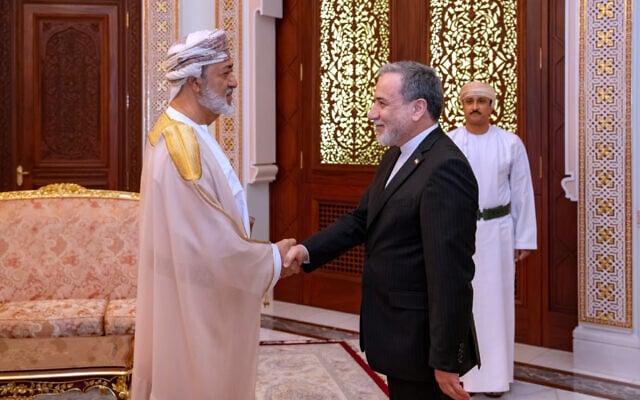
Oman, a mediator Gulf Arab country which has said relatively little on the talks, said in a statement that the discussions were ongoing “in a positive and constructive atmosphere,” and condemned attacks on ships on the strait, where the United Arab Emirates reported that one of its vessels was targeted Saturday by an Iranian missile.
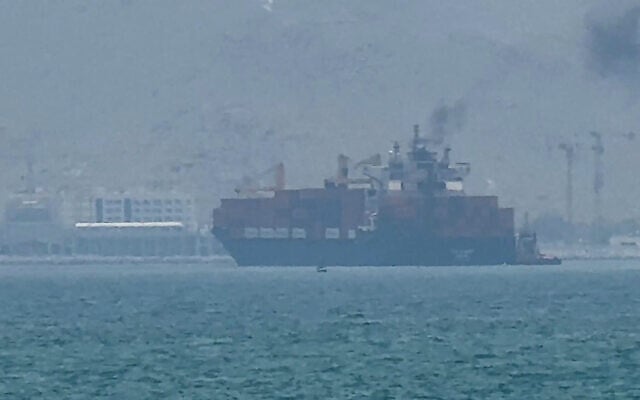
The strait, crucial to global supplies of oil and natural gas, had been considered an international waterway before the war. Ship transits remain low.
As the Islamic Republic issued its new demands, US Vice President JD Vance said to Fox News that Tehran told Washington it had “no plans” to impose tolls on the Strait of Hormuz.
“Some people within the Iranian system” have talked about tolling the waterway, he said, adding that “the Iranians have told us they have no plans to toll the Strait of Hormuz.”
“But again, we’re going to see what actions actually happen,” Vance said.
According to Vance, the expectation of the Trump administration was that “we see the same amount of oil and gas come out of the Gulf that you saw before the conflict.”
“The one problem of course is that the Iranians laid a large number of mines at the beginning of the war and so what we’re really working through is how you can actually set up a traffic scheme so ships that pass can pass through safely,” Vance continued. “That of course includes de-mining, it also includes a commitment from the Iranians that they are not going to fire at commercial vessels.”
A diplomat from one of the mediating countries told The Times of Israel that Vance was correct in stating that the temporary deal to reopen the Strait of Hormuz will bar either side from charging tolls.
Iran, however, has not ruled out the imposition of tolls once that deal expires, with state-owned news outlet Press TV reporting Friday that a parliamentary committee was reviewing a preliminary bill that would introduce fees for transiting the waterway, while barring US, Israeli and other “hostile” vessels from passing through.

Vance further said in the Fox News interview that Iran was “hurting in a big way,” and was pushing hard for a deal to end the war, adding: “I think we have made some progress in the last few days.”
“We’ve destroyed their nuclear program. We’ve destroyed their conventional military. We’ve radically reduced what you might call their asymmetric military capabilities,” Vance claimed, “and right now we’re trying to see if they’re willing to make the kind of long-term changes that would be necessary to have a better relationship with the United States. If not, that’s fine too. We are just going to keep on applying the kind of pressure that we can apply.”

As a multimedia journalist, my job is to take the quality, fact-based journalism produced by The Times of Israel newsroom and make it accessible across every platform — from Instagram posts to podcasts to short-form videos.
This is how many, especially young people, consume news these days. But misinformation is rampant on social media. Our team at ToI produces accurate, responsible short-form reporting on Israel and the Jewish world.
If you believe in the importance of factual social media journalism, please consider joining our reader support group, The Times of Israel Community. Your financial support is essential to sustain responsible multimedia reporting.
— Gabriella Jacobs, multimedia journalist

We’re really pleased that you’ve read X Times of Israel articles in the past month.
That’s why we started the Times of Israel – to provide discerning readers like you with must-read coverage of Israel and the Jewish world.
So now we have a request. Unlike other news outlets, we haven’t put up a paywall. But as the journalism we do is costly, we invite readers for whom The Times of Israel has become important to help support our work by joining The Times of Israel Community.
For as little as $6 a month you can help support our quality journalism while enjoying The Times of Israel AD-FREE, as well as accessing exclusive content available only to Times of Israel Community members.
Thank you, David Horovitz, Founding Editor of The Times of Israel




Iran's Supreme National Security Council declared on Saturday that the Strait of Hormuz will not reopen until the United States "corrects its behavior," issuing new demands that complicate ongoing negotiations. These demands include the US ending its war with Iran and its allies, lifting the naval blockade, withdrawing its military, fully compensating Iran for war damage, lifting sanctions, and unconditionally releasing frozen assets. These conditions, previously sought for a comprehensive accord addressing Iran's nuclear program, are now prerequisites for merely reopening the strait. While Iran claims progress in separate talks with Oman regarding navigation, the Islamic Revolutionary Guard Corps (IRGC) stated that reopening Hormuz is contingent on Washington accepting Tehran's conditions. US Vice President JD Vance indicated that Iran has stated it has "no plans" to impose tolls on the strait, but acknowledged the need to clear mines and ensure safe passage for commercial vessels. The 60-day period for a final deal is nearing its end, with a potential extension.
© All rights to the original article belong to the source. Din Online shows a headline, an excerpt and a link only. The objectivity rating is computed automatically and is an estimate only.
Discussion
No comments yet — be the first to comment.