Why Orthodox Jews in the US are pushing back against permanent daylight saving time
Andrew Silow-Carroll is the editor-in-chief of JTA
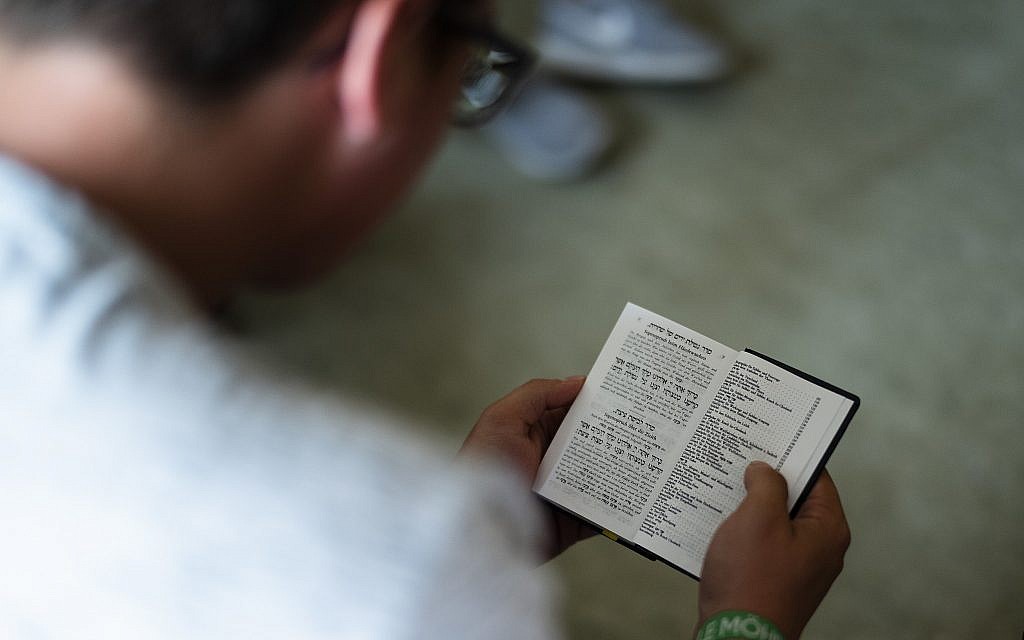
JTA — For many Orthodox Jews, a typical winter weekday begins early: head to synagogue, gather in a minyan for morning prayers, then rush off to work.
Orthodox Jewish in the United States groups say a bill that would make daylight saving time permanent could upend that routine by pushing winter sunrises — and the earliest permissible time for some prayers — an hour later.
Agudath Israel of America is among the groups urging the US Senate to reject legislation that would make daylight saving time permanent nationwide, arguing that the change would create both public safety risks and significant challenges for Orthodox Jewish religious life.
The US House of Representatives passed the Sunshine Protection Act on Tuesday by a wide bipartisan margin. In a statement issued after the vote, Agudath Israel said it understood the appeal of ending the twice-yearly clock changes but opposed making daylight saving time permanent.
The Orthodox advocacy organization warned that permanent daylight saving time would push winter sunrises past 9 a.m. in some parts of the country, forcing many children to travel to school before dawn. It also said the later sunrise would make it difficult for observant Jews to attend morning synagogue services and still arrive at work or school on time, because Jewish law prohibits reciting key morning prayers before prescribed times tied to sunrise.
“The extension of DST will create an extreme hardship on observant Jews,” the organization said. “It would be extraordinarily difficult — if not impossible — to arrive on time for a job and will affect the start time of our schools.”
The Orthodox Union and the Coalition for Jewish Values have also come out against the measure.

In a column for Chabad.org that didn’t take a position on the bill, Menachem Posner also wrote that the change would present a challenge in parts of the country for morning minyan, the 10-person prayer quorum. But he also noted an upside to the extension of daylight saving: a later start time for Shabbat on short winter Fridays.
Shabbat begins at sundown, which during the winter can fall before 4:00 p.m. in parts of the country. “With DST, however, this will be shifted one hour later, so that even on the darkest day of winter, Jews will have one more hour to prepare for Shabbat,” Posner wrote.
Orthodox parties in Israel have also made an issue of changes to the daylight saving calendar. In 2011, Prime Minister Benjamin Netanyahu’s cabinet unanimously approved extending daylight saving time until the first Sunday after October 1, despite objections from Haredi parties. The change brought Israel’s clock closer to European practice while still acknowledging Orthodox concerns about morning prayer and a later start time to Yom Kippur that they argued would make the fast more difficult.
This week Agudath Israel also pointed to the brief US experiment with year-round daylight saving time during the 1970s energy crisis, when Congress repealed the policy after widespread public dissatisfaction over dark winter mornings.
The organization said it hoped the Senate would weigh the broader consequences of permanent daylight saving time, including alternatives such as permanent standard time or retaining the current system of seasonal clock changes.

The war with Iran has been draining for all of us in Israel. But when I heard about a high casualty incident – ballistic missile impacts in Arad and Dimona that left nearly 200 people wounded – I drank a cup of coffee, packed a bag, and headed south.
There, I spoke with Shilgit, the head of an after-school program for underprivileged youth. Standing outside her destroyed center, Shilgit said it was a miracle that no children were hurt and spoke about the community coming together in the hours since.
As a Times of Israel reporter, I’m committed to telling stories of resilience like Shilgit’s. But my colleagues and I can't do this alone. If you value work like this, please consider joining our reader support group, The Times of Israel Community. Your financial support is essential to keep real human reporting like this going.
— Stav Levaton, military reporter

We’re really pleased that you’ve read X Times of Israel articles in the past month.
That’s why we started the Times of Israel – to provide discerning readers like you with must-read coverage of Israel and the Jewish world.
So now we have a request. Unlike other news outlets, we haven’t put up a paywall. But as the journalism we do is costly, we invite readers for whom The Times of Israel has become important to help support our work by joining The Times of Israel Community.
For as little as $6 a month you can help support our quality journalism while enjoying The Times of Israel AD-FREE, as well as accessing exclusive content available only to Times of Israel Community members.
Thank you, David Horovitz, Founding Editor of The Times of Israel








© All rights to the original article belong to the source. Din Online shows a headline, an excerpt and a link only. The objectivity rating is computed automatically and is an estimate only.
Discussion
No comments yet — be the first to comment.