From Ohio, a Palestinian American watches as settlers besiege his family in Qusra
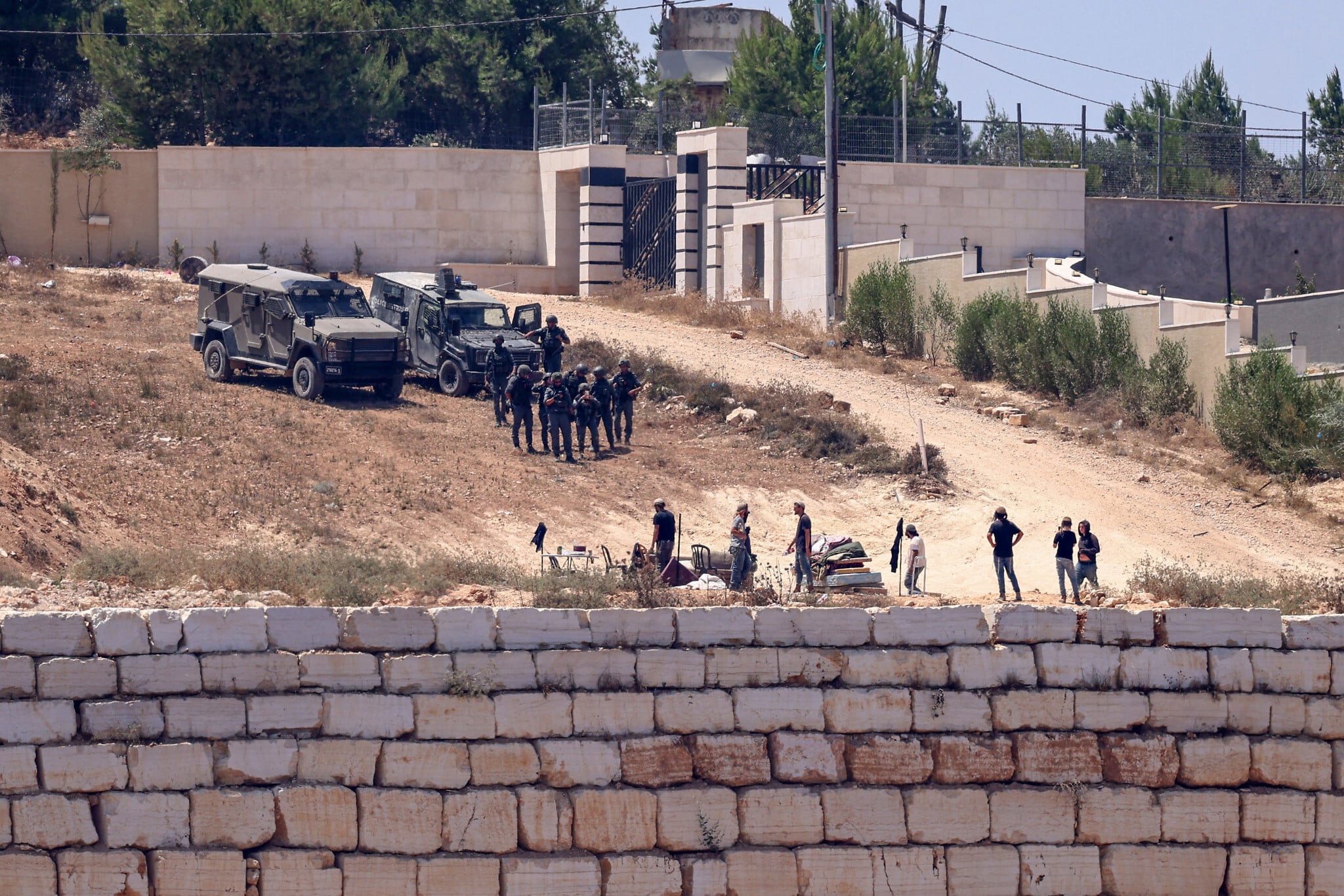
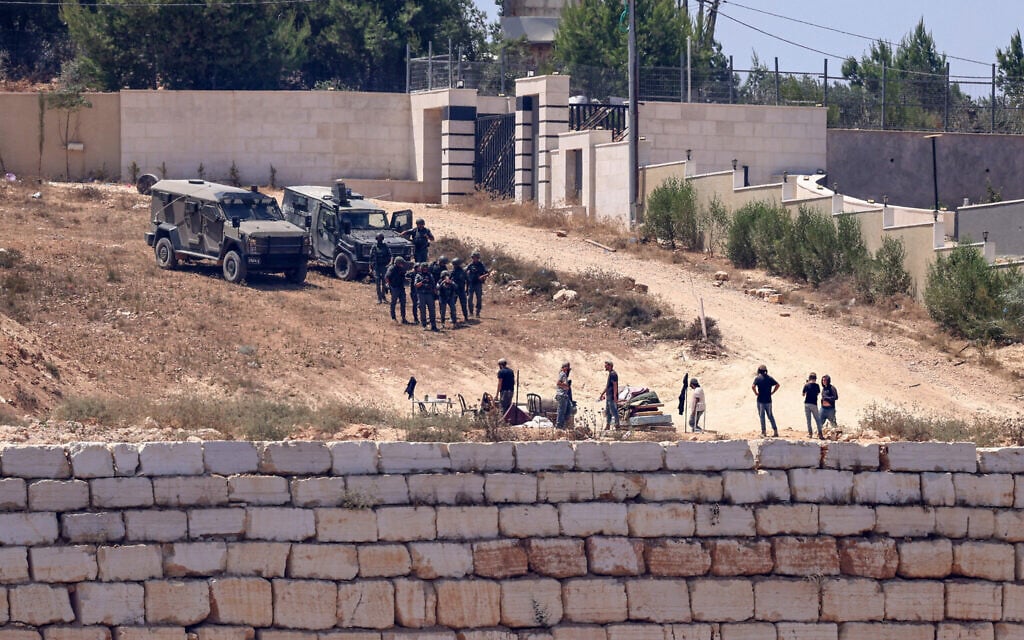
From thousands of miles away, Loui Ridi has watched in horror as extremist Israeli settlers have laid siege to the home he has been building in the Palestinian West Bank village of Qusra.
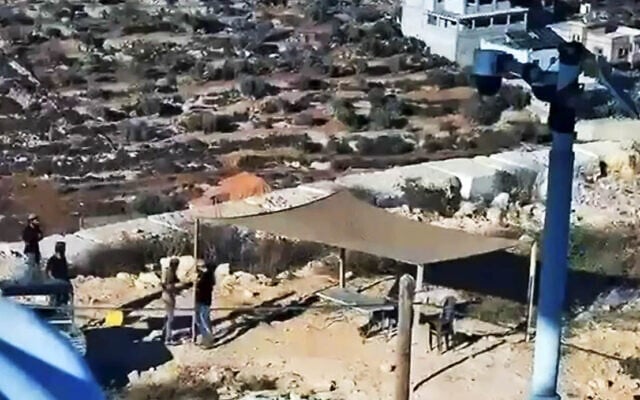
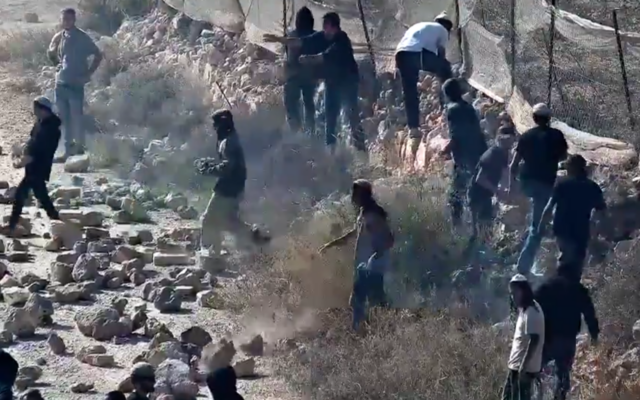
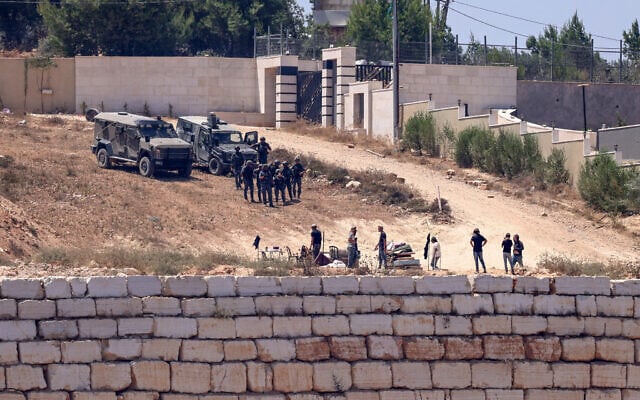
Cameras he had installed beam images to him of the settlers surrounding the home and that of a neighbor, obstructing their entrances with large stones and brazenly defying the Israeli soldiers who have done little to intervene.

Inside the home are Ridi’s brother, Qusai Abu Ridi, and Qusai’s 18-year-old son, both of whom are trapped. Nearby, Youssef Hassan, his wife and daughters are also prevented from leaving their own home by the same mob of extremists.
Ridi, 46, was born and raised in Qusra and now lives in Toledo, Ohio, where he owns and runs a successful chain of gas stations and car washes. He spoke with The Times of Israel early Wednesday morning, shortly after 6 a.m. Eastern Time (1 p.m. Israel time). He hadn’t slept; instead, he spent the night glued to the security cameras he installed at the Qusra home.
“I told Qusai, ‘Listen, your life is more important than anything. If you feel threatened and afraid, I’ll make sure someone comes and evacuates you somewhere safe,'” Ridi told The Times of Israel.
He added, “But he doesn’t want to leave. ‘Brother,’ he tells me, ‘all I need is food. I’m not leaving our home.'”
While Ridi lives in the US, he remains deeply connected to his hometown. Along with his brother and nephew, Ridi has family and friends in Qusra, and sweet memories of home. He left the village 23 years ago and settled in Ohio. He has two daughters, aged 10 and 20.
He makes a point of visiting his family at least once annually, traveling there even more often in recent years. His 83-year-old mother suffered a stroke, and he wants to be beside her as much as possible.
He bought the land in Qusra several years ago and began building the house. So far, he said he has already invested $1 million in the still-unfinished residence.
“I bought it so my daughters would be part of my family story,” he said. “It’s the most basic impulse, to connect my girls to my identity.”
“When my older daughter was seven, I brought her to Qusra for two months,” he said. “I enrolled her in school so she would form a connection with the place. It was a formative experience. Before I built the house, I received all the relevant permits from the Palestinian Authority, and I have all the documents proving that the land belongs to me and that I am permitted to build here.”
Ridi said he had reached out to the US Embassy in Jerusalem for assistance.
“I sent an email, and they replied that they had no jurisdiction there and that I should contact the Israeli government or the Palestinian Authority,” he said.
On Wednesday, US officials reportedly discussed the situation, were shocked at the settlers’ ongoing siege of the homes in Qusra, and are asking why Israel is allowing “anarchy” to unfold in the West Bank. The White House and the US State Department did not immediately respond to requests for comment on the matter.
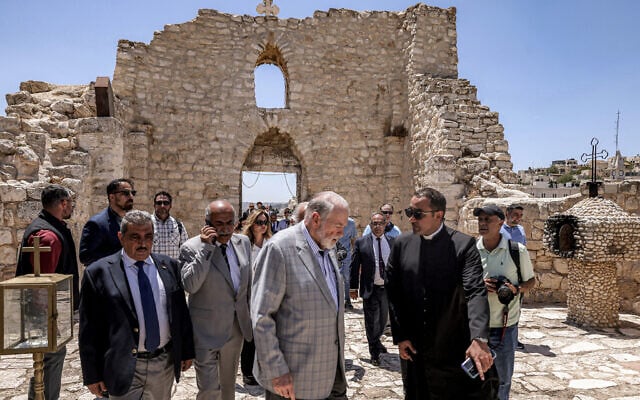
Other Palestinian American citizens have also complained of a lack of responsiveness from the US Embassy in Israel, which also operates the US Office of Palestinian Affairs. Thousands of Palestinians with American citizenship live in villages east of Ramallah, creating an unusually large and significant concentration of US citizens in the territory.
The most prominent example is Turmusayya, where the vast majority of residents hold American citizenship. There are also large communities of Palestinians with US citizenship in other villages northeast and east of Ramallah. Many of them say US Ambassador to Israel Mike Huckabee has refrained from helping.
“It’s very clear he isn’t on our side,” Ridi said.
In 2025, following an arson attack in the West Bank Palestinian town of Taybeh, Huckabee visited the area and pledged his support to American citizens.
“I work for ALL American citizens who live in Israel-Jewish, Muslim or Christian,” he said upon the visit. “When they are terrorized or victims of crime, I will demand those responsible be held accountable w/ real consequences.”
But last week, Palestinian Americans in Turmusayya told the Guardian that they believe the US administration is doing too little in the face of rising settler violence. The report described repeated appeals for American assistance that residents said failed to produce effective protection.
Watching his brother and nephew surrounded and defenseless through a screen is taking a heavy emotional toll on Ridi.
“It’s an extremely difficult experience. I’ve been glued to the cameras for three days already,” he said. “We talk every few hours. There are moments when I can actually see the settlers approaching the house. I watch how my brother and his son react, and it’s a nightmare.
He added, “These people are monsters. This is real terrorism. This couldn’t happen anywhere else in the world.”
“I don’t understand how this can be happening,” he continued. “My brother calls the police and asks for help, and some time later a white pickup truck arrives with IDF soldiers. Instead of helping, the soldiers hug the settlers. Instead of protecting my brother, the soldiers become part of the danger. It looks as though they have backing, as though this is part of Israeli government policy. I don’t understand it.”
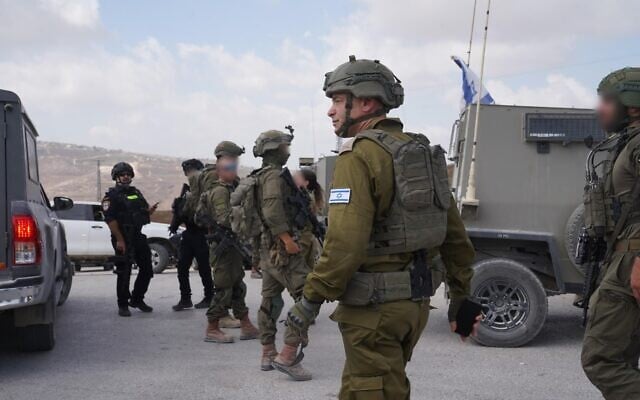
The military confirmed on Wednesday that it would be taking disciplinary action against troops who were caught praying alongside the settlers outside the besieged homes on Sunday rather than removing them from the area.
Ridi noted that Qusra is in Area B, a zone of the West Bank where Israel is meant to have security control.
“As a child, I didn’t know Israelis,” Ridi said. “My encounter now with these people is deeply unsettling. The one consolation is that there are other Israelis too. There are Israelis who genuinely care, people with hearts.”
He is preparing to travel to Qusra next week.
“Qusai told me to stay home. ‘There’s nothing you can do here. Stay home,’ he told me,” Ridi said. “But I have to come. I have to be close to my brother.”
Jacob Magid and Nurit Yohanan contributed to this report.

As a multimedia journalist, my job is to take the quality, fact-based journalism produced by The Times of Israel newsroom and make it accessible across every platform — from Instagram posts to podcasts to short-form videos.
This is how many, especially young people, consume news these days. But misinformation is rampant on social media. Our team at ToI produces accurate, responsible short-form reporting on Israel and the Jewish world.
If you believe in the importance of factual social media journalism, please consider joining our reader support group, The Times of Israel Community. Your financial support is essential to sustain responsible multimedia reporting.
— Gabriella Jacobs, multimedia journalist

We’re really pleased that you’ve read X Times of Israel articles in the past month.
That’s why we started the Times of Israel – to provide discerning readers like you with must-read coverage of Israel and the Jewish world.
So now we have a request. Unlike other news outlets, we haven’t put up a paywall. But as the journalism we do is costly, we invite readers for whom The Times of Israel has become important to help support our work by joining The Times of Israel Community.
For as little as $6 a month you can help support our quality journalism while enjoying The Times of Israel AD-FREE, as well as accessing exclusive content available only to Times of Israel Community members.
Thank you, David Horovitz, Founding Editor of The Times of Israel






Loui Ridi, a Palestinian American from Ohio, has been observing a settler siege on his family's home in Qusra, West Bank, via security cameras. His brother, Qusai Abu Ridi, and nephew are trapped inside, with settlers blocking entrances and Israeli soldiers reportedly failing to intervene effectively. Ridi, who invested $1 million in the unfinished home, expressed his distress, stating, "These people are monsters. This is real terrorism." He has contacted the US Embassy, which advised him to contact Israeli or Palestinian authorities. US officials are reportedly concerned about the situation, while the Israeli military confirmed disciplinary action against soldiers who prayed with settlers instead of dispersing them. Ridi plans to travel to Qusra despite his brother's urging to stay home.
© All rights to the original article belong to the source. Din Online shows a headline, an excerpt and a link only. The objectivity rating is computed automatically and is an estimate only.
Discussion
No comments yet — be the first to comment.