Israel presses doubts about Gaza plan as Hamas warns airstrikes will derail effort
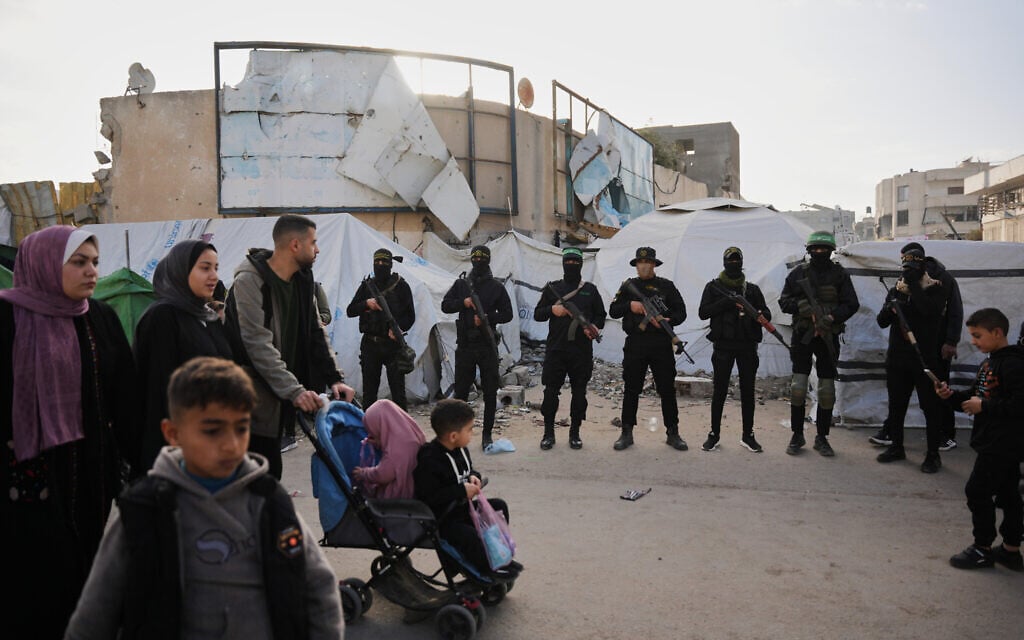
As Israel faced growing criticism from the Board of Peace for its continued strikes on Gaza, despite Hamas’s recent signing of a US-backed disarmament plan, a senior Israeli spokesman said Monday that the roadmap “does not reflect Israel’s positions,” and “stands in direct contrast to the current reality” in the Strip.
Compounding that criticism, an Israeli official said Monday that “Israel will not withdraw from the current line in the Gaza Strip, and will continue to eliminate any threats to our citizens and our soldiers.”
The deal, which both Hamas and Palestinian Islamic Jihad have signed on to, would see Hamas gradually hand over its weapons to a new Palestinian administration in Gaza, but the arms would remain in the territory. It says Gaza will run under the principle of “one authority, one law, one weapon,” and Gazans will be allowed to keep personal weapons subject to licensing from the new government.
It also mandates that Israel begin withdrawing from land it holds in Gaza before Hamas has fully disarmed.
Prime Minister Benjamin Netanyahu has yet to officially comment on the development, leaving top ministers and anonymous “senior officials” to voice disapproval of the plan, despite US President Donald Trump’s assurance that Israel was “very happy” with the deal.
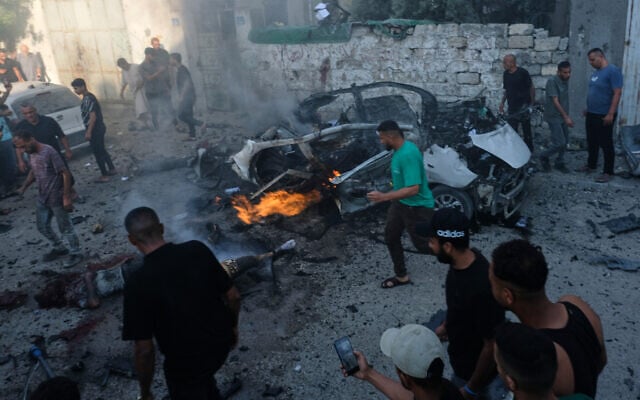
On Sunday, the Board of Peace’s top Gaza envoy Nickolay Mladenov lamented the previous two days of Israeli strikes in Gaza that “have killed civilians and destroyed medical supplies that people depend on,” and said that the Board was working to “de-escalate and create the space for the full implementation of the president’s plan.”
Following the criticism from the Board of Peace, Prime Minister’s Office spokesman Doron Spielman said Monday that “Israel has conveyed its comments and concerns on the proposed framework to our American counterparts.”
“The version that has been made public does not reflect Israel’s positions,” he said, contradicting earlier statements from Board of Peace officials that Israel was briefed “extensively” as the deal came together.
“Over the past eight months, according to Israeli intelligence, Hamas has used the ceasefire to rearm, recruit thousands of additional terrorists, rebuild its military infrastructure, and prepare for further October 7-style massacres,” Spielman said, stressing that the first clause in the framework envisions a “deradicalized, terror-free zone that does not pose a threat.”
“That vision stands in direct contrast to the current reality and to Hamas’s stated intentions,” he said, calling for the “genuine, verifiable, and irreversible demilitarization of Hamas.”
“Demilitarization means Hamas physically surrendering its weapons,” Spielman added. “Anything short of full demilitarization will leave Hamas with the capability to threaten Israel again.”
While the Prime Minister’s Office threw cold water on the developments, President Isaac Herzog on Monday gave a more upbeat assessment, saying he sees “a lot of positive elements in the efforts of the Board of Peace, under the auspices of President Trump and his leadership.”
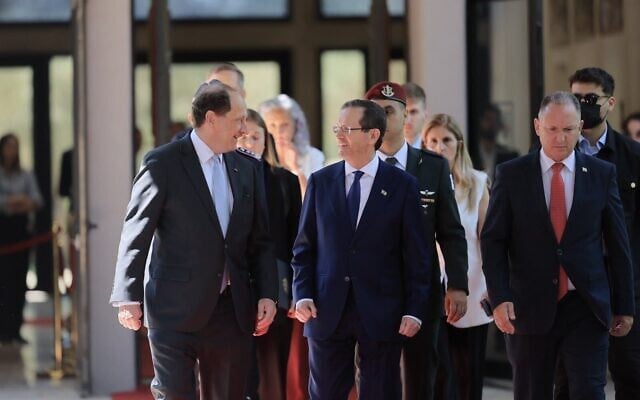
“I think his 20-Point Plan, which was adopted by the UN Security Council, and now, moving forward with the guidelines and the agreements that are going to be reached, is a very positive step with the clear caveat… that Hamas must be disarmed, and I hope Hamas will be disarmed fully,” he continued.
“This is clearly the basis of moving forward to the next phase by bringing in the government of technocrats,” said Herzog, adding that the efforts of Trump, the Board of Peace and Mladenov can “bring a certain vision of hope, also to the people of Gaza and to the people of Israel.”
Amid the dispute over the agreement, Finance Minister Bezalel Smotrich and Settlements Minister Orit Strock demanded that Netanyahu immediately convene the security cabinet to prohibit the entry of International Stabilization Force troops, as was approved last week.
The cabinet approved the move to allow 200 troops from “friendly countries” into the Palestinian enclave. ISF troops would first deploy along the borders of a pilot humanitarian zone in Gaza being planned by the Board of Peace in the area of the flattened city of Rafah.
According to the decision, the entry of ISF forces would still be subject to the specific approval of Netanyahu, Defense Minister Israel Katz, and Foreign Minister Gideon Sa’ar.

Writing to Netanyahu, the two far-right politicians asserted that the decision to allow the troops to enter Gaza had been based on “incorrect information” and that the Board of Peace roadmap “is dangerous to Israel and completely contradicts the disarming of Hamas and the demilitarization of Gaza.”
They called to reconvene the cabinet to roll back the decision and “adopt a preventative cabinet decision that will block the implementation of the Roadmap published by the Board of Peace, and to compel the Peace Council to amend the outline so that it aligns with the goals of the war and the commitments made to Israel.”
A Hamas official told Al Jazeera Monday that the disarmament plan will not be able to go ahead unless Israel halts what appeared to be a stepped-up campaign of airstrikes in the Strip.
The official said the group has contacted mediators and urged them to intervene directly to compel Israel to completely cease its military operations in Gaza.
“We made it clear to the mediators that the continued attacks will disrupt the implementation of the agreement and the negotiations over its timeline,” the Hamas source said.
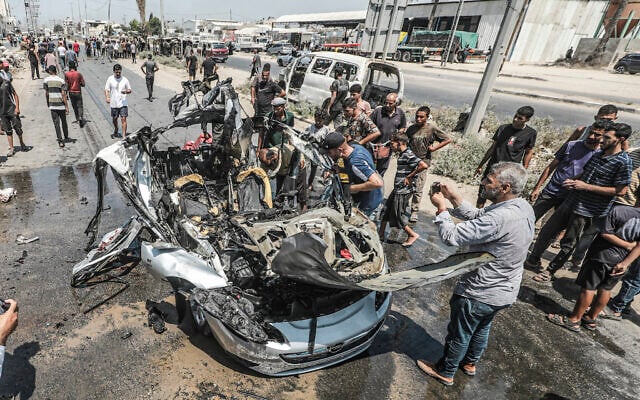
According to Hamas-run authorities in Gaza, 18 people were killed in Israeli strikes over the past 24 hours, one of the highest daily death tolls reported in recent months.
Hamas disarming has been a sticking point and has deadlocked negotiations for months. In announcing the deal on social media on Thursday, Trump said it would be carried out in “carefully structured phases.”
The agreement stipulates that all weapons held by the Hamas-run police will be transferred to the US-backed Palestinian technocratic committee, known as the National Committee for the Administration of Gaza (NCAG), upon its arrival in the enclave. It’s not clear when that would happen since it is contingent on other steps.
A process to decommission and store heavy weapons and to dismantle military production sites and tunnels will begin after the arrival of the Palestinian committee and the deployment of international forces. The process will be linked to a phased Israeli withdrawal, according to the agreement.
Eventually, armed groups are to hand over all weapons to NCAG, but the timeline for this has not been finalized.
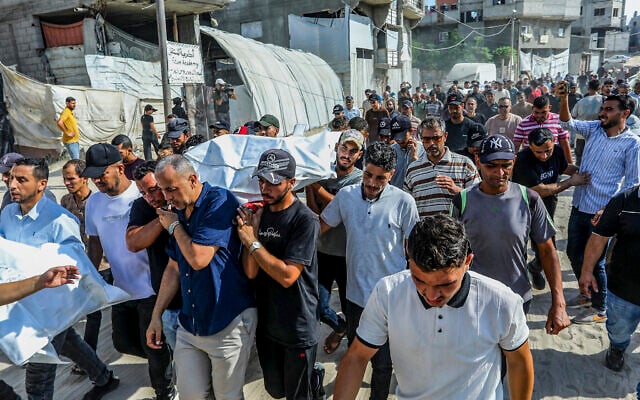
The areas Israel controls in Gaza have been mostly destroyed and depopulated. Most of the territory’s 2 million Palestinians are in the Hamas-held part, where hundreds of thousands live in squalid tent camps and destroyed neighborhoods.
Israel appears unlikely to pull back significant forces or make other concessions ahead of its October 27 elections. Netanyahu faces a tough reelection battle, with his far-right coalition partners urging him to keep up the pressure on Hamas and leave forces in Gaza, with some seeking to establish settlements in the territory.
While the heaviest fighting in Gaza has largely subsided, at least 1,230 people have been killed in Gaza since a ceasefire took effect in October 2025, according to the territory’s Hamas-run health ministry. The toll does not differentiate between combatants and civilians and is not verified, though Israel has generally accepted Hamas’s tally. Israel says its strikes respond to violations of the ceasefire or target operatives posing a threat.
Gunmen have continued to carry out shooting attacks on Israeli troops, and Israel says its strikes are in response to those and other violations. Five Israeli soldiers have been killed since the ceasefire began.
Times of Israel staff, agencies and Sam Sokol contributed to this report.

The war with Iran has been draining for all of us in Israel. But when I heard about a high casualty incident – ballistic missile impacts in Arad and Dimona that left nearly 200 people wounded – I drank a cup of coffee, packed a bag, and headed south.
There, I spoke with Shilgit, the head of an after-school program for underprivileged youth. Standing outside her destroyed center, Shilgit said it was a miracle that no children were hurt and spoke about the community coming together in the hours since.
As a Times of Israel reporter, I’m committed to telling stories of resilience like Shilgit’s. But my colleagues and I can't do this alone. If you value work like this, please consider joining our reader support group, The Times of Israel Community. Your financial support is essential to keep real human reporting like this going.
— Stav Levaton, military reporter

We’re really pleased that you’ve read X Times of Israel articles in the past month.
That’s why we started the Times of Israel – to provide discerning readers like you with must-read coverage of Israel and the Jewish world.
So now we have a request. Unlike other news outlets, we haven’t put up a paywall. But as the journalism we do is costly, we invite readers for whom The Times of Israel has become important to help support our work by joining The Times of Israel Community.
For as little as $6 a month you can help support our quality journalism while enjoying The Times of Israel AD-FREE, as well as accessing exclusive content available only to Times of Israel Community members.
Thank you, David Horovitz, Founding Editor of The Times of Israel








Israel has expressed significant reservations about a US-backed disarmament plan for Gaza, despite Hamas and Palestinian Islamic Jihad signing on. A senior Israeli spokesman, Doron Spielman, stated the public version of the roadmap "does not reflect Israel’s positions" and "stands in direct contrast to the current reality," citing Hamas's alleged rearmament during a ceasefire. He emphasized the need for "genuine, verifiable, and irreversible demilitarization of Hamas." The plan, which envisions Hamas gradually handing over weapons to a new Palestinian administration and a phased Israeli withdrawal, has drawn criticism from far-right Israeli ministers who urged Prime Minister Netanyahu to block the entry of International Stabilization Force troops. Meanwhile, Hamas warned that continued Israeli airstrikes would derail the implementation of the agreement, urging mediators to intervene.
© All rights to the original article belong to the source. Din Online shows a headline, an excerpt and a link only. The objectivity rating is computed automatically and is an estimate only.
Discussion
No comments yet — be the first to comment.