Israeli students return to classrooms as schools expand AI studies, ban phones
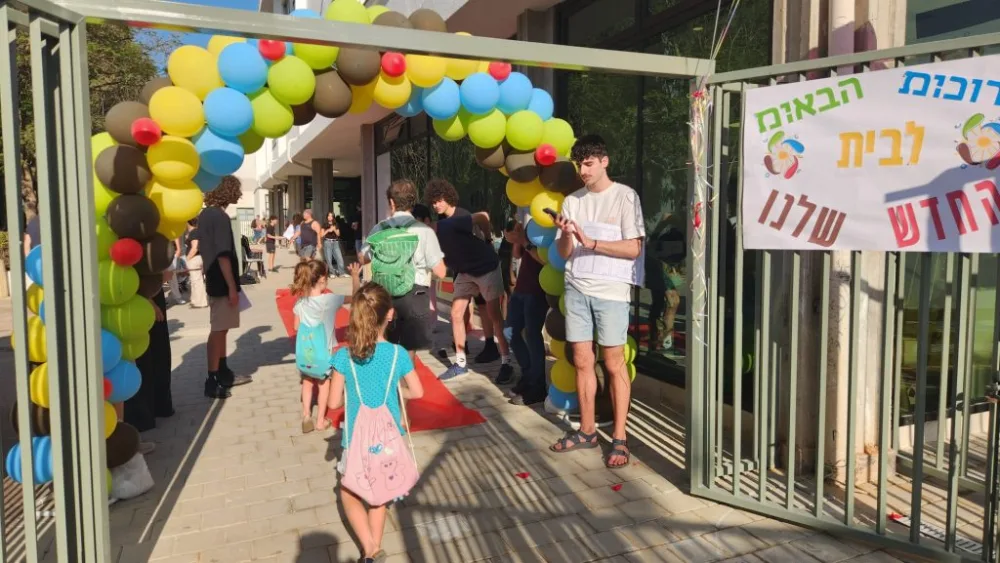
More than 2.6 million Israeli children returned to classrooms on Tuesday as the country began a new school year, with schools facing a teacher shortage while introducing new restrictions on smartphones and expanding artificial intelligence studies.
About 180,000 children entered first grade, while 143,000 12th-graders began their final year in the education system. The students are spread across nearly 28,000 kindergartens and schools.
Education Minister Yoav Kisch said about 500 teaching positions remain unfilled, but education officials indicated the shortage is deeper, forcing some schools to use unqualified teachers and assign teachers to multiple classes.
The first week will focus on strengthening students’ social and emotional resilience, with schools instructed to address violence, social rejection and bullying, both in person and online.
The Education Ministry is also rolling out financial education for ninth-graders and expanding science, technology, engineering and mathematics (STEM) studies. Artificial intelligence will feature more prominently in classrooms, with more than 12,000 English, science and technology teachers expected to receive AI training.
“We will continue to connect roots with the future: we will expand STEM and artificial intelligence studies, we will introduce financial education for the first time and we will continue to promote innovative and personalized learning,” Kisch said.
Students in eighth and ninth grades will take a 20-hour course covering AI use, critical thinking, misinformation and ethical issues. AI tools will also be incorporated into matriculation assignments in more than 10 STEM subjects.
Middle school students will face a new restriction this year: Mobile phone use will be prohibited on school grounds, including during breaks.
In communities near the Gaza border, 22,233 students are expected to begin the year in Sderot and four regional councils. That represents an increase of about 9%, or 1,802 students, compared with the number living in the area on Oct. 7, 2023, as residents continue returning to communities evacuated after the Hamas massacre.
The Tekuma Directorate said it is investing 364 million shekels ($121.8 million) in education across the region this year, including 184 million shekels ($61.5 million) for locally tailored programs, 103 million shekels ($34.4 million) for educational buildings and 54 million shekels ($18 million) for informal education.
“The increase in the number of students … reflects the return home, the strengthening of the communities and the transition of the Tekuma region from rehabilitation to growth,” said Aviad Friedman, head of the Tekuma Directorate.


Get the latest updates in our WhatsApp group.




Over 2.6 million Israeli students returned to classrooms on Tuesday for the new school year, facing a teacher shortage and new initiatives. Education Minister Yoav Kisch acknowledged approximately 500 unfilled teaching positions, though officials suggest the deficit is more significant. The curriculum will emphasize social and emotional resilience, addressing issues like violence and bullying, and introduce financial education for ninth graders. A major focus is the expansion of STEM and artificial intelligence studies, with over 12,000 teachers receiving AI training and a 20-hour AI course for eighth and ninth graders. Additionally, mobile phone use is now prohibited for middle school students on school grounds, including during breaks. In communities near the Gaza border, 22,233 students are starting the year, an increase of about 9% reflecting residents' return, with the Tekuma Directorate investing 364 million shekels in education for the region. Aviad Friedman, head of the Tekuma Directorate, stated, "The increase in the number of students … reflects the return home, the strengthening of the communities and the transition of the Tekuma region from rehabilitation to growth."
© All rights to the original article belong to the source. Din Online shows a headline, an excerpt and a link only. The objectivity rating is computed automatically and is an estimate only.
Discussion
No comments yet — be the first to comment.